
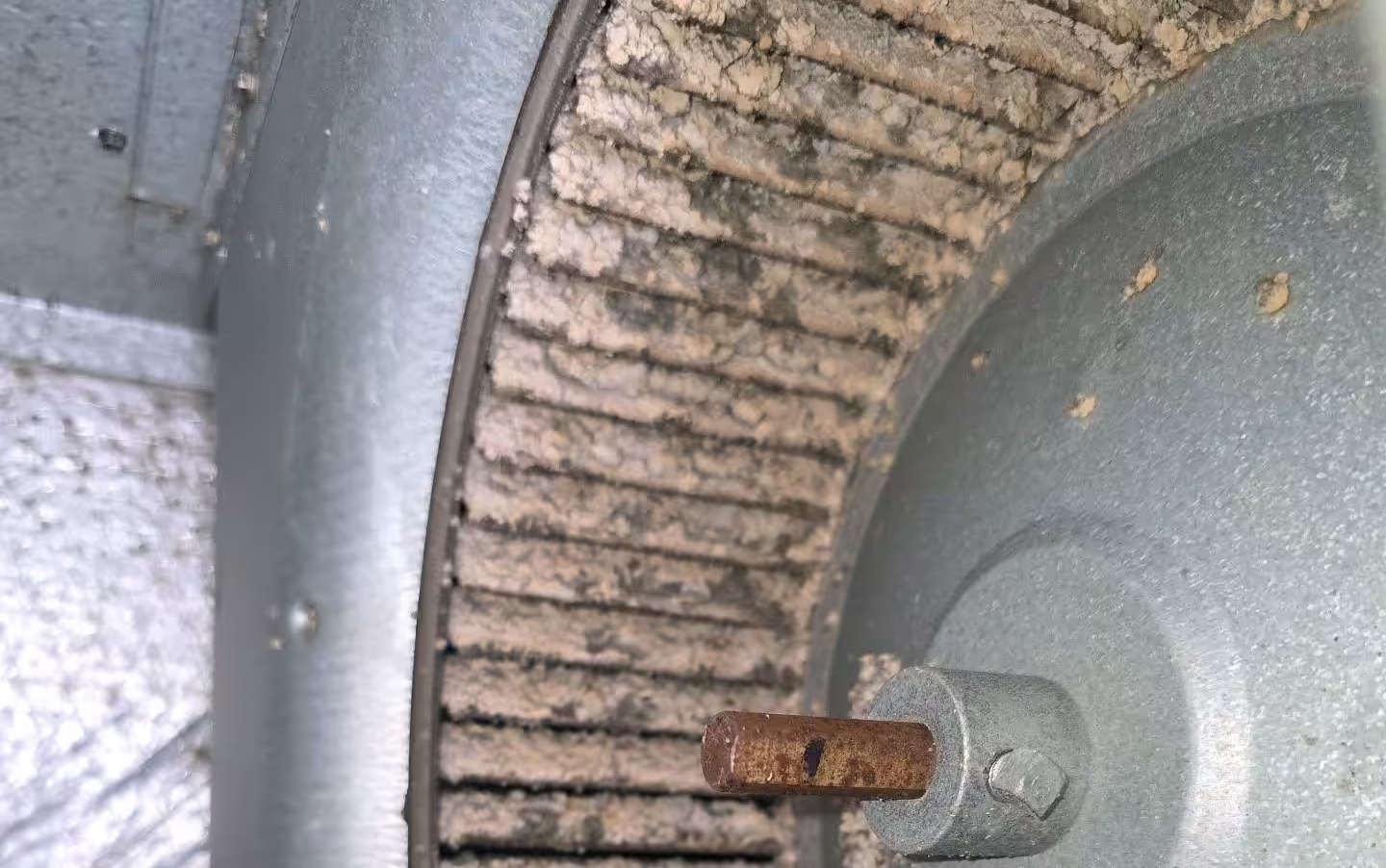
Regular HVAC maintenance can help your heating and cooling system operate efficiently, reduce unexpected problems, and identify developing concerns before they become more significant.
For Florida homeowners, HVAC system maintenance is particularly important. Air conditioning systems operate for much of the year while managing both indoor temperature and humidity.
Fortunately, homeowners don’t need to perform complicated HVAC repairs or diagnostics to take care of their systems.
Some of the most valuable maintenance involves relatively simple tasks: checking filters, keeping outdoor equipment clean, watching for condensate drainage problems, maintaining clearance around equipment, and recognizing when professional HVAC service is needed.
How Do I Maintain My HVAC System?
A practical HVAC maintenance routine should focus on several areas:
- Check and replace air filters as needed
- Keep the outdoor condenser clear of debris
- Maintain adequate clearance around outdoor equipment
- Observe the condensate drainage system
- Watch for water around the air handler
- Keep supply and return registers unobstructed
- Look for visible ductwork damage
- Monitor unusual noises or changes in operation
- Pay attention to changes in cooling performance
- Have the system professionally serviced when appropriate
The goal isn’t for homeowners to diagnose or repair every HVAC problem themselves.
Instead, routine maintenance helps keep readily accessible components in reasonable condition while making it easier to recognize when something has changed.
How Often Should I Change My HVAC Filter?
There is no single replacement interval that works for every home.
How frequently a filter needs to be changed depends on factors such as:
- Filter type
- Filter size
- Manufacturer recommendations
- HVAC operating time
- Pets
- Household occupancy
- Indoor environmental conditions
- Construction or renovation activity
- Amount of dust and debris
- Seasonal HVAC usage
Rather than relying exclusively on a calendar, homeowners should periodically inspect the filter.
If the filter is visibly loaded with dust and debris, it may need replacement even if it has not reached a predetermined replacement interval.
A significantly restricted filter can reduce airflow and potentially affect HVAC performance.
Learn more about how dirty HVAC coils and filters affect system performance.
Should I Use the Highest-Rated HVAC Filter Available?
Not necessarily.
Higher efficiency filters can capture smaller airborne particles, but some filters also create greater resistance to airflow.
The HVAC system must be capable of moving an appropriate amount of air through the installed filter.
Installing a highly restrictive filter in a system that was not designed for it can potentially reduce airflow.
Homeowners should follow the HVAC equipment and filter manufacturer’s recommendations or consult a qualified HVAC professional when determining the appropriate filter.
More filtration is not automatically better if it negatively affects system airflow.
How Do I Maintain My Outdoor HVAC Condenser?
The outdoor condenser or heat pump needs adequate airflow to operate properly.
Homeowners should periodically look around the equipment and remove obvious airflow restrictions such as:
- Leaves
- Grass clippings
- Weeds
- Loose debris
- Excessive vegetation
- Stored materials
Shrubs and landscaping should not be allowed to grow directly against the equipment.
The condenser coil should also remain reasonably clean so outdoor air can move through it effectively.
Homeowners should avoid aggressive cleaning methods that can damage the thin metal coil fins.
For more information, see Can I Clean My AC Condenser Coils Myself?
How Much Clearance Should I Keep Around My Outdoor HVAC Unit?
Outdoor HVAC equipment requires adequate space for airflow and service access.
Vegetation, fences, walls, decorative screens, stored materials, and other obstructions should not significantly restrict airflow around the equipment.
Exact clearance requirements vary by manufacturer and equipment configuration.
Rather than relying on one universal distance, homeowners should follow the equipment manufacturer’s installation and clearance requirements.
As a practical maintenance habit, keep vegetation trimmed and avoid placing objects immediately around or above the outdoor equipment.
Should I Clean My HVAC Condenser Coils?
Outdoor condenser coils can accumulate dirt and debris over time.
Common materials include:
- Grass clippings
- Leaves
- Dirt
- Dust
- Pollen
- Lint
- Landscaping debris
Significant accumulation can restrict airflow through the coil and interfere with heat transfer.
Basic cleaning may be appropriate for homeowners when it can be performed safely without opening electrical compartments or damaging the equipment.
Pressure washers should generally be avoided because they can easily bend or damage the delicate condenser fins.
Learn more in Can I Clean My AC Condenser Coils Myself?
Should I Clean My Indoor Evaporator Coil?
The indoor evaporator coil is different from the outdoor condenser coil.
Evaporator coils are commonly located inside or adjacent to the air handler and may require opening HVAC equipment to access.
Because electrical, refrigeration, drainage, and other components may be nearby, significant evaporator coil cleaning is generally better handled by a qualified HVAC professional.
Good filter maintenance can help reduce the amount of dust and debris reaching the indoor coil.
If an evaporator coil is visibly contaminated or repeatedly freezing, professional evaluation may be appropriate.
How Do I Maintain My HVAC Condensate Drain?
Air conditioning systems produce condensation while cooling and dehumidifying indoor air.
That water must drain properly away from the HVAC equipment.
Homeowners should become familiar with the readily accessible portions of their condensate drainage system and periodically look for:
- Water around the air handler
- Standing water in an auxiliary drain pan
- Visible drain line damage
- Disconnected piping
- Water staining
- Repeated HVAC shutdowns associated with a float switch
- Unusual moisture around HVAC equipment
A clogged condensate drain can allow water to back up into or around the air handler.
In systems equipped with a condensate safety switch, the HVAC system may shut down before the water overflows.
Learn more about HVAC condensate leaks and how an HVAC float switch works.
Should I Pour Bleach or Vinegar Into My HVAC Drain Line?
Homeowners commonly encounter recommendations to periodically pour bleach, vinegar, or other cleaning products into HVAC condensate drains.
However, the appropriate maintenance method depends on the equipment, drain configuration, materials, and manufacturer recommendations.
Some HVAC systems include an accessible service opening specifically intended for condensate maintenance.
Rather than universally recommending a particular chemical or concentration, homeowners should follow the equipment manufacturer’s recommendations or guidance from their HVAC professional.
Mixing cleaning chemicals or introducing inappropriate products into the drainage system should be avoided.
What Is an HVAC Float Switch and Why Should I Check It?
A float switch is a safety device designed to respond when abnormal water accumulation occurs within the HVAC condensate system or auxiliary drain pan.
If the water level rises, the switch can interrupt HVAC operation.
This helps prevent the air conditioner from continuing to produce condensation while a drainage problem is present.
Homeowners don’t need to routinely activate or manipulate the switch.
Instead, periodically look for visible damage, water accumulation, or signs that the device has been bypassed.
If a float switch repeatedly shuts down the system, the underlying drainage problem should be identified.
Learn more about how an HVAC float switch works.
Should I Inspect My HVAC Ductwork?
Homeowners can periodically observe readily accessible ductwork, particularly when ducts are visible in an attic, garage, basement, or utility area.
Look for obvious conditions such as:
- Disconnected ducts
- Torn or damaged exterior coverings
- Excessive sagging
- Compressed ductwork
- Damaged insulation
- Moisture or condensation
- Loose connections
Avoid walking across, storing items on, or compressing flexible ductwork in attic spaces.
Duct damage can affect airflow and allow conditioned air to escape before reaching the intended rooms.
Learn more about damaged HVAC ductwork and how it can affect your home.
Should I Keep Supply and Return Vents Open?
Generally, HVAC systems are designed to distribute and return a particular volume of air.
Furniture, rugs, curtains, boxes, and other belongings should not obstruct supply or return openings.
Homeowners sometimes close multiple supply registers in unused rooms in an attempt to reduce energy consumption.
However, significantly altering airflow through a duct system can affect system performance and pressure.
If certain rooms consistently receive too much or too little airflow, HVAC balancing or duct evaluation may be more appropriate than simply closing numerous registers.
What Should I Look for Around My Air Handler?
Periodically look at the readily accessible area surrounding the indoor air handler.
Potential warning signs include:
- Water on the floor
- Water in an auxiliary drain pan
- Rust or corrosion
- Moisture staining
- Damaged refrigerant line insulation
- Unusual vibration
- Unusual noises
- Visible air leakage
- Damaged duct connections
- Repeated system shutdowns
Water around an air handler deserves particular attention because condensate leakage can damage surrounding building materials.
This is especially important when the equipment is located in an attic or above finished living areas.
Learn more about how an HVAC air handler works.
Should I Check the Refrigerant Lines?
Homeowners should not open the refrigeration system or attempt to evaluate refrigerant pressures themselves.
However, the visible refrigerant lines between the indoor and outdoor equipment can be periodically observed.
The larger refrigerant line is typically insulated.
Exterior insulation can deteriorate from:
- Sunlight
- Weather exposure
- Animals
- Landscaping equipment
- Age
- Physical damage
Damaged or missing insulation should be addressed as appropriate.
Suspected refrigerant leaks or refrigeration system problems should be evaluated by a qualified HVAC professional.
How Can I Tell if My HVAC System Isn’t Cooling Properly?
Pay attention to changes in how the system operates.
Potential warning signs include:
- HVAC runs much longer than usual
- System struggles to reach the thermostat setting
- Air from supply registers doesn’t feel adequately conditioned
- Certain rooms remain significantly warmer
- Airflow becomes noticeably weaker
- Evaporator coil or refrigerant lines freeze
- Outdoor equipment operates abnormally
- System repeatedly turns on and off
- Indoor humidity becomes unusually high
These symptoms do not identify a specific defect.
Many different HVAC, ductwork, airflow, and building conditions can produce similar symptoms.
Learn more in Why Is My HVAC Running but Not Blowing Cold Air?
Should I Measure My HVAC Temperature Differential?
Homeowners may notice HVAC technicians or home inspectors comparing return and supply air temperatures.
The difference between these measurements is commonly called the HVAC temperature differential or Delta T.
This measurement can provide useful information about cooling performance, but it should not be treated as a complete diagnostic test.
Airflow, humidity, ductwork, equipment operation, measurement location, and other conditions can influence the observed temperature difference.
A commonly referenced cooling range is approximately 15°F to 20°F, but the measurement should be interpreted in context rather than used as an absolute pass-or-fail standard.
Learn more about HVAC temperature differential and what the readings can indicate.
Should I Cover My Outdoor HVAC Unit?
In Florida, outdoor condensers and heat pumps are designed to remain outdoors and are routinely exposed to weather.
Homeowners generally should not cover operating equipment or install coverings that restrict airflow.
Decorative screens, landscaping, and other structures can also create airflow or service-access problems when installed too close to the equipment.
If protection from a specific environmental condition is being considered, homeowners should follow the equipment manufacturer’s recommendations.
How Often Should I Have My HVAC System Professionally Serviced?
There is no maintenance schedule that applies universally to every HVAC system.
Equipment manufacturers and HVAC contractors may recommend periodic professional servicing based on the system type, age, usage, and warranty requirements.
Professional HVAC maintenance may include tasks beyond normal homeowner maintenance, such as evaluating:
- Equipment operation
- Electrical components
- Blower condition
- Coil condition
- Condensate drainage
- Refrigeration performance
- Temperature performance
- System controls
- Heat pump operation
- Visible duct conditions
Florida HVAC systems frequently operate for extended portions of the year, making routine professional maintenance particularly valuable.
Homeowners should also consider manufacturer maintenance requirements when equipment is covered by a warranty.
What HVAC Maintenance Can Homeowners Safely Do?
A useful distinction is between maintenance and repair.
Reasonable homeowner maintenance can include:
- Inspecting and changing filters
- Keeping vegetation away from outdoor equipment
- Removing loose debris around the condenser
- Observing accessible condensate drainage
- Checking for water around the air handler
- Keeping registers unobstructed
- Looking for visible duct damage
- Monitoring unusual changes in system operation
Homeowners should generally leave tasks involving energized electrical components, internal equipment disassembly, refrigerant systems, significant coil cleaning, and mechanical diagnostics to qualified professionals.
What HVAC Maintenance Should I Avoid Doing Myself?
Unless appropriately qualified, homeowners should avoid:
- Opening energized electrical compartments
- Handling capacitors or internal electrical components
- Adding or removing refrigerant
- Connecting refrigerant gauges
- Bypassing float switches or safety controls
- Dismantling HVAC equipment
- Aggressively cleaning delicate coils
- Making significant electrical repairs
- Attempting compressor repairs
- Modifying equipment controls
HVAC equipment combines electricity, moving mechanical components, refrigerant systems, and water drainage.
When a task goes beyond basic observation and routine maintenance, professional service is generally the safer approach.
Does Regular HVAC Maintenance Prevent Every Problem?
No.
Even a well-maintained HVAC system can develop mechanical, electrical, refrigeration, or installation related problems.
Equipment also deteriorates with age.
Maintenance should therefore be viewed as a way to help support system operation and identify developing conditions, not as a guarantee that equipment will not fail.
Age, installation quality, usage, environmental conditions, equipment design, and previous repairs can all affect HVAC service life.
What Do Home Inspectors Check on an HVAC System?
During a home inspection, the HVAC system is typically operated using normal controls when conditions permit.
Depending on the system and accessibility, an inspector may evaluate:
- Heating and cooling operation
- Air handler
- Outdoor condenser or heat pump
- Supply and return temperatures
- HVAC temperature differential
- Accessible ductwork
- Air filters
- Condensate drainage
- Float switches and accessible safety components
- Refrigerant line insulation
- Equipment support
- Electrical disconnects
- Visible corrosion or deterioration
- Unusual operating conditions
A home inspection provides a visual and operational evaluation of readily accessible HVAC components.
It is not the same as a specialized HVAC service or diagnostic evaluation.
When Should I Call an HVAC Professional?
Professional evaluation may be appropriate when:
- The system isn’t adequately heating or cooling
- Airflow becomes noticeably weak
- The HVAC system repeatedly shuts down
- A float switch repeatedly activates
- Water is leaking around the air handler
- The evaporator coil freezes
- Unusual noises or vibration develop
- The outdoor fan isn’t operating properly
- Significant coil contamination is present
- Electrical problems are suspected
- Refrigerant related problems are suspected
- Ductwork is significantly damaged
- The system runs continuously or excessively
- Overall equipment performance is uncertain
Addressing developing problems early may help prevent additional equipment or property damage.
A Simple HVAC Maintenance Checklist
For most homeowners, HVAC maintenance doesn’t need to be complicated.
Periodically:
- Check the air filter
- Look around the air handler for water
- Check accessible drain pans
- Keep the outdoor condenser clear
- Trim vegetation away from outdoor equipment
- Keep supply and return registers unobstructed
- Look for visible duct damage
- Pay attention to unusual noises
- Watch for changes in airflow or cooling performance
- Schedule professional HVAC maintenance as appropriate
These simple observations can help homeowners become familiar with how their HVAC system normally operates.
That familiarity also makes it easier to recognize when something changes.
The Bottom Line
So, how do you maintain your HVAC system?
Start with the basics.
Keep the filter reasonably clean, maintain airflow around the outdoor equipment, watch the condensate drainage system, keep supply and return openings unobstructed, observe accessible ductwork, and pay attention to changes in system operation.
Homeowners don’t need to become HVAC technicians to take good care of their equipment.
In fact, knowing what not to do yourself is an important part of HVAC maintenance.
Electrical repairs, refrigeration work, internal equipment diagnostics, significant coil cleaning, and safety-control problems should generally be handled by qualified HVAC professionals.
For Florida homeowners, where air conditioning systems operate heavily for much of the year, a combination of routine homeowner observation and appropriate professional maintenance can help keep the system operating reliably and make developing problems easier to identify.
For more information about HVAC maintenance, air handlers, condensers, ductwork, condensate drainage, airflow, and cooling performance, visit the Tier-1 Pro HVAC Knowledge Center.