
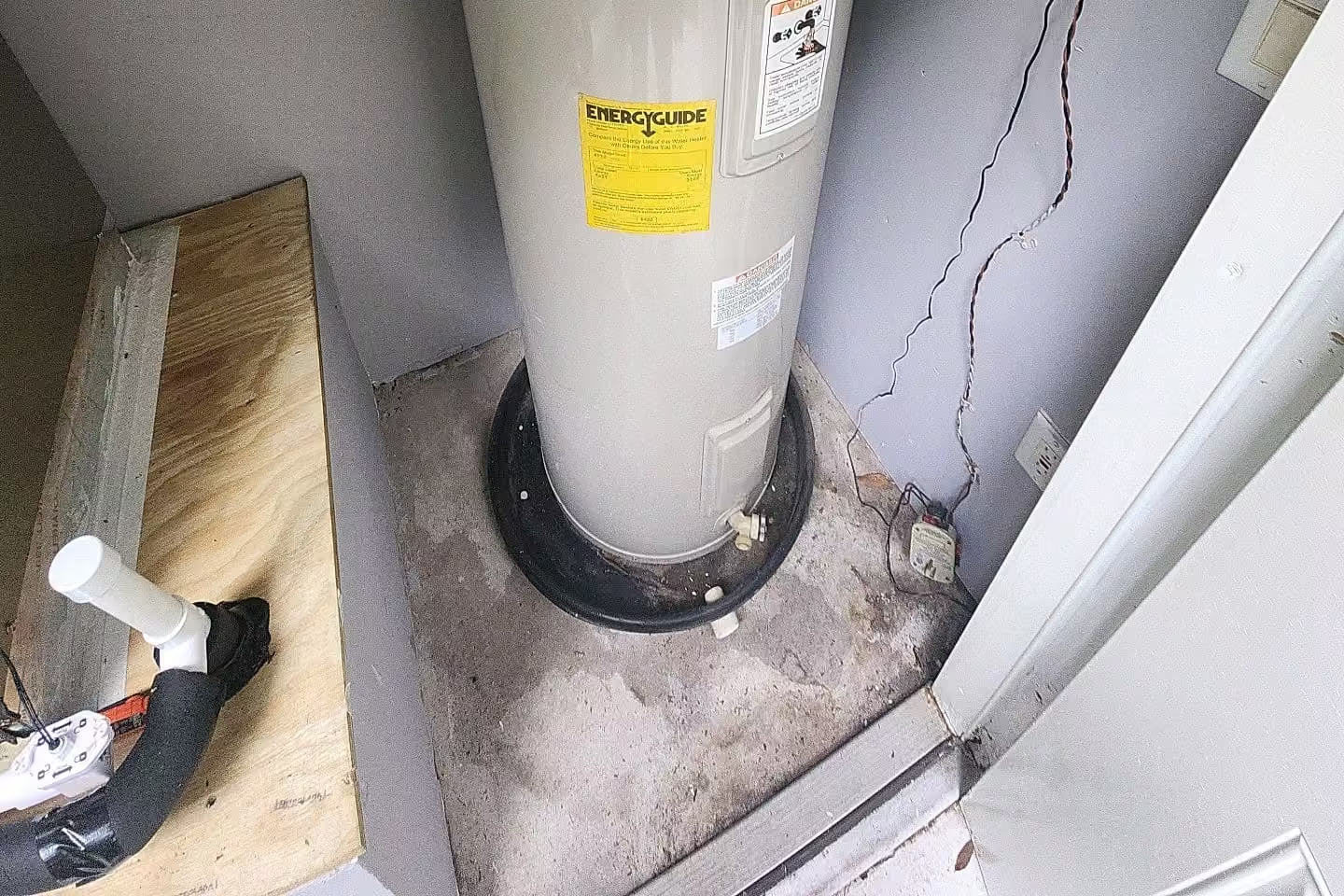
A water heater drain pan is a simple safeguard designed to collect incidental leakage near the base of a water heater and, when properly connected to an appropriate drain, help direct that water away from surrounding finishes. It does not prevent a leak or replace maintenance. In Florida properties, the location of the heater, the pan’s condition, and the route of its drain line can make a meaningful difference if water escapes.
What does a water heater drain pan actually do?
A drain pan sits beneath the water heater to catch water from certain leaks and direct it toward a drain where a drain connection is provided. A properly configured pan may limit the spread of water from a small leak, but it cannot reliably contain every failure. The effectiveness of the pan depends on its size, condition, drainage arrangement, and the volume of water released.
Not every water heater is installed in the same environment. Some are located in garages, where nearby surfaces may be more tolerant of incidental moisture. Others occupy interior closets, laundry rooms, or elevated locations where escaping water could affect drywall, flooring, cabinetry, or rooms below. A property’s layout and the installation requirements help determine what protections are appropriate.
Common drain pan concerns inspectors encounter
Visible installation and maintenance issues can include:
- Missing or poorly fitted pans. Where a pan is appropriate or required, an absent, damaged, undersized, or poorly positioned pan may not manage leakage as intended.
- Disconnected or restricted drains. A drain line that is missing, loose, blocked, pitched poorly, or terminated at an unsuitable location may allow collected water to remain in the pan or overflow.
- Corrosion and deteriorated materials. Rust, cracking, or previous makeshift repairs can reduce the pan’s reliability.
- Evidence of previous leakage. Staining, moisture damage, mineral deposits, or water in the pan can indicate a condition worth investigating rather than simply drying up.
- Limited visibility. Closets, platforms, and restricted access may prevent an inspector from following the entire drain line to its termination.
Water in the pan does not always mean the tank has failed
A wet drain pan identifies a moisture condition, but it does not establish its source. Possibilities include leakage at supply connections, the drain valve, the tank, or nearby piping. Condensation may also occur under some operating conditions. The source should be identified before anyone assumes the water heater itself needs replacement.
A. O. Smith Technical Bulletin 51 notes that temporary condensation can sometimes collect near a gas water heater while it warms up. However, water around the heater can also indicate a plumbing or tank leak, so persistent or unexplained moisture deserves evaluation. A qualified plumbing contractor can distinguish these conditions and determine appropriate repairs. For related issues, see our guide to water heater relief discharge piping and our overview of water heater expansion tanks.
A drain pan is not the same as a relief valve discharge system
The water heater’s temperature and pressure relief valve provides a separate safety function. Its discharge pipe is intended to route water released by that valve appropriately. A drain pan and its drain line serve a different purpose: collecting incidental water near the appliance. These components should not be treated as interchangeable, and neither one corrects an underlying leak or an improper installation.
What a home inspector can evaluate
During a visual inspection, accessible conditions may include the presence and visible condition of the pan, obvious leakage, corrosion, visible drain connections, staining, and evidence of moisture affecting adjacent materials. Inspectors may note where the drain line’s termination cannot be confirmed or where a component is concealed.
A general inspection is not a destructive examination or a drain-flow certification. An inspector does not normally disassemble plumbing connections, intentionally create leaks, or guarantee that an emergency discharge path will handle a major tank failure. Applicable installation requirements depend on the equipment, location, and circumstances and should be confirmed by the appropriate licensed contractor or authority when necessary.
Field Insight | Inspector Perspective
Imagine if there were one simple thing you could do to help prevent potentially thousands of dollars in water damage. You’d do it, right?
That’s exactly how we feel as inspectors when we come across water heaters without drain pans, especially those installed on the second floor or in interior locations where a leak could quickly damage flooring, walls, ceilings, and surrounding materials.
The reality is that water heaters can develop leaks over time, whether from a failing tank, malfunctioning component, plumbing connection, or simply age-related deterioration. It’s not always a matter of whether a leak will occur, but when.
A properly installed drain pan with an appropriate drainage connection is a relatively simple precaution that can make a significant difference when something goes wrong.
In our book, water heater drain pans are a must, especially when a leak could cause significant damage.
What should buyers and homeowners do?
If you notice standing water in a pan, deteriorated connections, or moisture staining near a water heater, arrange an evaluation by a qualified plumbing contractor. Avoid assuming a dry pan means the installation is leak-free. Periodic checks of accessible areas and timely attention to small leaks can help reduce the risk of concealed damage.
For a broader explanation of how water heaters fit into the property’s supply and distribution system, visit our plumbing systems guide. If you are buying a property in Central Florida, a professional home inspection can help identify visible concerns and clarify when specialist evaluation is appropriate.