
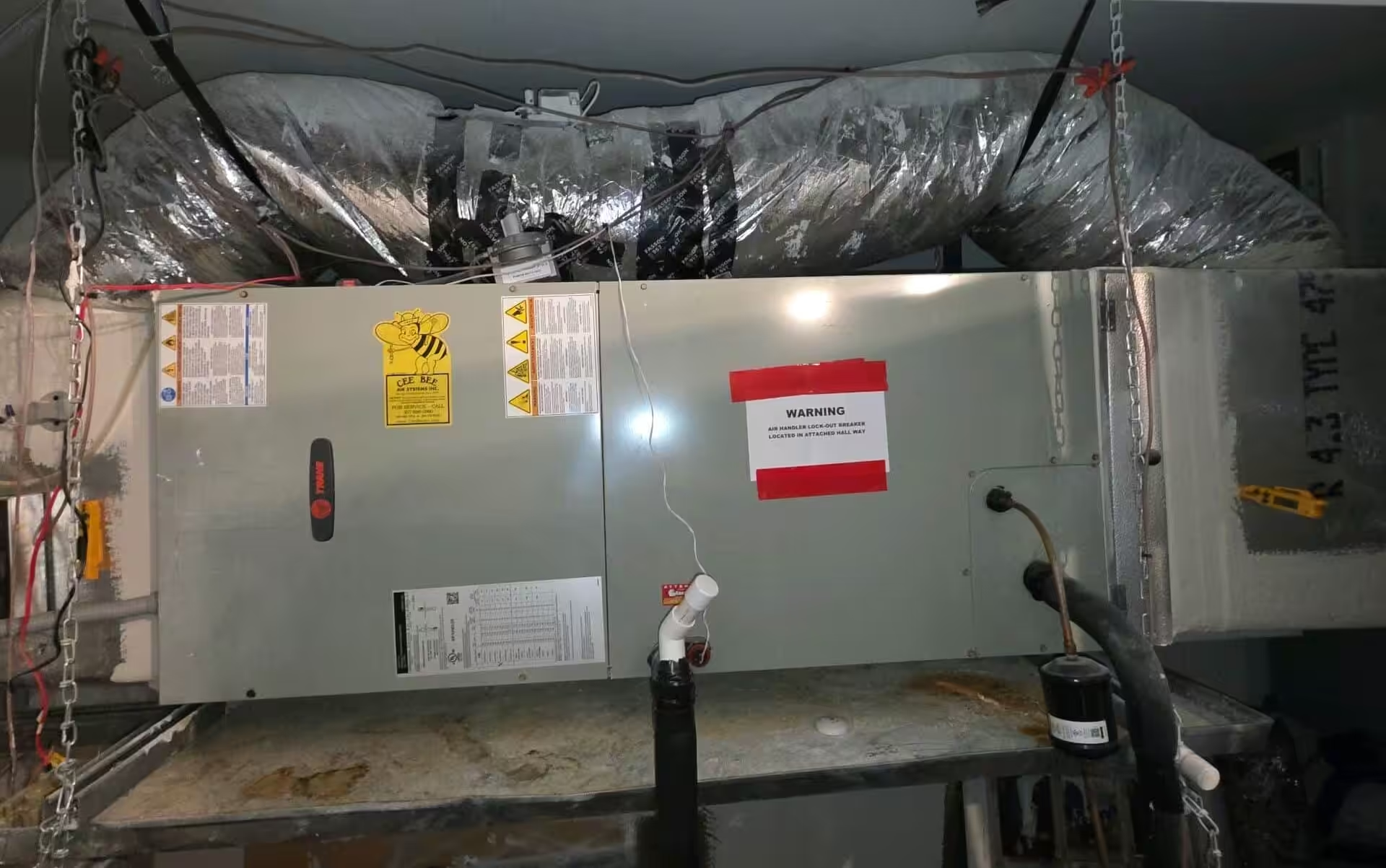
An HVAC temperature differential is one of the measurements that can help evaluate how an air conditioning system is performing during a home inspection.
The temperature differential, sometimes called the temperature split or Delta T, compares the temperature of air entering the HVAC system with the temperature of the conditioned air leaving the system.
For example, if return air entering the system measures 76°F and conditioned supply air measures 58°F, the temperature differential is approximately 18°F.
While this measurement can provide useful information about HVAC performance, it is important to understand what it does and does not tell you. A temperature differential is not a complete HVAC diagnostic test, and an abnormal reading does not automatically identify the cause of a problem.
What Is an HVAC Temperature Differential?
HVAC temperature differential is the difference between the temperature of the air entering the HVAC system and the conditioned air leaving it.
During air conditioning operation:
- Warm indoor air enters through the return system.
- The air passes through the HVAC filter.
- Air moves across the cold evaporator coil.
- Heat is removed from the air.
- Cooler conditioned air is distributed through the supply ductwork.
The difference between the return-air temperature and supply-air temperature provides a basic indication of how much the air has cooled as it passes through the system.
How Is HVAC Temperature Differential Calculated?
The basic calculation is:
Return Air Temperature − Supply Air Temperature = Temperature Differential
For example:
76°F return air − 58°F supply air = 18°F temperature differential
This would be described as an approximately 18°F temperature split.
The calculation itself is simple, but interpreting the result requires additional context.
Outdoor temperature, indoor humidity, airflow, system operating time, equipment condition, measurement location, and other factors can influence the observed temperature difference.
What Is a Normal HVAC Temperature Differential?
A commonly referenced temperature differential during cooling operation is approximately 16°F to 22°F between the return and supply air.
However, this should be treated as a general performance guideline rather than an absolute pass-or-fail standard.
HVAC systems operate under varying conditions, and the expected temperature split can be influenced by:
- Indoor temperature
- Indoor humidity
- Outdoor temperature
- Airflow
- Equipment design
- Blower speed
- Filter condition
- Coil condition
- System operating time
- Measurement location
A reading outside a commonly expected range does not automatically mean the HVAC system has failed.
Likewise, a temperature differential within a typical range does not prove that every component of the system is functioning properly.
Where Should HVAC Temperatures Be Measured?
Measurement location matters.
Ideally, temperature differential evaluates air entering and leaving the HVAC equipment as accurately as reasonably possible.
During a home inspection, however, equipment configuration and accessibility vary considerably.
An inspector may obtain measurements from accessible return and supply locations that provide a reasonable representation of system performance.
Measurements taken at distant registers can be influenced by the duct system itself.
For example, supply air traveling through a hot attic may gain heat before reaching a register. Damaged, poorly insulated, or leaking ductwork can further affect the temperature observed at the register.
This is why temperature measurements should be interpreted in the context of the complete HVAC installation.
How Long Should the AC Run Before Measuring Temperature Differential?
An HVAC system generally needs time to establish normal cooling operation before meaningful temperature measurements are taken.
Measuring immediately after the system starts may not accurately represent its performance.
During a home inspection, the inspector typically operates the HVAC system using normal controls and allows it to run when conditions permit before evaluating its cooling performance.
The exact amount of time needed can vary based on:
- Indoor and outdoor conditions
- Equipment type
- Initial indoor temperature
- System configuration
- Previous operating mode
Temperature differential is therefore a snapshot of system performance under the conditions present at the time of inspection.
What Does a Low HVAC Temperature Differential Mean?
A lower-than-expected temperature differential means the air leaving the HVAC system is not substantially cooler than the air entering it.
There are many possible reasons this can occur.
Potential contributors include:
- Restricted or improper airflow
- Dirty evaporator coil
- Outdoor condenser problems
- Refrigeration related conditions
- Compressor problems
- Duct leakage
- Thermostat or control conditions
- Improper equipment operation
- Measurement location
- System not operating long enough before measurement
A low temperature differential identifies a performance concern, not necessarily the specific defect causing it.
Further evaluation may be appropriate when the system is not adequately cooling or the observed temperature difference is inconsistent with expected operation.
Can a Dirty Air Filter Affect Temperature Differential?
Yes.
A significantly dirty or restrictive air filter can affect airflow through the HVAC system.
Because temperature differential depends partly on the volume of air passing across the evaporator coil, abnormal airflow can influence the observed temperature split.
Restricted airflow can also contribute to other HVAC problems, including reduced performance and evaporator coil freezing.
However, the relationship between airflow and temperature differential can be complicated. A temperature reading alone should not be used to conclude that the filter is responsible.
Learn more about how dirty HVAC coils and filters can affect system performance.
Can Dirty HVAC Coils Affect Temperature Differential?
Yes.
Both the indoor evaporator coil and outdoor condenser coil play important roles in heat transfer.
A dirty evaporator coil can interfere with airflow and the transfer of heat from indoor air into the refrigerant.
A significantly restricted outdoor condenser coil can interfere with the system’s ability to release that heat outdoors.
Either condition may contribute to poor overall HVAC performance.
The effect should be evaluated together with airflow, equipment operation, indoor conditions, and other observations rather than relying solely on the temperature differential.
Can Damaged Ductwork Affect HVAC Temperature Readings?
Yes.
Ductwork can significantly affect temperatures measured at supply registers.
Conditioned air may travel through attic spaces that are substantially warmer than the living area.
Damaged insulation, leaking connections, disconnected ducts, or other duct deficiencies can allow conditioned air to gain heat or escape before reaching the intended room.
Return duct leakage can also allow hot attic air to enter the system.
These conditions may affect both HVAC performance and the temperatures observed during an inspection.
Learn more about damaged HVAC ductwork and how it can affect airflow and cooling performance.
Does a Low Temperature Differential Mean the HVAC Needs Refrigerant?
Not necessarily.
This is an important distinction.
A low temperature differential should not automatically be interpreted as evidence of low refrigerant.
Refrigeration related problems are one possible cause of poor cooling performance, but many other conditions can produce similar symptoms.
Proper refrigerant evaluation requires specialized HVAC diagnostic equipment and procedures beyond the scope of a standard home inspection.
A home inspector may identify that the system is not performing as expected and recommend further evaluation, but determining refrigerant pressures, charge, or specific refrigeration defects is generally the role of a qualified HVAC professional.
Can HVAC Temperature Differential Be Too High?
Yes.
An unusually large temperature difference does not necessarily mean the air conditioner is performing exceptionally well.
A high temperature differential can sometimes be associated with reduced airflow across the evaporator coil.
Potential contributors can include:
- Heavily restricted filters
- Dirty evaporator coils
- Blower problems
- Restricted ductwork
- Closed or obstructed registers
- Other airflow deficiencies
If too little air passes across the coil, the air that does pass across it may become very cold while the system still fails to properly condition the home.
This is another reason temperature differential should not be evaluated in isolation.
A larger temperature split does not automatically mean better HVAC performance.
Can a High Temperature Differential Cause the Evaporator Coil to Freeze?
The temperature differential itself does not cause the coil to freeze.
Rather, some of the same conditions that can produce an unusual temperature differential can also contribute to evaporator coil freezing.
Restricted airflow is one example.
When insufficient warm indoor air passes across the evaporator coil, the coil can become excessively cold. Moisture that normally condenses on the coil may then begin to freeze.
Ice accumulation can further restrict airflow and interfere with HVAC performance.
If an evaporator coil repeatedly freezes, the underlying cause should be professionally evaluated.
Does Humidity Affect HVAC Temperature Differential?
Yes.
Air conditioning systems do more than lower indoor temperature. They also remove moisture from the air.
When warm, humid air passes across the evaporator coil, part of the system’s cooling capacity is being used to remove moisture.
This can influence HVAC performance and observed temperature measurements.
Florida’s high humidity makes this particularly relevant.
Temperature differential should therefore be considered together with indoor conditions rather than viewed as an isolated number.
Is HVAC Temperature Differential the Same as the Thermostat Temperature?
No.
The thermostat measures or responds to the temperature near its location in the home.
Temperature differential compares the temperature of air entering and leaving the HVAC system.
For example, a thermostat may indicate that the home is 76°F while the supply air is approximately 58°F.
Those two numbers serve different purposes.
The thermostat determines when the HVAC system should operate, while the temperature differential provides information about the change occurring as air passes through the cooling system.
Does a Good Temperature Differential Mean the HVAC System Is in Good Condition?
Not necessarily.
An HVAC system can produce an apparently reasonable temperature differential while still having other deficiencies.
Examples can include:
- Damaged ductwork
- Condensate drainage problems
- Corroded equipment
- Electrical concerns
- Unusual noise or vibration
- Improper installation
- Aging equipment
- Damaged insulation
- Restricted airflow in certain areas
- Equipment compatibility concerns
Temperature differential is simply one piece of information used when evaluating HVAC operation.
A home inspector considers the measurement together with the visible condition and operation of the system.
Why Is My HVAC Temperature Differential Normal but the House Isn’t Cooling?
This can happen.
A reasonable temperature split at the HVAC equipment indicates that the system is producing a measurable change in air temperature, but it does not guarantee that conditioned air is being effectively distributed throughout the home.
Possible contributors can include:
- Damaged or disconnected ductwork
- Duct leakage
- Poor airflow
- Improper duct sizing
- Building air leakage
- Insulation deficiencies
- Solar heat gain
- Equipment sizing
- Uneven air distribution
- Extreme outdoor conditions
The HVAC equipment and the building must work together for the home to maintain comfortable indoor conditions.
If the HVAC system is operating but the home isn’t cooling adequately, see Why Is My HVAC Running but Not Blowing Cold Air?
What Do Home Inspectors Check When Evaluating HVAC Performance?
During a home inspection, the HVAC system is typically operated using normal controls when conditions permit.
Depending on the system and accessibility, the inspector may evaluate:
- Heating and cooling operation
- Supply and return air temperatures
- Temperature differential
- Airflow at accessible registers
- Air handler condition
- Outdoor condenser or heat pump
- Visible ductwork
- Air filters
- Condensate drainage
- Refrigerant line insulation
- Electrical disconnects
- Visible equipment damage
- Unusual sounds or operating conditions
The goal is to identify readily observable conditions and determine whether the system appears to be operating as expected at the time of inspection.
A standard home inspection is not an HVAC service call and does not include invasive mechanical or refrigeration diagnostics.
When Should an HVAC Professional Evaluate the System?
Further HVAC evaluation may be appropriate when:
- The temperature differential is significantly outside an expected range
- The home isn’t adequately cooling
- Supply airflow is weak
- The evaporator coil freezes
- The system runs continuously or excessively
- Unusual noises are present
- The condenser or air handler is not operating properly
- Significant duct deficiencies are present
- Water leakage or condensate problems are observed
- Refrigeration related problems are suspected
- Overall system performance is uncertain
An HVAC technician can perform diagnostic testing beyond the scope of a home inspection and determine the specific cause of abnormal system performance.
The Bottom Line
An HVAC temperature differential measures the difference between return air entering the cooling system and conditioned supply air leaving it.
A temperature difference of approximately 15°F to 20°F is commonly referenced as a general cooling-performance guideline, but it should not be treated as an absolute pass-or-fail standard.
Temperature differential can be affected by airflow, humidity, dirty filters, coil condition, ductwork, equipment operation, measurement location, and other factors.
Most importantly, a temperature differential does not diagnose a specific HVAC defect.
A low reading does not automatically mean the system needs refrigerant, and an unusually high reading does not necessarily mean the system is performing exceptionally well.
During a home inspection, temperature differential is best used as one part of the overall evaluation of HVAC operation and performance.
For more information about HVAC systems, air handlers, condensers, ductwork, cooling performance, and common conditions identified during home inspections, visit the Tier-1 Pro HVAC Knowledge Center.