
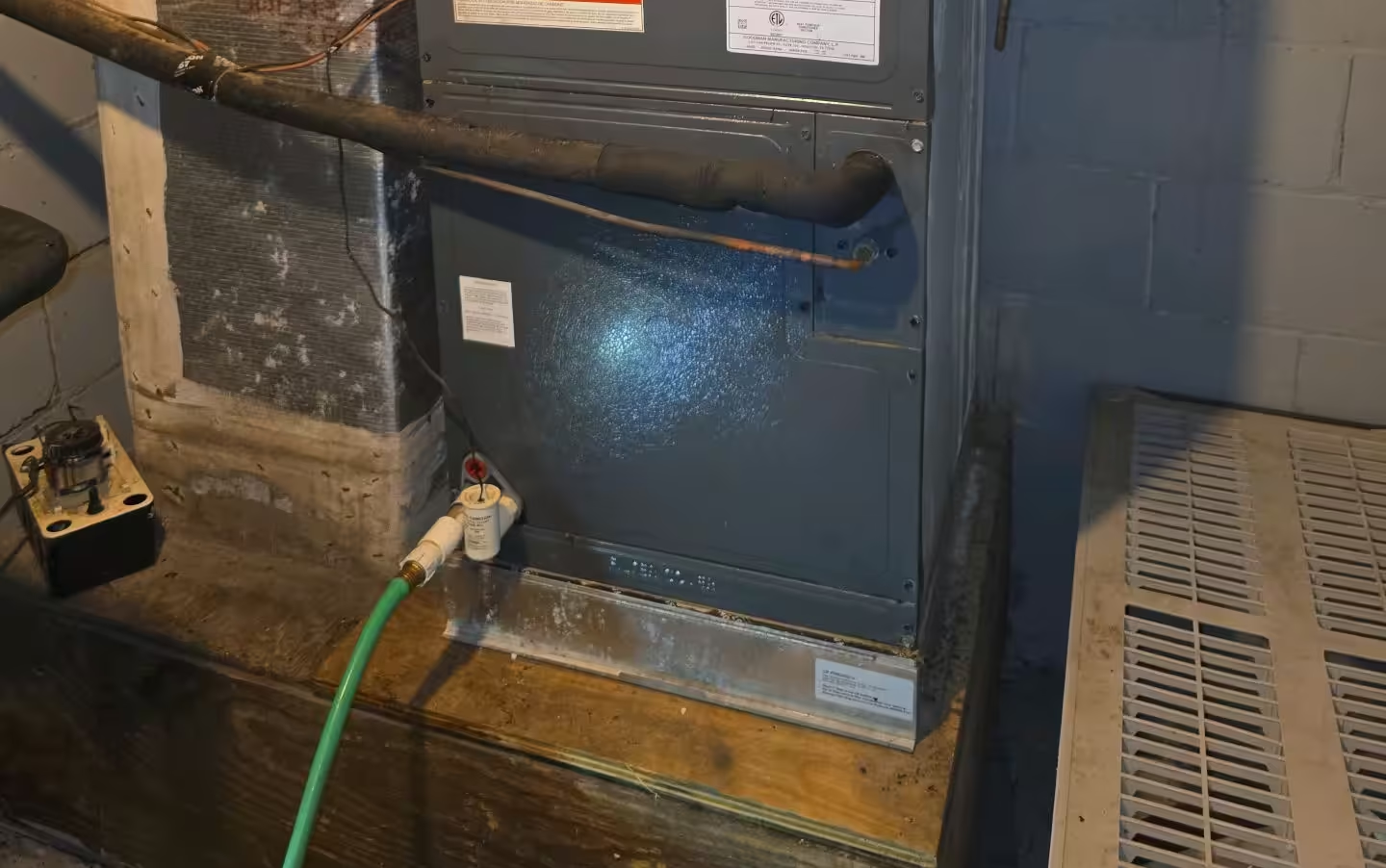
An HVAC float switch is a safety device designed to help protect your home from water damage when a problem develops with the air conditioning system’s condensate drainage.
Air conditioning systems naturally produce water while cooling and dehumidifying indoor air. Normally, this condensation collects in a drain pan and flows safely through a condensate drain line.
If that water cannot drain properly, it can begin to back up or accumulate around the HVAC equipment.
A float switch detects this rising water and can shut down the HVAC system before the condensate overflows and damages the home.
If your air conditioner suddenly stops operating, particularly during hot and humid weather, an activated float switch may be one possible reason.
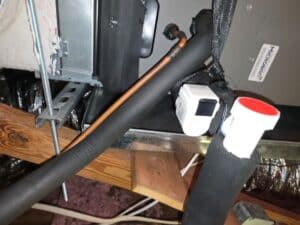
What Is an HVAC Float Switch?
An HVAC float switch is a relatively simple safety device that responds to rising water within the condensate drainage system.
Depending on the installation, the switch may be located:
- On the condensate drain line
- At the primary drain pan
- Inside or near the air handler
- At an auxiliary drain pan beneath the equipment
When water reaches a predetermined level, the float rises and activates the switch.
The switch is connected to the HVAC control circuit and can interrupt system operation.
This prevents the air conditioner from continuing to operate and produce additional condensation while a drainage problem is present.
Why Does an Air Conditioner Need a Float Switch?
Air conditioning systems can produce a significant amount of condensation, especially in Florida’s warm and humid climate.
During cooling operation, warm indoor air passes across the cold evaporator coil.
Moisture in the air condenses on the coil and falls into the condensate collection system.
Normally, this water drains away from the equipment.
Problems develop when something prevents that from happening.
Common causes include:
- Clogged condensate drain lines
- Damaged drain piping
- Improper drainage
- Blocked drain connections
- Damaged drain pans
- Biological accumulation
- Debris within the drainage system
Without some form of protection, water may continue accumulating until it overflows.
A float switch provides an additional layer of protection by stopping HVAC operation when abnormal water accumulation is detected.
How Does an HVAC Float Switch Work?
The basic principle is straightforward.
Under normal conditions, condensate drains away and the float remains in its normal position.
If the drain becomes restricted or water begins accumulating:
- The water level rises.
- The float rises with the water.
- The switch activates.
- The HVAC control circuit is interrupted.
- The air conditioning system shuts down.
Once activated, the system may remain off until the water level drops and the underlying drainage problem is corrected.
The exact configuration varies depending on the type of switch and HVAC installation, but the purpose is the same: help prevent continued condensate production when water is not draining properly.
Where Is the HVAC Float Switch Located?
There is no single location used for every HVAC system.
One common configuration places a float switch directly on the condensate drain piping near the air handler.
Another configuration places the switch in an auxiliary drain pan beneath the equipment.
Some systems may have more than one condensate safety device.
The location often depends on:
- Air handler configuration
- Equipment location
- Drainage design
- Installation requirements
- Available secondary drainage
- Local installation practices
Air handlers installed in attics or above finished living spaces deserve particular attention because an overflow can damage ceilings, insulation, drywall, and other building materials below.
What Is a Drain Line Float Switch?
A drain line float switch is installed at or near the HVAC condensate drain connection.
If the primary drain becomes clogged and water begins backing up, the rising water activates the switch.
The switch then interrupts HVAC operation.
This type of float switch is designed to respond to a drainage backup before water escapes from the condensate collection system.
What Is an Auxiliary Drain Pan Float Switch?
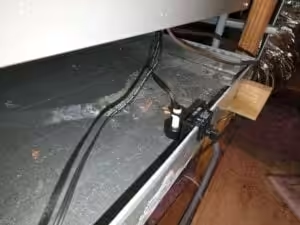
An auxiliary drain pan may be installed beneath an air handler to provide additional protection if water escapes from the primary condensate system.
A float switch can be installed in this pan.
Under normal conditions, the auxiliary pan should generally remain dry.
If water enters the pan, the float rises and shuts down the HVAC system.
Water in an auxiliary drain pan is therefore more than an inconvenience. It can be an indication that the primary condensate system, drain pan, or another HVAC component requires attention.
Why Did My HVAC Float Switch Shut Off My AC?
If a float switch has activated, it generally means water has reached the switch.
A clogged condensate drain is a common cause, but it is not the only possibility.
Potential causes include:
- Clogged condensate drain line
- Drain line obstruction
- Improper drain slope
- Damaged condensate piping
- Disconnected drain components
- Damaged primary drain pan
- Frozen evaporator coil thawing
- Excessive water accumulation
- Another source of water entering an auxiliary pan
The activated switch is often the symptom of another problem, not the actual defect.
The reason water accumulated should be identified.
Can a Clogged Condensate Line Cause the AC to Stop Working?
Yes.
This can sometimes confuse homeowners because the HVAC system may appear to have suddenly experienced an electrical or mechanical failure.
In reality, a properly functioning float switch may have intentionally shut down the system because the condensate drain became clogged.
This is exactly what the safety device is intended to do.
If the system unexpectedly stops cooling and a condensate float switch is present, checking for a condensate drainage problem can be part of determining what happened.
Learn more about common drainage problems in Why Is My HVAC Condensate Line Leaking?
Should There Be Water in My HVAC Float Switch?
It depends on the type and location of the switch.
A switch installed directly in the condensate drainage system may encounter water as part of its operation.
However, water accumulating high enough to activate the switch can indicate that drainage is restricted.
A float switch installed in an auxiliary drain pan is different.
The auxiliary pan normally should not be collecting condensate during routine HVAC operation.
Water in that pan can indicate that the primary drainage system is not functioning properly or that another moisture problem is present.
Will the AC Turn Back On After the Float Switch Dries?
Depending on the switch and HVAC configuration, the system may become capable of operating again after the water level drops and the float returns to its normal position.
However, that does not necessarily mean the underlying problem has been corrected.
For example, a partially clogged condensate line may drain slowly enough for the float to reset.
The HVAC system may begin operating again, produce more condensation, and then shut down when the water backs up again.
Repeated float switch activation is a strong indication that the source of the drainage problem should be identified and corrected.
Can I Reset an HVAC Float Switch?
Many HVAC float switches do not function like a conventional breaker with a manual reset button.
The switch responds to the position of the float.
When the water level drops, the float may return to its normal position and allow the HVAC control circuit to operate again.
However, homeowners should avoid focusing only on resetting or bypassing the switch.
The important question is why the switch activated.
If water accumulated because of a clogged drain, damaged pan, frozen coil, or another HVAC problem, that condition should be corrected.
Should I Bypass My HVAC Float Switch?
No.
A float switch is a safety device intended to reduce the risk of water damage.
Bypassing the switch may allow the HVAC system to continue producing condensation even though the drainage system cannot properly handle the water.
This can result in water overflowing from the equipment.
The potential consequences can be significant when an air handler is located in an attic or above finished living areas.
Instead of bypassing the switch, the reason for its activation should be identified and corrected.
What Happens If an HVAC System Doesn’t Have a Float Switch?
Without an appropriate condensate safety device, a clogged or failed drainage system may allow water to continue accumulating while the air conditioner operates.
Eventually, that water may overflow.
Depending on the location of the equipment, moisture can damage:
- Ceilings
- Drywall
- Insulation
- Flooring
- Cabinetry
- Wood framing
- Interior finishes
- Personal belongings
Repeated moisture exposure can also create conditions conducive to deterioration and microbial growth.
The appropriate condensate protection depends on the equipment configuration and installation requirements.
Why Are Float Switches Important for Attic Air Handlers?
An attic mounted air handler can produce substantial property damage if condensate escapes unnoticed.
Water leaking from attic HVAC equipment may saturate insulation and ceiling materials before becoming visible inside the living space.
By the time staining or dripping appears at the ceiling, moisture may already have affected a larger area above.
A properly installed and functioning float switch can help reduce this risk by shutting down the system before abnormal water accumulation becomes more severe.
Can a Float Switch Go Bad?
Yes.
Like other mechanical and electrical components, float switches can become damaged, improperly positioned, disconnected, or otherwise fail to function as intended.
Potential concerns can include:
- Damaged wiring
- Loose electrical connections
- Stuck float mechanisms
- Improper installation
- Physical damage
- Switches that have been bypassed
- Improper positioning
A float switch should not be assumed to provide protection simply because one is visibly present.
Its installation and condition also matter.
Why Does My Float Switch Keep Tripping?
Repeated float switch activation usually means the underlying water accumulation is recurring.
Potential causes include:
- Partially clogged condensate drains
- Recurring biological accumulation
- Improper drain configuration
- Drainage slope problems
- Evaporator coil freezing
- Damaged drain pans
- Condensation occurring outside the intended drainage system
Repeatedly removing water or allowing the switch to reset without correcting the source can allow the problem to continue.
An HVAC professional can evaluate the drainage system when the cause is not readily apparent.
Can a Dirty Air Filter Cause a Float Switch to Trip?
Potentially, although usually indirectly.
A severely restricted air filter can reduce airflow across the evaporator coil.
Under certain conditions, restricted airflow can contribute to evaporator coil freezing.
When that ice melts, the resulting water can contribute to drainage or overflow problems.
This does not mean a dirty filter is the cause every time a float switch activates.
It illustrates how different HVAC components can affect one another.
Learn more about how dirty HVAC coils and filters affect system performance.
Can a Frozen Evaporator Coil Activate the Float Switch?
It can.
When ice accumulates on an evaporator coil and later melts, a significant amount of water may enter the condensate system.
If the drainage system cannot adequately manage that water or melting occurs outside the intended collection area, water may reach a condensate safety switch.
The frozen coil itself should also be investigated because freezing can result from airflow problems, refrigeration related conditions, or other HVAC defects.
Does a Float Switch Prevent Every HVAC Water Leak?
No.
A float switch provides valuable protection, but it cannot prevent every possible source of HVAC related moisture.
For example, water may originate from:
- Damaged drain piping downstream of the switch
- Condensation on ductwork
- Damaged refrigerant line insulation
- Cabinet condensation
- Cracked or leaking components
- Sources unrelated to the HVAC system
The effectiveness of a float switch also depends on its location, installation, and condition.
It should be considered one component of the overall condensate management system, not a guarantee against water damage.
What Do Home Inspectors Look for With HVAC Float Switches?
During a home inspection, readily accessible condensate drainage components and safety devices may be visually evaluated.
Depending on the installation, an inspector may observe:
- Presence of accessible float switches
- Float switch location
- Visible condition
- Damaged or disconnected wiring
- Evidence of bypassing
- Auxiliary drain pan condition
- Water within the auxiliary pan
- Condensate drain configuration
- Active leakage
- Moisture staining
- Corrosion or deterioration
- Other visible drainage concerns
Home inspectors do not generally dismantle HVAC equipment or perform invasive testing of concealed condensate components.
The float switch is evaluated as part of the overall HVAC and condensate drainage system.
When Should an HVAC Professional Evaluate the Float Switch or Drainage System?
Professional HVAC evaluation may be appropriate when:
- The float switch repeatedly shuts down the system
- Water is present in an auxiliary drain pan
- The condensate drain repeatedly clogs
- Water is leaking around the air handler
- The evaporator coil is freezing
- The float switch appears damaged
- The switch has been bypassed
- Drainage components appear improperly installed
- The HVAC system will not operate
- The source of water accumulation is uncertain
The goal should be to identify and correct why water reached the float switch, rather than simply restoring HVAC operation.
The Bottom Line
So, how does an HVAC float switch work?
The float switch monitors for abnormal water accumulation within the HVAC condensate drainage system or auxiliary drain pan.
When the water rises, the float activates the switch and interrupts the HVAC control circuit. This shuts down the air conditioning system and prevents it from continuing to produce condensation while a drainage problem is present.
If a float switch shuts down your AC, that can actually mean the safety device is doing exactly what it was designed to do.
The important next step is determining why the water accumulated.
Clogged condensate drains, damaged drain pans, drainage problems, frozen evaporator coils, and other conditions can all contribute.
A float switch is a relatively small HVAC component, but particularly in Florida homes with attic mounted air handlers, it can provide important protection against potentially significant water damage.
For more information about condensate drainage, air handlers, cooling performance, and other common HVAC concerns, visit the Tier-1 Pro HVAC Knowledge Center.