
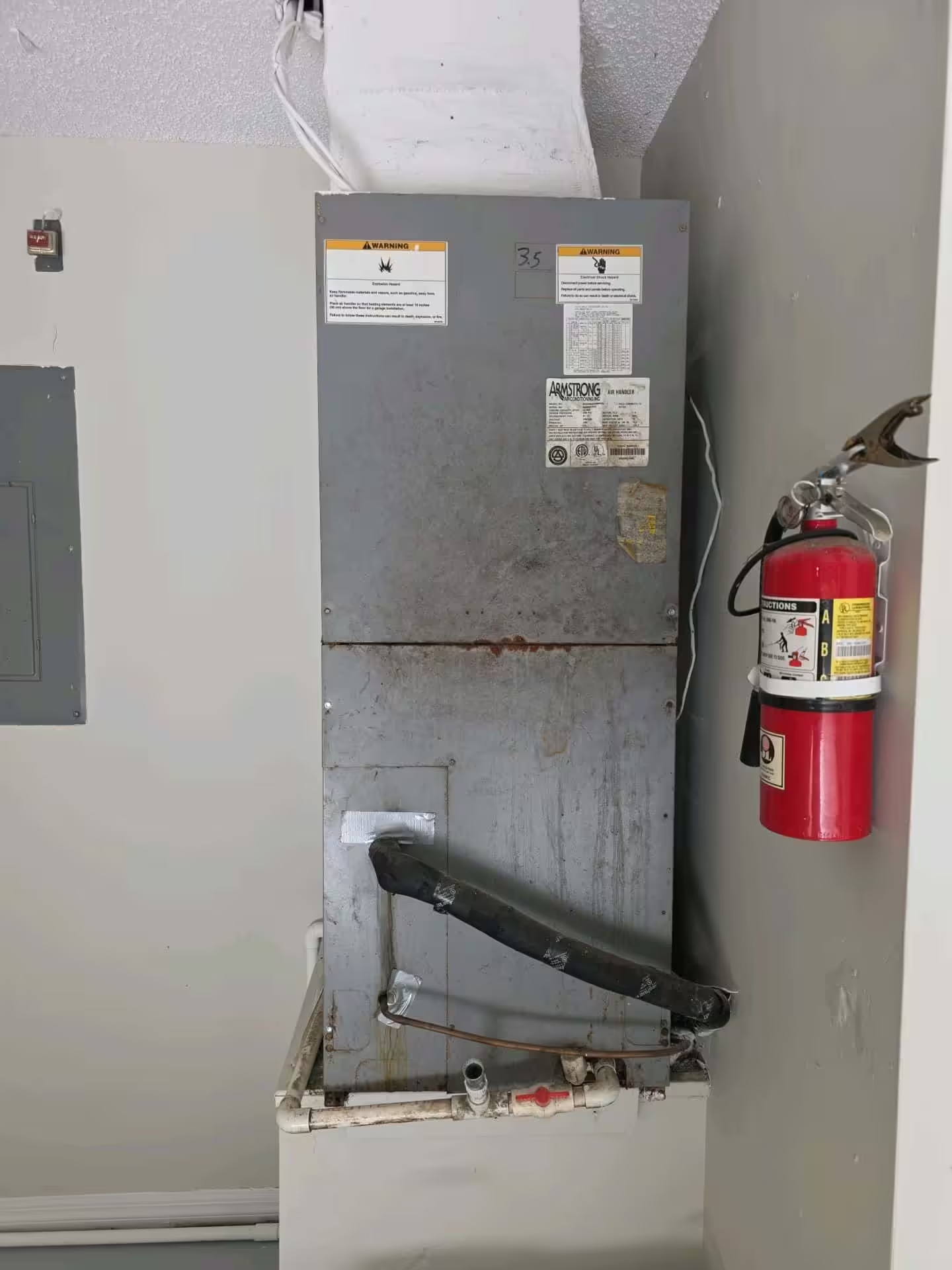
Your home’s HVAC system plays a major role in comfort, indoor air quality, humidity control, and energy use. For home buyers, it can also represent one of the more significant mechanical systems to understand before purchasing a property.
During a home inspection, HVAC equipment is evaluated for general operation and visible conditions at the time of the inspection. While a home inspection is not a substitute for specialized HVAC diagnostics, it can identify performance concerns, visible defects, aging equipment, and conditions that may warrant further evaluation.
Understanding the basics of your HVAC system can help you make better decisions about maintenance, repairs, and when professional service may be needed.
What Is an HVAC System?
HVAC stands for Heating, Ventilation, and Air Conditioning.
In Central Florida homes, the system commonly consists of an indoor air handler or furnace and an outdoor condenser or heat pump. These components work together with the thermostat and duct system to heat or cool the home and circulate conditioned air.
Major components may include:
- Indoor air handler or furnace
- Evaporator coil
- Outdoor condenser or heat pump
- Compressor
- Blower assembly
- Thermostat
- Supply and return ductwork
- Air filter
- Refrigerant lines
- Condensate drain system
- Float switch
A problem with any of these components can affect comfort, airflow, cooling performance, humidity, or system efficiency.
How Does an HVAC System Cool Your Home?
An air conditioning system doesn’t simply create cold air. It removes heat and moisture from indoor air and transfers that heat outside.
Warm indoor air is drawn through the return system and passes across the evaporator coil. Refrigerant within the system absorbs heat from the air, and the blower distributes the conditioned air back through the home’s supply ducts.
The refrigerant then carries the absorbed heat to the outdoor equipment, where it is released.
When part of this process isn’t functioning properly, the HVAC system may continue operating without adequately cooling the home.
If your system appears to be operating but the home isn’t getting cooler, see our guide to Why Is My HVAC Running but Not Blowing Cold Air?
What Do Home Inspectors Check on an HVAC System?
During a home inspection, the inspector typically operates the HVAC equipment using normal controls and evaluates readily accessible components and observable system performance.
Depending on the system and conditions present, observations may include:
- Thermostat operation
- Heating and cooling response
- Supply and return air temperatures
- Accessible indoor equipment
- Outdoor HVAC equipment
- Visible refrigerant lines
- Condensate drainage components
- Accessible supply and return ductwork
- Air filters
- Visible electrical connections and disconnects
- General airflow at representative registers
- Visible deterioration, damage, corrosion, or other deficiencies
The objective is to identify observable conditions and indications that the system may not be functioning as intended.
A standard home inspection does not typically include specialized HVAC diagnostic procedures such as refrigerant pressure testing, internal component testing, system charging, or invasive evaluation of concealed components.
What Is an HVAC Temperature Differential?
One observation that can provide information about cooling performance is the difference between the temperature of the air entering the HVAC system and the conditioned air leaving it.
This is commonly called the temperature differential or temperature split. Learn more about HVAC temperature differential and what the readings can indicate.
An abnormal temperature difference can indicate that further investigation may be appropriate. However, temperature differential alone cannot diagnose the cause of an HVAC problem.
Airflow, humidity, outdoor conditions, equipment configuration, operating time, filter condition, ductwork, and other factors can influence the measurement.
What Are Common HVAC Problems Found During Home Inspections?
HVAC deficiencies range from relatively minor maintenance concerns to conditions requiring professional repair or further evaluation.
Some commonly observed conditions include:
Dirty or Missing Air Filters
A dirty filter can restrict airflow and place additional stress on HVAC equipment. Missing filters can allow dust and debris to accumulate within the system.
Condensate Drainage Problems
Air conditioning systems remove moisture from indoor air, producing condensation that must drain properly.
Clogged, damaged, improperly configured, or leaking condensate components can contribute to water damage and microbial growth around HVAC equipment which can present staining on ceiling, walls or floors.
Damaged or Disconnected Ductwork
Conditioned air can be lost when ductwork is damaged, deteriorated, poorly connected, or disconnected.
In Florida attics, a disconnected supply duct can release conditioned air directly into the attic rather than the living space.
Corrosion and Deterioration
Corrosion may be observed on drain pans, indoor equipment, outdoor equipment, refrigerant components, or other areas.
The significance depends on the location and extent of deterioration.
Poor Cooling Performance
An HVAC system may operate without adequately cooling the home.
Possible causes range from airflow restrictions and thermostat settings to coil, condenser, refrigerant, ductwork, or mechanical problems.
Learn more about why an HVAC system may be running but not blowing cold air.
Aging Equipment
HVAC equipment does not have a predetermined expiration date, but age becomes increasingly important when evaluating an older system.
Maintenance history, installation quality, operating conditions, equipment type, usage, and previous repairs can all affect service life.
Age alone does not determine whether an HVAC system is defective, but buyers should consider the potential cost of future repair or replacement when purchasing a home with older equipment.
How Can You Determine the Age of an HVAC System?
HVAC equipment typically includes a manufacturer’s data plate containing the model and serial number.
Depending on the manufacturer, information within the serial number can often be used to determine the equipment’s manufacturing date.
Understanding equipment age can be particularly useful during a real estate transaction because it gives buyers additional context when evaluating the home’s major mechanical systems.
The manufacture date should not be confused with the exact installation date. Equipment may have been manufactured before it was installed.
How Long Do HVAC Systems Last in Florida?
There is no single lifespan that applies to every HVAC system.
Florida systems experience demanding operating conditions, including prolonged cooling seasons, high humidity, heat, and frequent operation.
Equipment life can be influenced by:
- Installation quality
- Maintenance history
- Equipment type and quality
- Usage
- Indoor and outdoor conditions
- Airflow
- Duct system condition
- Previous repairs
- Exposure to moisture and corrosion
An older HVAC system that is operating properly should not automatically be considered defective solely because of its age. However, buyers may want to budget for future repairs or replacement as equipment ages.
Why Is There Water Around My Air Handler?
Moisture around an air handler should not simply be assumed to be normal.
Potential sources can include condensate drainage problems, a damaged or overflowing drain pan, frozen evaporator coils, sweating components, damaged insulation, or other conditions.
Because HVAC systems routinely produce condensation during cooling operation, proper condensate management is particularly important in Florida.
Visible moisture, staining, or deterioration around HVAC equipment should be investigated to determine the source.
What Does a Frozen AC Coil Mean?
Ice on an evaporator coil or refrigerant line can indicate that the system is not operating normally.
Potential contributing conditions include restricted airflow, dirty filters, dirty coils, blower problems, or refrigeration system issues.
Allowing the ice to melt may temporarily restore airflow, but it does not necessarily correct the underlying cause.
Repeated freezing warrants professional HVAC evaluation.
Does Poor HVAC Performance Mean the System Needs Replacement?
Not necessarily.
Poor performance can result from maintenance issues, airflow restrictions, damaged ductwork, electrical problems, component failures, refrigeration system problems, or other conditions.
Some issues may be repairable without replacing the entire system. General maintenance, such as cleaning your condenser coils can help prolong the life of your system.
The appropriate recommendation depends on the equipment’s condition, age, repair history, diagnosis, and cost of repair compared with replacement.
A qualified HVAC professional can perform specialized diagnostic testing and provide repair or replacement recommendations when needed.
When Should an HVAC Professional Be Called?
Further evaluation may be appropriate when an HVAC system demonstrates conditions such as:
- Inadequate heating or cooling
- Weak or significantly reduced airflow
- Repeatedly frozen coils
- Water leakage around equipment
- Unusual noises or odors
- Outdoor equipment that does not operate properly
- Electrical problems
- Significant corrosion or deterioration
- Damaged HVAC components
- Continuous operation without reaching the thermostat setting
- Significant differences in comfort between areas of the home
These symptoms do not necessarily identify the underlying problem. Professional diagnostic testing may be necessary to determine the cause.
HVAC Systems and Home Inspections
For home buyers, an HVAC system deserves careful attention because repairs and replacement can represent a significant expense.
A home inspection provides valuable information about the system’s observable condition and operation at a specific point in time. When concerns are identified, additional evaluation by a qualified HVAC professional can provide more detailed information before important purchasing or repair decisions are made.
Homeowners can also benefit from understanding their HVAC system and recognizing changes in cooling performance, airflow, drainage, noise, or other operating characteristics.
The Bottom Line
Your HVAC system is a collection of interconnected components working together to heat, cool, dehumidify, and distribute air throughout your home.
A system that turns on is not necessarily a system that is performing properly.
Understanding equipment age, airflow, temperature differential, condensate drainage, ductwork, and common HVAC deficiencies can help homeowners and buyers recognize when something deserves closer attention.
For more information about specific HVAC conditions, cooling performance, equipment age, airflow, condensate systems, and issues commonly identified during home inspections, explore the Tier-1 Pro HVAC Knowledge Center.