
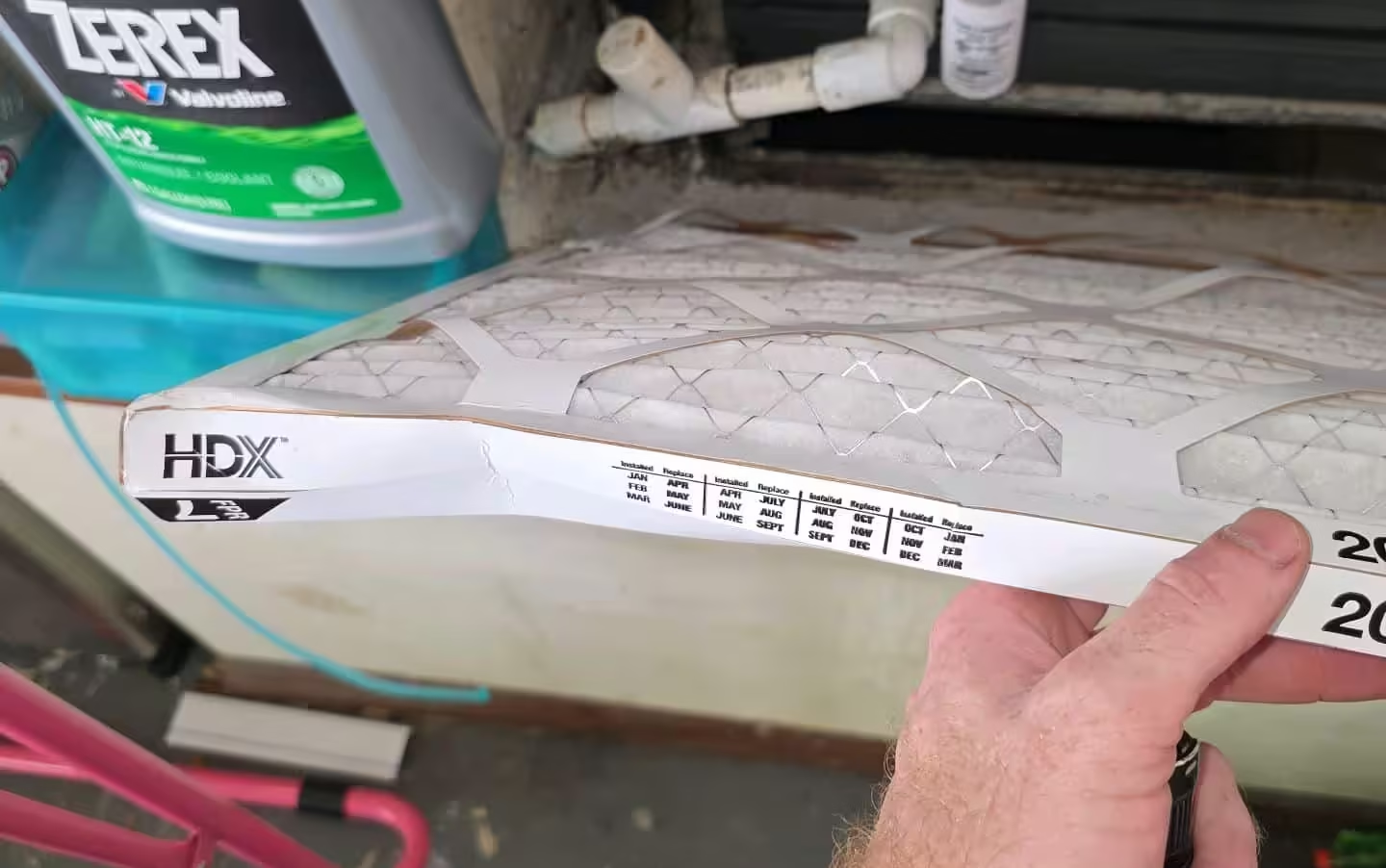
Dirty HVAC coils and air filters are common conditions that can affect how well a heating and cooling system operates.
An HVAC system depends on adequate airflow and effective heat transfer. When an air filter becomes heavily restricted or dirt accumulates on the evaporator or condenser coils, the system may have to work harder to heat or cool the home.
In some cases, these conditions can contribute to poor cooling performance, frozen coils, longer operating cycles, increased energy use, and additional stress on HVAC equipment.
Understanding the relationship between airflow, filters, and HVAC coils can help homeowners recognize maintenance needs before they develop into larger problems.
Why Is Airflow Important to an HVAC System?
Central HVAC systems continuously move air through the home.
During cooling operation, the air handler pulls warm indoor air through the return ductwork. That air passes through the HVAC filter and across the evaporator coil before being distributed back through the home’s supply ducts.
Adequate airflow is necessary for this process to work properly.
If airflow becomes significantly restricted, the HVAC system may not be able to transfer heat as effectively or distribute conditioned air throughout the home.
Several conditions can restrict airflow, including:
- Dirty air filters
- Dirty evaporator coils
- Blocked return openings
- Damaged or restricted ductwork
- Blower problems
- Closed or obstructed registers
- Improperly sized or installed filters
Dirty filters and coils are therefore only part of the overall airflow system.
What Happens When an HVAC Filter Gets Dirty?
The HVAC filter is designed to capture airborne particles before they enter the air handler and accumulate on HVAC components.
As the filter collects dust and debris, resistance to airflow gradually increases.
A filter that becomes heavily restricted can reduce the amount of air moving through the HVAC system.
Potential effects can include:
- Reduced airflow from supply registers
- Poor heating or cooling performance
- Longer HVAC operating cycles
- Uneven temperatures throughout the home
- Increased stress on the blower
- Evaporator coil freezing
- Increased energy consumption
The severity of these effects depends on how restricted the filter becomes and the overall design and condition of the HVAC system.
Can a Dirty Air Filter Cause the AC Not to Cool?
Yes.
A severely restricted air filter can contribute to poor cooling performance by limiting the amount of indoor air passing across the evaporator coil.
The HVAC system may still operate, and air may still come from the registers, but the system may struggle to maintain the desired indoor temperature.
However, a dirty filter is only one possible cause of an air conditioner that isn’t cooling properly.
Dirty coils, duct leakage, blower problems, thermostat conditions, refrigerant related problems, outdoor equipment defects, and other issues can produce similar symptoms. Airflow conditions can also includnece the HVAC temperature differential measured between the supply and return air.
If your HVAC system is operating but the home isn’t cooling adequately, learn more in Why Is My HVAC Running but Not Blowing Cold Air?
Can a Dirty Air Filter Cause the Evaporator Coil to Freeze?
Yes, restricted airflow can contribute to evaporator coil freezing.
During cooling operation, warm indoor air must continuously move across the cold evaporator coil.
When airflow becomes significantly restricted, the coil can become colder than intended. Under certain conditions, moisture that normally condenses and drains from the coil can begin to freeze.
Ice may then accumulate on the coil and surrounding refrigerant components.
A frozen evaporator coil should not simply be assumed to be caused by a dirty filter. Refrigerant related conditions, blower problems, dirty coils, and other HVAC defects can also contribute to freezing.
If the coil repeatedly freezes, professional HVAC evaluation is recommended.
What Does the Evaporator Coil Do?
The evaporator coil is located inside or adjacent to the indoor air handler.
During cooling operation, refrigerant flowing through the coil absorbs heat from indoor air passing across it.
At the same time, moisture from the air condenses on the cold coil and drains through the HVAC condensate system.
For the evaporator coil to operate effectively, air must be able to move across its surface.
A layer of dust, dirt, or other accumulation on the coil can interfere with both airflow and heat transfer.
What Happens When an Evaporator Coil Gets Dirty?
A dirty evaporator coil can make it more difficult for the HVAC system to remove heat from indoor air.
Depending on the severity of the contamination, a dirty coil may contribute to:
- Reduced cooling performance
- Restricted airflow
- Longer system operating cycles
- Increased energy consumption
- Evaporator coil freezing
- Increased condensation related concerns
- Additional stress on HVAC equipment
The evaporator coil is often located inside the air handler cabinet and may not be readily visible to a homeowner.
This is one reason regular filter maintenance is important. The filter helps reduce the amount of dust and debris reaching the indoor coil.
Can a Dirty Evaporator Coil Cause Water Leaks?
A dirty evaporator coil does not necessarily cause a condensate leak by itself, but conditions affecting the coil can contribute to moisture problems.
For example, restricted airflow can contribute to coil freezing. When the accumulated ice eventually melts, the resulting water may exceed what the drainage system can properly manage or may travel outside the intended collection area.
Dirt and biological accumulation can also contribute to condensate drainage problems.
If water is present around the air handler, the actual source should be identified rather than assuming the coil is responsible.
Learn more about common moisture problems in Why Is My HVAC Condensate Line Leaking?
What Does the Outdoor Condenser Coil Do?
The condenser coil is located within the outdoor HVAC equipment.
During air conditioning operation, refrigerant carries heat removed from inside the home to the outdoor unit.
The condenser coil and outdoor fan allow that heat to transfer into the outside air.
Adequate airflow through the condenser coil is essential for effective heat transfer.
Unlike the indoor evaporator coil, the outdoor condenser coil is continuously exposed to harsh environmental conditions.
What Happens When the Condenser Coil Gets Dirty?
Outdoor condenser coils can accumulate:
- Grass clippings
- Leaves
- Dirt
- Dust
- Pollen
- Lint
- Vegetation
- Landscaping debris
When enough material accumulates against the coil, airflow can become restricted.
The HVAC system may then have more difficulty releasing heat outdoors.
This can contribute to reduced cooling performance, longer operating cycles, increased energy consumption, and additional stress on the equipment.
The outdoor unit should be kept reasonably clean and free from significant airflow restrictions.
For basic homeowner maintenance guidance, see Can I Clean My AC Condenser Coils Myself?
What’s the Difference Between a Dirty Filter and a Dirty Coil?
Both conditions can affect HVAC performance, but they do so in somewhat different ways.
A dirty air filter primarily restricts the amount of air moving through the HVAC system.
A dirty evaporator coil can restrict airflow while also interfering with heat transfer between the indoor air and refrigerant.
A dirty condenser coil primarily interferes with airflow and the system’s ability to release heat outdoors.
These conditions can also influence one another.
For example, consistently operating an HVAC system with a missing or poorly maintained filter may allow more contamination to accumulate on the indoor evaporator coil.
Can a Dirty HVAC System Increase My Electric Bill?
Potentially.
When airflow or heat transfer is restricted, an HVAC system may need to operate longer to reach the thermostat setting.
Longer operating times generally mean greater electricity consumption.
However, high electric bills can have many causes, including:
- Outdoor temperatures
- Thermostat settings
- Building insulation
- Air leakage
- Duct leakage
- Equipment efficiency
- HVAC system condition
- Household usage
- Pool equipment and other electrical loads
A sudden increase in energy consumption should therefore not automatically be attributed to a dirty filter or coil.
How Often Should You Change Your HVAC Filter?
There is no single replacement schedule appropriate for every home.
How frequently an HVAC filter needs attention depends on several factors, including:
- Filter type
- Filter size
- Manufacturer recommendations
- HVAC operating time
- Pets
- Household occupancy
- Indoor air quality conditions
- Construction or renovation activity
- Dust and environmental conditions
Rather than relying solely on a fixed calendar interval, homeowners should periodically inspect the filter and replace or clean it as appropriate for the particular system and filter.
A filter that is visibly loaded with dust and debris should not be ignored simply because it has not reached a predetermined replacement date.
Does a More Expensive HVAC Filter Work Better?
Not necessarily for every HVAC system.
Higher efficiency filters may capture smaller airborne particles, but they can also create greater resistance to airflow.
The appropriate filter depends on the HVAC equipment, filter housing, system design, and airflow requirements.
Installing a highly restrictive filter in a system that was not designed for it can potentially reduce airflow.
Homeowners should follow equipment and filter manufacturer recommendations or consult a qualified HVAC professional when selecting a filter.
The goal is to provide appropriate filtration without unnecessarily restricting airflow through the HVAC system.
Can I Clean My HVAC Evaporator Coil Myself?
The indoor evaporator coil is generally less suitable for homeowner cleaning than the accessible exterior of an outdoor condenser coil.
Evaporator coils may be located inside HVAC cabinets and near electrical, drainage, and refrigeration components.
Accessing or cleaning the coil may require opening equipment or removing panels.
Improper cleaning can damage delicate coil fins, electrical components, insulation, drain components, or other parts of the HVAC system.
Basic filter maintenance is appropriate for many homeowners, but significant evaporator coil contamination is generally better evaluated and cleaned by a qualified HVAC professional.
Can I Clean the Outdoor Condenser Coil Myself?
Basic outdoor condenser maintenance can often be performed by homeowners when appropriate precautions are taken.
This can include keeping vegetation away from the equipment, removing loose debris, and gently cleaning accessible portions of the coil.
Pressure washers and aggressive cleaning methods should be avoided because the thin condenser fins can be easily damaged.
For detailed guidance, see Can I Clean My AC Condenser Coils Myself?
What Do Home Inspectors Look for With HVAC Filters and Coils?
During a home inspection, readily accessible HVAC components are visually evaluated and the system is operated using normal controls when conditions permit.
An inspector may identify conditions such as:
- Dirty or missing air filters
- Improperly installed filters
- Significant visible coil contamination
- Restricted condenser coils
- Vegetation around outdoor equipment
- Damaged condenser fins
- Weak or inconsistent airflow
- Frozen refrigerant components
- Condensate drainage concerns
- Poor heating or cooling performance
Some evaporator coils are not readily accessible during a standard home inspection and may be enclosed within the HVAC equipment.
A home inspection is not the same as an HVAC cleaning or service evaluation. When significant contamination or performance concerns are identified, professional HVAC servicing may be recommended.
When Should an HVAC Professional Evaluate Dirty Coils or Airflow Problems?
Professional HVAC evaluation may be appropriate when:
- The evaporator coil is visibly contaminated
- The coil repeatedly freezes
- Cooling performance is poor
- Airflow remains weak after replacing a dirty filter
- The condenser coil is heavily contaminated
- The HVAC system runs for unusually long periods
- Water is leaking around the air handler
- Unusual noises are present
- The system frequently shuts down
- Cleaning and basic maintenance do not improve performance
An HVAC professional can determine whether contamination is actually contributing to the problem or whether another mechanical, airflow, electrical, or refrigeration condition is present.
The Bottom Line
Dirty HVAC coils and filters can affect system performance by restricting airflow and interfering with heat transfer.
A dirty filter can reduce the amount of air moving through the system, while dirty evaporator and condenser coils can make it more difficult for the HVAC system to absorb or release heat effectively.
Basic filter maintenance and keeping the outdoor condenser free from significant debris are relatively simple ways homeowners can help maintain their HVAC systems.
However, poor cooling performance should not automatically be blamed on a dirty filter or coil. HVAC systems contain multiple components that must work together properly, and similar symptoms can have several different causes.
If airflow remains poor, coils repeatedly freeze, water leakage develops, or the system is not heating or cooling properly, evaluation by a qualified HVAC professional may be appropriate.
For more information about HVAC airflow, air handlers, condensers, cooling performance, and common conditions identified during home inspections, visit the Tier-1 Pro HVAC Knowledge Center.