
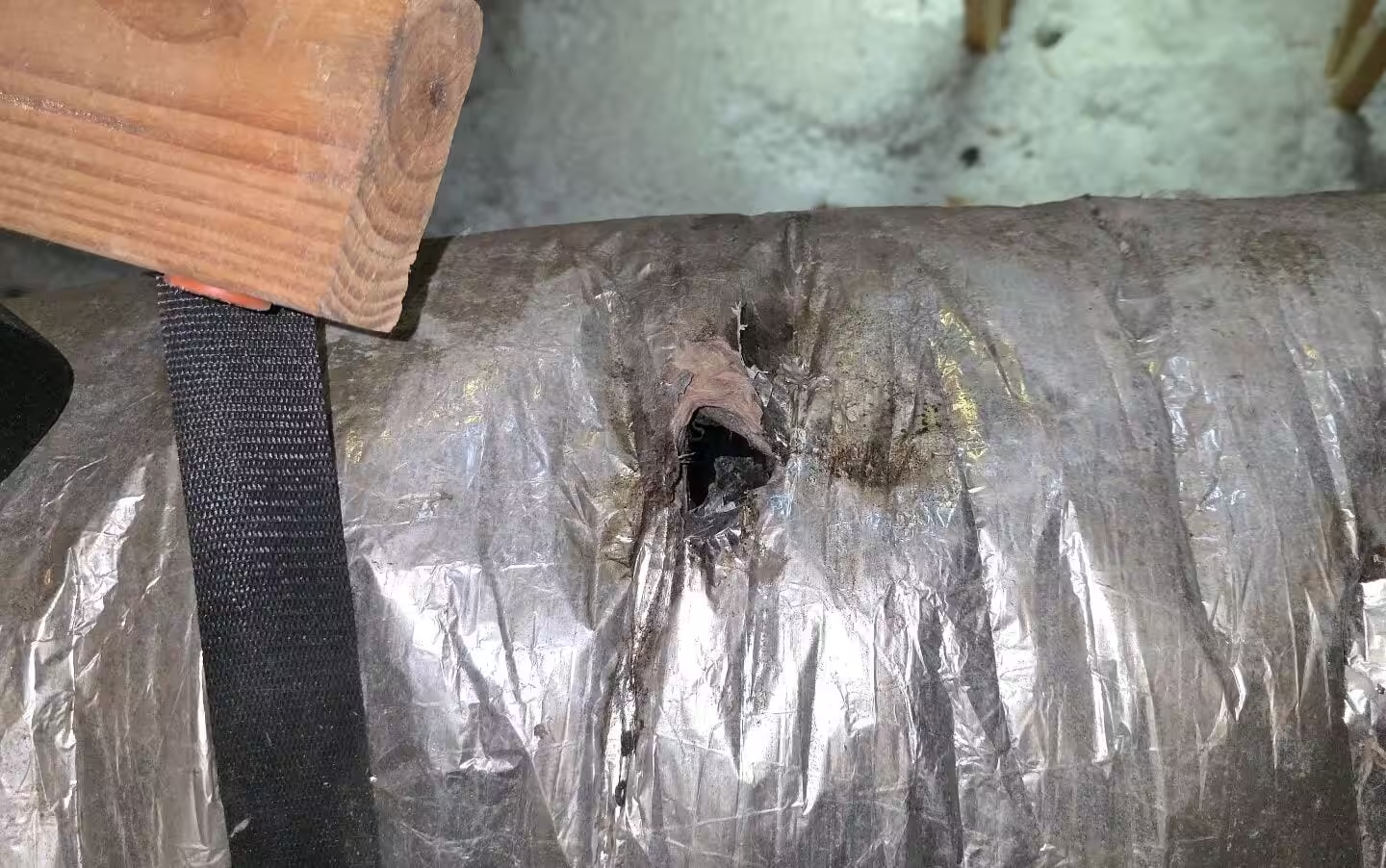
Your HVAC system can be operating properly at the equipment while still struggling to keep parts of your home comfortable. One possible reason is damaged HVAC ductwork.
Ductwork carries conditioned air from the HVAC system to different areas of the home and returns indoor air back to the equipment. When ducts become damaged, disconnected, crushed, poorly supported, or inadequately sealed, airflow and system performance can be affected.
In Central Florida homes, much of the ductwork is commonly located in attics, where problems may go unnoticed until homeowners experience uneven temperatures, weak airflow, higher energy consumption, or visible condensation.
What Does HVAC Ductwork Do?
Ductwork serves as the distribution system for a central HVAC system.
Most ducted systems have two basic sides:
Supply ductwork carries conditioned air from the HVAC equipment to supply registers throughout the home. Learn more about proper HVAC temperature differentials.
Return ductwork carries indoor air back to the air handler so it can be conditioned again.
For the system to operate effectively, ducts should be appropriately sized, connected, supported, insulated where necessary, and reasonably airtight.
Problems anywhere within that distribution system can affect how conditioned air reaches the living areas.
What Are Common Types of HVAC Ductwork?
Residential duct systems can include several different materials and configurations.
Common examples include:
- Flexible ductwork
- Fiberglass duct board
- Sheet metal ducts
- Insulated metal ducts
- Combination systems using multiple materials
Flexible insulated ductwork is particularly common in residential attic installations.
Each type has different installation requirements and potential failure points.
What Causes HVAC Ductwork to Become Damaged?
Ductwork can become damaged for many reasons.
Common causes include:
- Age and deterioration
- Improper installation
- Inadequate support
- Attic activity
- Pest or animal damage
- Previous HVAC repairs
- Poor connections
- Excessive bending or compression
- Moisture exposure
- Damaged exterior insulation
- Construction activity
New ductwork can also have problems when it is improperly installed.
Age alone does not determine whether a duct system is functioning correctly.
What Happens When HVAC Ductwork Is Damaged?
The effect depends on the location and severity of the damage.
Damaged ductwork can potentially contribute to:
- Reduced airflow
- Uneven room temperatures
- Longer HVAC operating cycles
- Loss of conditioned air
- Increased energy consumption
- Excessive attic cooling
- Poor heating or cooling performance
- Condensation concerns
- Air entering the system from unintended locations
A severely disconnected supply duct, for example, may discharge a significant amount of conditioned air directly into an attic instead of the intended room.
A damaged return duct can create a different problem by allowing the system to pull air from an attic or other unintended area.
What Does Disconnected HVAC Ductwork Mean?
Duct sections are connected to air handlers, plenums, distribution boxes, boots, and other duct components.
These connections can occasionally separate or become inadequately secured.
When a supply duct becomes disconnected, conditioned air may escape before reaching the intended room.
Homeowners may notice:
- Weak or no airflow from a register
- A room that stays warmer than surrounding rooms
- Longer cooling cycles
- Unusually cool conditions around attic ductwork
- Increased energy usage
Disconnected ductwork should be properly reconnected and sealed rather than relying on temporary or makeshift repairs.
Why Is Sagging Flexible Ductwork a Problem?
Flexible ductwork requires proper support.
When flex duct is inadequately supported, long sections can sag between support points.
Excessive sagging can increase resistance to airflow and reduce the effective interior diameter of the duct.
This can make it more difficult for conditioned air to move through the system.
Significant sagging can also place additional stress on duct connections.
Some curvature is normal and often unavoidable. The concern is excessive sagging, compression, or routing that noticeably restricts the duct.
Why Is Compressed or Kinked Ductwork a Problem?
Flexible ductwork performs best when it is appropriately extended and routed without unnecessary restrictions.
Sharp bends, compression, and kinks can restrict airflow.
This is similar to partially pinching a hose: air can still move through the duct, but the restriction can reduce the amount that reaches the intended area.
Compressed ducts are commonly found where ductwork is:
- Routed through tight attic spaces
- Forced around framing
- Installed beneath other components
- Improperly supported
- Excessively long
- Crushed by stored items or attic activity
Significant restrictions may contribute to poor airflow at individual registers.
Can Damaged Ductwork Cause One Room to Be Hotter Than Another?
Yes.
Damaged or restricted ductwork is one possible reason certain rooms don’t cool as well as others.
For example, a bedroom with a partially disconnected or compressed supply duct may receive significantly less conditioned air than nearby rooms.
However, uneven temperatures can have many other causes, including:
- HVAC balancing
- Improper duct sizing
- Insulation deficiencies
- Solar exposure
- Air leakage
- Window performance
- Closed registers
- HVAC equipment performance
- Building design
Ductwork should therefore be considered as part of the overall HVAC and building system.
Can Damaged Ductwork Cause My AC Not to Cool Properly?
Yes, particularly when the damage is significant.
An HVAC system can produce properly conditioned air at the equipment but still fail to effectively deliver that air throughout the home.
If conditioned air is escaping into the attic or airflow is severely restricted, the system may operate for longer periods while struggling to reach the thermostat setting.
This is one reason poor cooling performance does not automatically mean the condenser or air handler has failed.
If your system is operating but the home isn’t adequately cooling, see Why Is My HVAC Running but Not Blowing Cold Air?
Can Leaking Ductwork Increase My Electric Bill?
Potentially.
When conditioned air escapes from supply ductwork before reaching the living space, some of the energy used to cool that air is wasted.
The HVAC system may then need to operate longer to maintain the desired indoor temperature.
The amount of energy loss depends on factors such as:
- Location of the ductwork
- Severity of leakage
- Amount of damaged ductwork
- Attic temperature
- HVAC operating time
- Overall system condition
Duct leakage is only one possible contributor to high electricity usage, but significant leakage can reduce overall system efficiency.
What Happens When Return Ductwork Is Damaged?
Return duct problems can be particularly important because the return side of the system operates under negative pressure.
Instead of conditioned air leaking outward, openings in return ductwork may allow surrounding air to be pulled into the HVAC system.
If return ducts are located in a hot attic, damaged connections or openings may allow hot, humid, dusty attic air to enter the system.
This can potentially affect:
- HVAC performance
- Indoor comfort
- Filtration
- Humidity control
- Equipment operation
Return duct connections should therefore remain appropriately sealed and intact.
Can Damaged Ductwork Cause Condensation?
Yes, under certain conditions.
Conditioned air traveling through ductwork can be substantially cooler than the surrounding attic air.
Insulation around the ducts helps prevent the exterior duct surface from becoming cold enough for condensation to develop.
When duct insulation is damaged, missing, compressed, or improperly sealed, cold surfaces may become exposed to warm, humid air.
Moisture can then form on the exterior of the ductwork.
In Central Florida’s humid climate, persistent duct condensation can contribute to:
- Wet insulation
- Ceiling staining
- Moisture damaged materials
- Deteriorated duct components
- Conditions conducive to microbial growth
The source of moisture should be properly identified because condensation can sometimes be mistaken for a plumbing, roof, or condensate drainage leak.
What Does Damaged Duct Insulation Look Like?
Visible duct insulation problems may include:
- Torn exterior jackets
- Missing insulation
- Exposed inner duct material
- Open seams
- Compressed insulation
- Loose insulation
- Moisture staining
- Deteriorated exterior coverings
Small cosmetic imperfections do not necessarily indicate significant duct failure.
The greater concern is damage that affects insulation performance, exposes interior components, permits air leakage, or allows condensation to develop.
Can Animals Damage HVAC Ductwork?
Yes.
Rodents and other animals can damage flexible ductwork and insulation in attics and crawlspaces.
Damage may include:
- Torn exterior coverings
- Damaged insulation
- Openings in flexible ducts
- Contamination
- Displaced ductwork
When animal related damage is present, both the duct condition and the underlying pest issue should be addressed.
Depending on the extent of contamination or physical damage, repair or replacement of affected duct sections may be appropriate.
Is Duct Tape the Correct Way to Repair HVAC Ductwork?
Despite its name, common household duct tape is generally not the preferred material for permanent HVAC duct repairs.
HVAC duct systems use products and connection methods specifically intended for air distribution systems.
Depending on the duct material and type of repair, this may include approved mastics, tapes, mechanical fasteners, collars, straps, and other components.
The appropriate repair method depends on the type of ductwork and the location of the damage.
Significant duct repairs should be completed using materials and methods appropriate for the HVAC system.
Does Damaged Ductwork Need to Be Replaced?
Not always.
Some duct deficiencies can be repaired without replacing the entire duct system.
Examples may include:
- Resealing a connection
- Correcting inadequate support
- Repairing localized insulation damage
- Reconnecting a separated duct
- Correcting minor routing problems
More extensive replacement may be appropriate when ductwork is significantly deteriorated, contaminated, crushed, improperly sized, extensively damaged, or otherwise unsuitable for continued use.
A qualified HVAC contractor can determine whether localized repair or broader replacement is appropriate.
Can New Construction Homes Have Ductwork Problems?
Yes.
New construction does not guarantee that ductwork has been installed correctly.
Duct deficiencies we may encounter in newer homes can include:
- Excessive sagging
- Compressed flex duct
- Sharp bends
- Loose connections
- Disconnected ducts
- Inadequate support
- Damaged insulation
- Poor routing
- Incomplete sealing
- Restricted airflow
These conditions can be particularly important during new construction and warranty inspections because installation related deficiencies may still be eligible for correction by the builder.
What Do Home Inspectors Check on HVAC Ductwork?
During a home inspection, readily accessible and visible portions of the HVAC duct system are evaluated.
Depending on accessibility and the installation, an inspector may identify:
- Disconnected ductwork
- Damaged ducts
- Excessive sagging
- Compressed or kinked ducts
- Improper support
- Damaged insulation
- Visible air leakage
- Moisture or condensation
- Loose connections
- Deteriorated materials
- Improper routing
- Visible contamination
- Weak airflow at registers
Much of a home’s duct system may be concealed behind walls, ceilings, insulation, or other building components.
A standard home inspection therefore cannot verify the condition of every portion of the duct system.
When widespread deficiencies, significant airflow problems, or inaccessible concerns are suspected, further evaluation by a qualified HVAC professional may be recommended.
When Should an HVAC Professional Evaluate Ductwork?
Professional evaluation may be appropriate when:
- Ductwork is disconnected
- Multiple ducts are damaged
- Significant sagging or compression is present
- Airflow is consistently weak
- Certain rooms are difficult to heat or cool
- Condensation is forming on ductwork
- Duct insulation is significantly damaged
- Animal damage or contamination is present
- The HVAC system runs excessively
- Significant duct leakage is suspected
- Previous duct repairs appear inadequate
- The overall condition of the duct system is uncertain
An HVAC contractor can perform a more detailed evaluation and determine whether repairs, sealing, balancing, or replacement are appropriate.
The Bottom Line
Damaged HVAC ductwork can affect airflow, comfort, energy efficiency, and overall HVAC performance.
Common problems include disconnected ducts, excessive sagging, compressed flexible ductwork, damaged insulation, leaking connections, and improper support.
These conditions are particularly important when ductwork runs through a hot and humid attic because lost conditioned air and damaged insulation can have a greater effect on system performance and may contribute to condensation.
Homeowners experiencing weak airflow, uneven room temperatures, unusually long HVAC cycles, or unexplained condensation should consider the duct system as one possible source of the problem.
When significant damage or performance concerns are present, a qualified HVAC professional can evaluate the complete duct system and determine the appropriate repairs.
For more information about air handlers, cooling performance, airflow, condensate drainage, and other common HVAC concerns, visit the Tier-1 Pro HVAC Knowledge Center.