
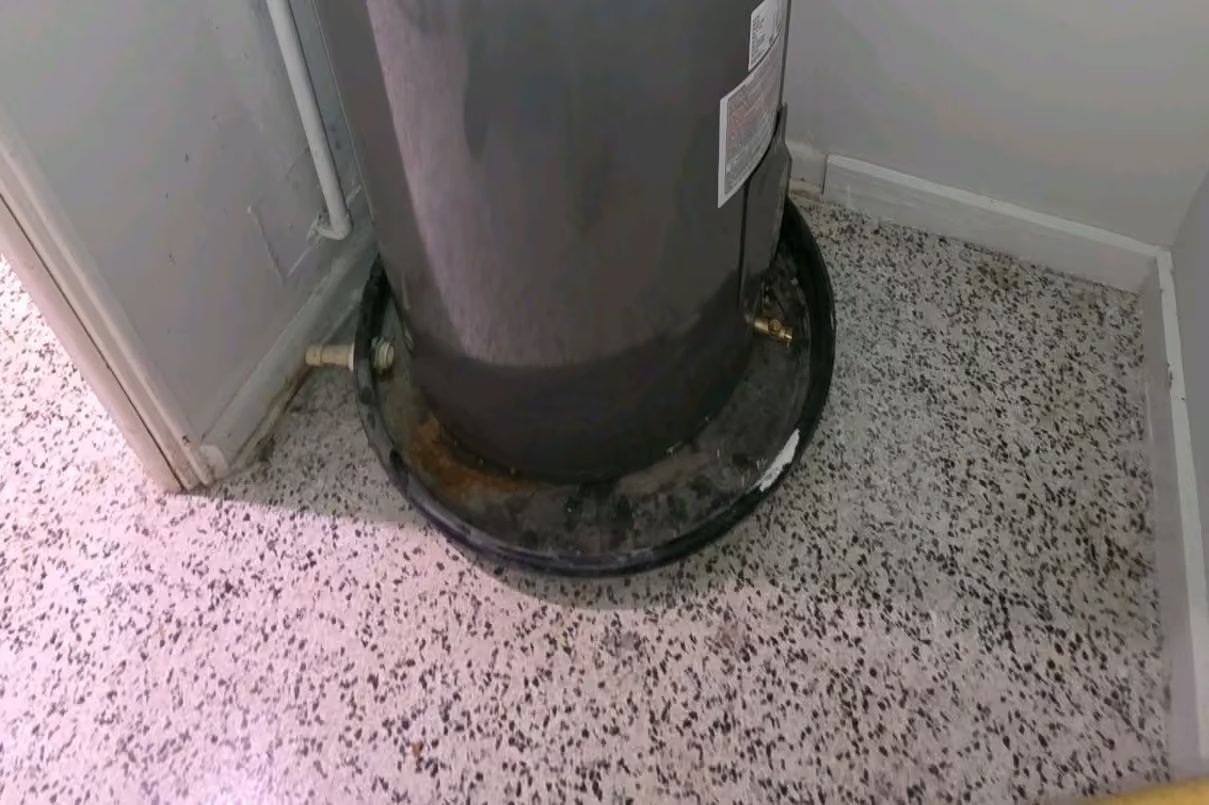
Why water collects beneath a water heater
Finding a puddle beneath a water heater is a reason to investigate promptly, but it does not automatically mean the storage tank has failed. Water may originate at a supply connection, relief valve, drain valve, or the tank. Because water follows gravity and can travel along the outside of the unit, a leak that begins near the top may appear to come from the bottom. Identifying the source matters because some components can be repaired, while a leaking tank generally requires replacement.
A leaking tank versus a leaking connection
Traditional tank water heaters store heated water inside a steel vessel protected by an internal lining and a sacrificial anode rod. Over time, corrosion or deterioration can lead to leakage through the tank wall or bottom seam. When the tank itself is leaking, sealing the exterior is not a dependable long-term repair. A licensed plumbing contractor should evaluate replacement. The age of the unit, visible corrosion, repeated leakage, and overall condition help inform the recommendation, but age alone does not prove a tank has failed.
Other leaks may be more localized. Water can escape from hot or cold supply fittings and run down the jacket. The drain valve near the bottom may drip if it is damaged or does not close completely. Condensation may also be mistaken for a leak under certain operating conditions. A professional should trace the water to its actual source rather than assume the lowest wet location is where the problem began.
What does the relief valve have to do with it?
A temperature and pressure relief valve is an important safety device intended to release water if conditions exceed its operating limits. Discharge from its pipe can leave water near the heater and may be confused with a tank leak. A dripping or discharging relief valve should not be capped, plugged, or ignored. The U.S. Department of Energy’s water equipment maintenance guidance notes that system pressure and water heater settings can contribute to relief valve discharge. A plumber should determine whether the valve, system pressure, thermal expansion, temperature controls, or another condition is contributing to the discharge. Our article on water heater relief discharge piping explains why this component matters.
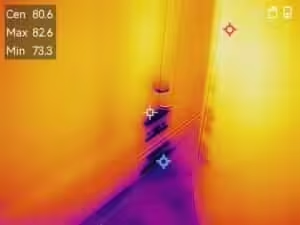
What should you do when you discover water?
Keep people away from wet electrical equipment and any suspected gas hazard. If water is actively spreading, contact a licensed plumber promptly and follow the manufacturer’s instructions for safely shutting down the appliance and its water supply. Do not attempt electrical or gas work yourself. If you smell gas, leave the area and contact the gas utility or emergency services from a safe location. Even a slow leak can damage flooring, baseboards, drywall, and nearby stored items if it continues.
Photograph the water, note when it appears, and observe whether it is continuous or associated with hot water use. These details may help the plumber diagnose the source. Avoid removing safety devices or dismantling the heater to investigate. If water has reached adjacent building materials, those materials may need moisture evaluation and drying in addition to plumbing repairs.
How home inspectors evaluate water heaters
During a visual home inspection, the inspector examines readily accessible portions of the water heater, its visible piping and connections, signs of leakage or corrosion, and observable installation conditions within the inspection scope. The inspection is not a pressure test, invasive leak investigation, or guarantee against future failure. Concealed piping and internal tank surfaces cannot be assessed visually. An active leak or suspicious moisture condition is reported with a recommendation for further evaluation by a licensed plumbing contractor.
Field Insight
It’s not necessarily a question of if a water heater will develop a leak, but when. Like every major component in a property, water heaters have a limited service life, and leaks can develop for several reasons.
One area where we commonly observe leakage is at the temperature and pressure relief (TPR) valve discharge pipe, particularly when excessive water pressure or other conditions cause the valve to release water. Over time, the tank itself may also begin leaking, with corrosion and rust developing near the bottom. Water supply connections and fittings are another common source of leakage.
In our experience, one of the most frequent locations for active leaks is at the electric heating element connections. These leaks can often be identified by moisture staining, rust, or corrosion around the heating element access panels.
If you notice moisture staining or evidence of leakage around these panels, we recommend contacting a licensed plumber promptly. A leaking heating element gasket or connection may be relatively straightforward to repair when caught early. However, allowing the condition to continue can quickly lead to corrosion, deterioration of surrounding components, and potentially more extensive damage.
Small leaks rarely stay small forever. Identifying and correcting them early can make the difference between a relatively simple plumbing repair and premature water heater replacement.
Does a leaking water heater always need replacement?
No. A loose or deteriorated connection, drain valve, or other replaceable component may be repairable. Leakage through the storage tank itself typically points toward replacement. The plumber’s assessment should consider the exact source, condition, manufacturer guidance, and safety implications. If the unit is near the end of its expected service life, replacement may be more practical than repeated repairs, but the decision should be based on the actual condition rather than a universal age cutoff.
Protecting the property from further damage
Promptly addressing the source is the first priority. A properly configured drain pan and discharge arrangement may help manage certain leaks, but a pan does not eliminate the need for repairs and cannot be assumed to contain every failure. Keep the area accessible and monitor nearby finishes for moisture after corrective work. If water has affected porous materials, appropriate drying and further evaluation may be warranted. For buyers in Central Florida, a full home inspection provides a broader review of accessible plumbing systems and other components. Schedule with Tier-1 Pro Inspections before closing.