
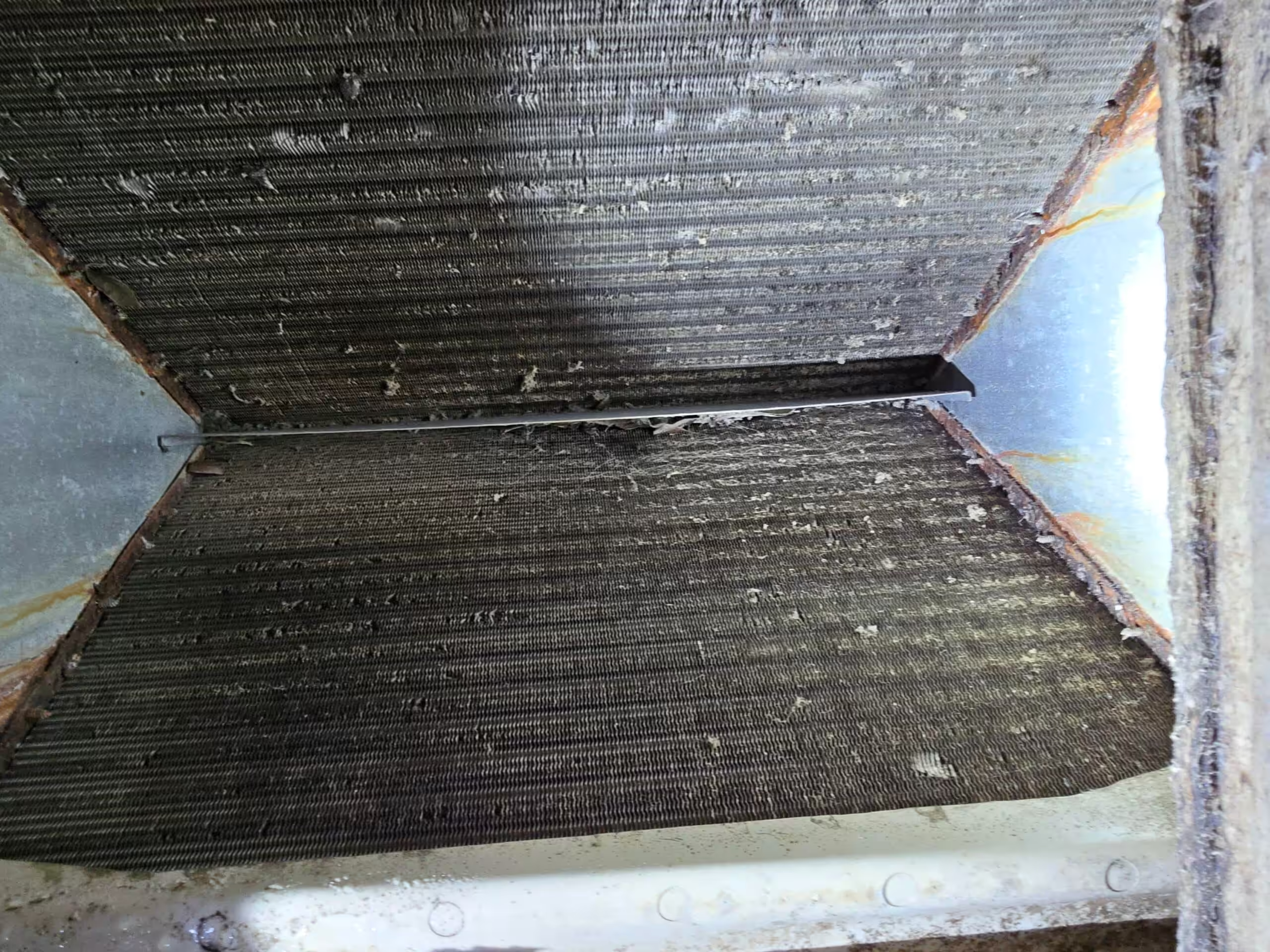
If your HVAC is running but not blowing cold air, the system may be operating without effectively cooling your home. Possible causes include restricted airflow, thermostat settings, a dirty or frozen evaporator coil, problems with the outdoor condenser, refrigerant related issues, duct leakage, or other equipment malfunctions.
Some causes are relatively simple, while others require evaluation by a qualified HVAC professional. Understanding the common reasons an air conditioning system may run without cooling can help you determine what to do next.
Why Is My HVAC Running but Not Blowing Cold Air?
An air conditioning system does more than simply move air through your home. It must circulate indoor air across the evaporator coil, remove heat and moisture from that air, and transfer the collected heat outside.
If part of that process isn’t working properly, you may still hear the HVAC system running and feel air coming from the supply registers, but the air may not feel cold enough to effectively cool the home.
There are several possible reasons this can happen.
Common Reasons Your AC Is Running but Not Cooling
Dirty or Restricted Air Filter
A dirty air filter can restrict airflow through the HVAC system.
When airflow becomes significantly restricted, the system may struggle to move enough air across the evaporator coil and throughout the home. Severe airflow restriction can also contribute to other problems, including freezing of the evaporator coil.
Air filters should be checked regularly and replaced according to the filter manufacturer’s recommendations and the conditions within the home.
A float switch may be activated and may prevent your HVAC from powering on completely.
Incorrect Thermostat Settings
Before assuming there is a mechanical problem, check the thermostat settings.
The thermostat should typically be set to Cool, with the desired temperature set below the current indoor temperature.
Also check the fan setting. When the thermostat fan is set to On, the blower may continue circulating air even when the air conditioning system is not actively cooling. This can make it seem as though the HVAC is running but blowing warm or room temperature air.
Frozen Evaporator Coil
The evaporator coil is responsible for absorbing heat from the air inside your home.
When the coil freezes, airflow and heat transfer can be significantly reduced. You may notice reduced airflow from the registers, inadequate cooling, or visible ice around accessible portions of the HVAC equipment or refrigerant lines.
A frozen evaporator coil can have several underlying causes, including restricted airflow or problems with the refrigeration system.
Simply allowing the ice to melt does not necessarily correct the underlying problem. If the coil freezes repeatedly, professional evaluation is recommended.
Dirty Evaporator Coil
Dust, debris, and other contaminants can accumulate on the evaporator coil over time.
A dirty coil can interfere with airflow and reduce the system’s ability to transfer heat efficiently. Because evaporator coils are often located inside the air handler and may not be readily accessible, evaluation and cleaning are generally best handled by an HVAC professional.
Outdoor Condenser Problems
Your outdoor condenser plays an important role in releasing the heat removed from inside the home.
The indoor blower may continue operating even when the outdoor portion of the system isn’t functioning properly.
Problems may involve the condenser fan, electrical components, controls, dirty or obstructed coils, or other equipment conditions.
If the indoor system is running but the outdoor equipment does not appear to be operating, professional HVAC evaluation may be needed.
Refrigerant Related Issues
Air conditioning systems rely on refrigerant to transfer heat.
When there is a problem with the refrigeration system, the HVAC equipment may continue running but have difficulty producing adequately cooled air.
Refrigerant related problems require specialized equipment and training to properly diagnose. If a refrigeration system problem is suspected, the system should be evaluated by a qualified HVAC professional.
Leaking, Damaged, or Disconnected Ductwork
Sometimes the HVAC equipment itself is producing conditioned air, but that air isn’t reaching the living areas effectively.
Damaged, leaking, poorly connected, or disconnected ductwork can allow conditioned air to escape into attics, garages, wall cavities, or other unintended areas.
This can result in reduced airflow, uneven temperatures, longer system run times, and difficulty maintaining the desired indoor temperature.
Accessible portions of the duct system are commonly evaluated during a home inspection for visible defects and disconnected or damaged components.
Blower or Airflow Problems
The blower is responsible for moving conditioned air through the duct system and into the home.
Problems with the blower motor, fan assembly, controls, or other components can reduce airflow even when other portions of the HVAC system are operating.
Reduced airflow from multiple supply registers may warrant further evaluation.
What Should the Temperature Difference Be Between Supply and Return Air?
One way HVAC performance may be evaluated is by comparing the temperature of the air entering the system with the temperature of the conditioned air leaving the system.
This is commonly referred to as the temperature differential or temperature split.
The temperature difference can provide useful information about system operation, but it should not be used by itself to diagnose an HVAC problem. Indoor and outdoor conditions, humidity, airflow, system configuration, equipment operation, and other factors can influence the measurement.
For a deeper explanation, see our guide to What Should the Temperature Difference Be Between AC Supply and Return Air?
Does an AC Running but Not Cooling Mean It Needs to Be Replaced?
Not necessarily.
An HVAC system that isn’t cooling properly may have a relatively minor issue, or it could have a more significant mechanical problem.
The age of the equipment is certainly worth considering, but poor cooling performance alone does not determine whether an HVAC system needs replacement.
A qualified HVAC professional can evaluate the system, identify the cause of the performance issue, and provide appropriate repair or replacement recommendations.
What Do Home Inspectors Check When an AC Isn’t Cooling Properly?
During a home inspection, accessible HVAC equipment is evaluated for general operation and visible conditions at the time of the inspection.
Depending on the system and conditions, the inspection may include observations of:
- Thermostat operation
- Heating and cooling response
- Supply and return air temperatures
- Accessible air handling equipment
- Outdoor condenser equipment
- Visible condensate components
- Accessible ductwork
- Airflow at representative supply registers
- Visible damage, deterioration, or other deficiencies
If the system does not appear to be cooling properly, the inspector may recommend further evaluation by a qualified HVAC professional.
A home inspection is not the same as a comprehensive HVAC diagnostic or service evaluation. Specialized testing of refrigerant pressures, internal mechanical components, electrical components, and other HVAC specific diagnostics may be outside the scope of a standard home inspection.
When Should an HVAC Professional Evaluate the System?
Professional evaluation should be considered when the HVAC system is running but consistently fails to cool the home properly, particularly when there are signs of equipment malfunction.
Conditions that may warrant further evaluation include:
- Little or no temperature difference between supply and return air
- Repeatedly frozen evaporator coils
- Weak or significantly reduced airflow
- Outdoor equipment that does not operate when cooling is requested
- Unusual noises or odors
- Water or excessive condensation around HVAC equipment
- Electrical or breaker related problems
- The system runs continuously without reaching the thermostat setting
- Cooling performance has noticeably declined
An HVAC professional can perform diagnostic testing that goes beyond what is typically included in a home inspection.
The Bottom Line
If your HVAC is running but not blowing cold air, it doesn’t automatically mean the system needs to be replaced.
The problem could involve something as simple as thermostat settings or a restricted filter, or it could involve airflow, ductwork, the evaporator or condenser, refrigerant related conditions, or another mechanical issue.
If basic observations don’t identify the cause or the system continues to perform poorly, evaluation by a qualified HVAC professional is recommended.
Learn More About Your Home’s HVAC System
Your HVAC system is one of the most important and costly systems in a home. Understanding common HVAC conditions can help homeowners and buyers recognize potential concerns and make informed decisions about maintenance, repairs, and further evaluation.
Visit the Tier-1 Pro HVAC Knowledge Center for more information about HVAC systems, cooling performance, common inspection findings, equipment age, airflow, and other conditions frequently encountered during home inspections.