
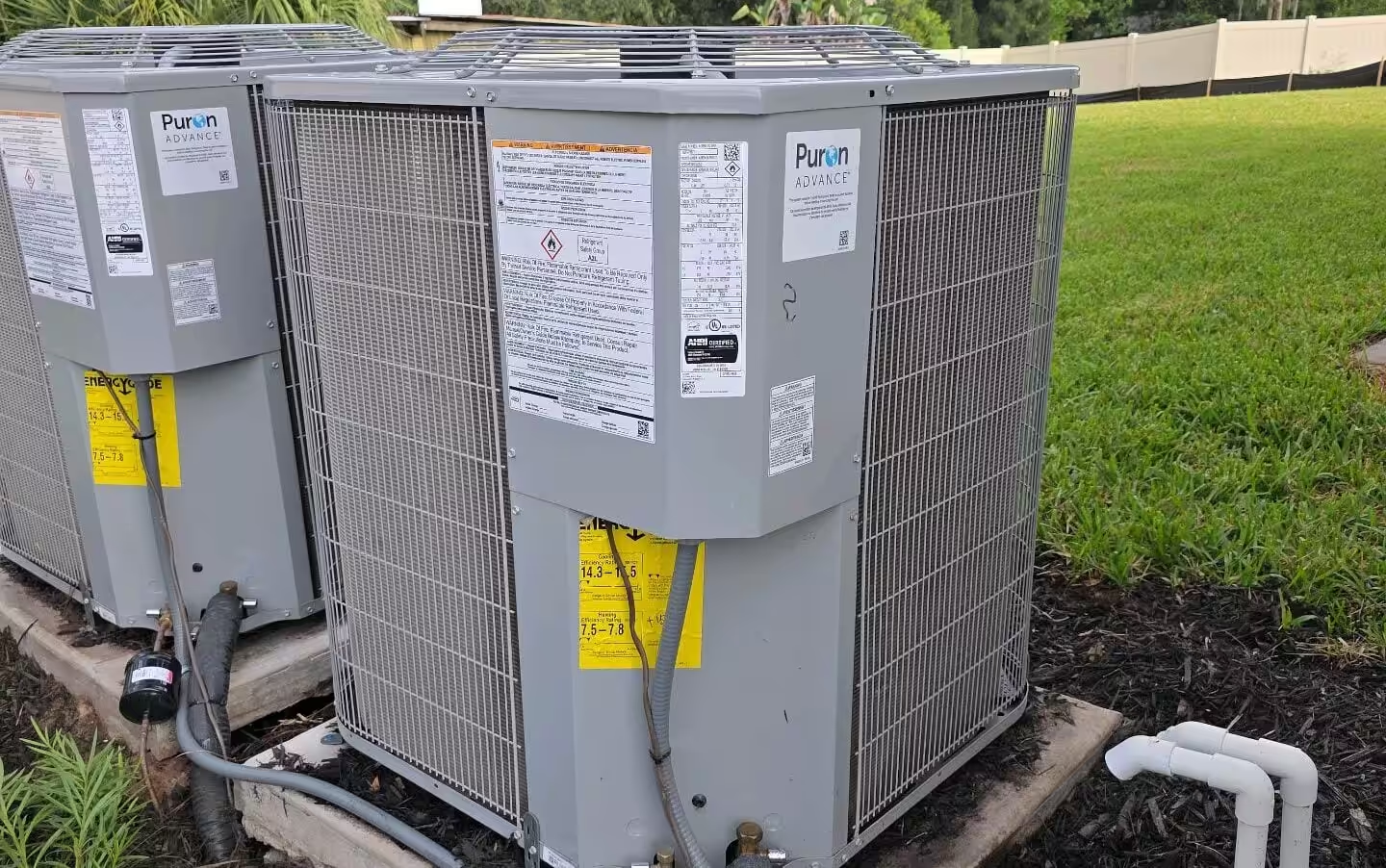
An HVAC condenser is the outdoor portion of most central air conditioning systems. Its primary job during cooling operation is to release the heat that the HVAC system has removed from inside the home.
The condenser works together with the indoor air handler, evaporator coil, refrigerant lines, and other HVAC components as part of a complete heating and cooling system.
In many Florida homes, the outdoor equipment is actually a heat pump, which performs the condenser function during cooling but can reverse operation to help heat the home during colder weather.
Understanding how an HVAC condenser works can help homeowners recognize normal operation, identify common maintenance concerns, and better understand conditions identified during a home inspection.
What Is an HVAC Condenser?
The HVAC condenser is the outdoor equipment commonly associated with a central air conditioning system.
A typical outdoor condenser contains several important components, including:
- Compressor
- Condenser coil
- Outdoor fan
- Fan motor
- Electrical controls
- Capacitor
- Contactor
- Refrigerant connections
- Protective cabinet and panels
These components work together to circulate refrigerant and transfer heat from the HVAC system to the outside air.
How Does an HVAC Condenser Work?
During cooling operation, the HVAC system removes heat from the air inside the home.
That heat is absorbed by refrigerant at the indoor evaporator coil and carried through refrigerant lines to the outdoor condenser.
The compressor circulates the refrigerant through the system and raises its pressure and temperature.
The hot refrigerant then travels through the outdoor condenser coil.
The condenser fan pulls or moves outdoor air across the coil, allowing heat from the refrigerant to transfer into the outside air.
After releasing heat outdoors, the refrigerant continues through the refrigeration cycle and eventually returns to the indoor coil, where it can absorb more heat from inside the home.
This process repeats while the air conditioning system is operating.
What Does the HVAC Compressor Do?
The compressor is one of the most important components of the refrigeration system.
Its job is to compress and circulate refrigerant through the HVAC system.
During normal cooling operation, refrigerant leaving the indoor evaporator travels toward the compressor. The compressor increases the refrigerant’s pressure and temperature before sending it through the condenser coil.
This allows the refrigerant to release heat into the outdoor air.
Because the compressor is a major mechanical component, compressor failure can be a significant HVAC repair.
A standard home inspection does not involve internally diagnosing compressor condition. If the system is not operating properly or there are indications of a mechanical problem, further evaluation by a qualified HVAC professional may be recommended.
What Does the Condenser Coil Do?
The condenser coil surrounds much of the exterior of the outdoor equipment.
During cooling operation, hot refrigerant travels through tubing within the coil while the outdoor fan moves air across the coil’s metal fins.
This airflow allows heat to transfer from the refrigerant into the surrounding outdoor air.
For this reason, adequate airflow through the condenser coil is important.
Grass clippings, dirt, leaves, vegetation, lint, or other debris can accumulate against the coil and restrict airflow.
Homeowners can learn more about basic maintenance in our guide, Can I Clean My AC Condenser Coils Myself?
What Does the Condenser Fan Do?
The outdoor fan helps move a large volume of air across the condenser coil.
As air passes through the coil, it carries away heat released by the refrigerant.
If the condenser fan is damaged, obstructed, or not operating properly, the system may have difficulty releasing heat.
A fan that isn’t operating while the compressor is running can indicate a problem requiring professional evaluation.
Homeowners should avoid reaching into or removing protective components from operating HVAC equipment. Outdoor fan blades and electrical components can create significant hazards.
Why Does an HVAC Condenser Blow Hot Air?
Warm or hot air coming from the top or side of an outdoor condenser during cooling operation is generally normal.
Remember that the HVAC system is removing heat from inside the home and releasing it outdoors.
The air leaving the outdoor equipment has passed across the warm condenser coil and absorbed some of that heat.
Feeling warm air discharged from the condenser can therefore be an indication that heat transfer is occurring.
However, the temperature of the discharged air alone should not be used to determine whether the HVAC system is operating properly.
How Does the Condenser Work With the Air Handler?
The condenser and air handler perform different functions, but they operate together as part of the same HVAC system.
During cooling:
- The air handler pulls warm indoor air through the return ductwork.
- Air passes across the indoor evaporator coil.
- Refrigerant absorbs heat from the indoor air.
- The air handler distributes conditioned air through the home’s supply ducts.
- Refrigerant carries the absorbed heat to the outdoor condenser.
- The condenser releases that heat into the outside air.
- The refrigeration cycle continues until the thermostat is satisfied.
The indoor and outdoor components are connected by refrigerant lines and controls.
Learn more about the indoor portion of the system in How Does an HVAC Air Handler Work?
Is a Condenser Part of a Split HVAC System?
Yes.
In a traditional split HVAC system, major components are divided between indoor and outdoor equipment.
The air handler or furnace is located inside the home, while the condenser or heat pump is located outside.
Refrigerant lines connect the two portions of the system.
This configuration is extremely common in residential construction.
Learn more in What Is a Split HVAC System and How Does It Work?
Is an HVAC Condenser the Same as a Heat Pump?
Not exactly.
A conventional air conditioning condenser is primarily used to release heat outdoors during cooling operation.
A heat pump can perform this same function during cooling but can also reverse the refrigeration cycle to provide heating.
During heat pump heating operation, the outdoor coil absorbs heat from the outside air rather than simply releasing heat from the home.
This means an outdoor heat pump may operate during both summer cooling and winter heating.
Learn more about this process in How Do HVAC Heat Pumps Work?
Why Is My Outdoor HVAC Unit Not Running?
There are many possible reasons an outdoor condenser may not operate when cooling is expected.
Potential causes can include:
- Thermostat settings
- Electrical power problems
- Tripped breakers
- Disconnect problems
- Failed capacitors
- Contactor problems
- Fan motor problems
- Compressor problems
- Control or communication problems
- Safety switches
- Other internal equipment defects
Some causes may be relatively simple, while others require specialized HVAC diagnosis.
Homeowners should avoid opening electrical compartments or attempting to diagnose energized condenser components unless appropriately qualified.
Can a Dirty Condenser Cause the AC Not to Cool?
Yes, a significantly restricted condenser coil can contribute to poor HVAC performance.
The outdoor equipment must be able to release heat effectively.
When dirt, grass clippings, vegetation, or other debris restricts airflow through the coil, heat transfer can become less effective and the system may have to work harder.
However, a dirty condenser is only one possible cause of poor cooling.
If the HVAC system is operating but the home isn’t cooling properly, airflow restrictions, frozen coils, duct problems, refrigerant related conditions, thermostat problems, or mechanical defects may also be responsible. Learn more in Can I Clean My AC Condenser Coils Myself?
Learn more in Why Is My HVAC Running but Not Blowing Cold Air?
How Much Clearance Does an HVAC Condenser Need?
Outdoor HVAC equipment needs adequate space around it for airflow and service access.
Shrubs, fences, walls, decorative screens, stored items, and other obstructions should not significantly restrict airflow around the condenser.
The exact clearance requirements vary by equipment manufacturer and installation configuration.
Rather than relying on one universal measurement, homeowners should follow the clearance requirements provided by the equipment manufacturer.
Vegetation should also be maintained so that it does not grow against or into the condenser.
Should the Condenser Be Installed on a Pad?
Outdoor HVAC equipment is typically installed on a stable, appropriately sized support such as a concrete or manufactured equipment pad.
The support helps keep the condenser stable and elevated from surrounding soil.
A significantly damaged, settled, unstable, or improperly sized pad can allow the equipment to become unlevel or inadequately supported.
Installation requirements can vary depending on the equipment, location, and applicable standards.
Why Is My HVAC Condenser Making Noise?
Some sound is normal when outdoor HVAC equipment operates.
The compressor, fan motor, moving air, and refrigerant flow can all produce normal operating noise.
However, unusual or newly developed sounds may indicate a problem.
These can include:
- Grinding
- Scraping
- Rattling
- Squealing
- Repeated clicking
- Excessive buzzing
- Significant vibration
- Metal contacting the fan
Unusual condenser noises should be evaluated when the cause is not readily apparent.
Why Is There Ice on My Outdoor HVAC Unit?
The answer depends partly on whether the equipment is an air conditioner or heat pump and what operating mode is being used.
During normal air conditioning operation, significant ice accumulation on the outdoor equipment is not expected and may indicate a system problem.
During heat pump heating operation, however, frost can develop on the outdoor coil under certain weather conditions.
Heat pumps periodically use a defrost cycle to remove this accumulation.
Some temporary frost or steam associated with a normal defrost cycle may therefore be expected.
Heavy or persistent icing that does not clear may indicate a condition requiring HVAC evaluation.
What Are Common HVAC Condenser Problems?
Outdoor HVAC equipment is exposed to weather, landscaping, moisture, and environmental conditions throughout its service life.
Common conditions observed during home inspections include:
Dirty or Restricted Coils
Grass clippings, leaves, dirt, vegetation, and other debris can restrict airflow through the condenser coil.
Damaged Condenser Fins
The thin metal fins surrounding the condenser coil can be bent by impact, landscaping equipment, pressure washing, or improper cleaning.
Significant fin damage can restrict airflow through the coil.
Corrosion
Outdoor equipment can develop corrosion and deterioration over time.
This may be more significant in coastal environments or other locations where equipment is exposed to corrosive conditions.
Damaged Refrigerant Line Insulation
The larger refrigerant line between the indoor and outdoor equipment is typically insulated.
Exterior insulation can deteriorate from sunlight, weather exposure, animals, landscaping equipment, and age.
Electrical Concerns
Damaged disconnects, improper wiring, deteriorated conduit, unsecured electrical components, or other visible electrical conditions may be identified around outdoor HVAC equipment.
Improper Support
A settled, damaged, unstable, or improperly installed equipment pad can affect the condenser’s support.
Vegetation and Restricted Clearance
Shrubs and landscaping are frequently allowed to grow too close to outdoor HVAC equipment.
This can restrict airflow and make servicing the equipment more difficult.
What Do Home Inspectors Check on an HVAC Condenser?
During a home inspection, readily accessible portions of the outdoor HVAC equipment are visually evaluated and the system is operated using normal controls when conditions permit.
Depending on the equipment and installation, an inspector may evaluate:
- General equipment condition
- Cooling and heating operation
- Condenser or heat pump fan operation
- Visible condenser coil condition
- Refrigerant lines
- Refrigerant line insulation
- Electrical disconnect
- Accessible wiring and conduit
- Equipment support
- Clearance around the unit
- Vegetation and airflow restrictions
- Visible corrosion
- Physical damage
- Unusual operating conditions
The inspector may also compare information from the indoor and outdoor equipment to better understand the overall HVAC system.
A standard home inspection is not the same as an HVAC service evaluation. Home inspectors do not typically connect refrigerant gauges, open sealed refrigeration components, test internal compressor condition, or perform invasive mechanical diagnostics.
Does an Old HVAC Condenser Need to Be Replaced?
Not necessarily.
Age is an important consideration, but it should be evaluated along with the equipment’s condition and performance.
An older condenser may continue to operate adequately, while newer equipment can still experience installation defects or mechanical problems.
Factors to consider include:
- Equipment age
- Maintenance history
- Corrosion
- Previous repairs
- Cooling performance
- Refrigerant type
- Compatibility with the indoor equipment
- Overall system condition
When an older system develops a significant mechanical problem, homeowners may need to compare the cost of repair with the cost and benefits of replacing the system.
When Should an HVAC Professional Evaluate the Condenser?
Professional HVAC evaluation may be appropriate when:
- The outdoor unit doesn’t operate when expected
- The fan isn’t running properly
- The system isn’t adequately cooling the home
- The condenser repeatedly shuts down
- Unusual noises or excessive vibration are present
- Significant corrosion or physical damage is visible
- The condenser coil is heavily contaminated
- Refrigerant leakage is suspected
- Electrical problems are present
- The equipment frequently trips a breaker
- The indoor and outdoor equipment may not be properly matched
- The overall condition or performance of the system is uncertain
An HVAC technician can perform diagnostic testing beyond the scope of a standard home inspection.
The Bottom Line
So, how does an HVAC condenser work?
During air conditioning operation, the condenser receives heat that has been removed from inside the home and releases that heat into the outdoor air.
The compressor circulates refrigerant through the system, the condenser coil provides an area for heat transfer, and the outdoor fan moves air across the coil to help carry that heat away.
The condenser must work together with the indoor air handler, evaporator coil, refrigerant lines, ductwork, and controls for the HVAC system to operate properly.
Because outdoor HVAC equipment is continuously exposed to weather, vegetation, lawn maintenance, and other environmental conditions, keeping the area around the condenser clear and recognizing visible signs of deterioration are important parts of home maintenance.
For more information about HVAC equipment, heat pumps, air handlers, cooling performance, and common conditions identified during home inspections, visit the Tier-1 Pro HVAC Knowledge Center.