
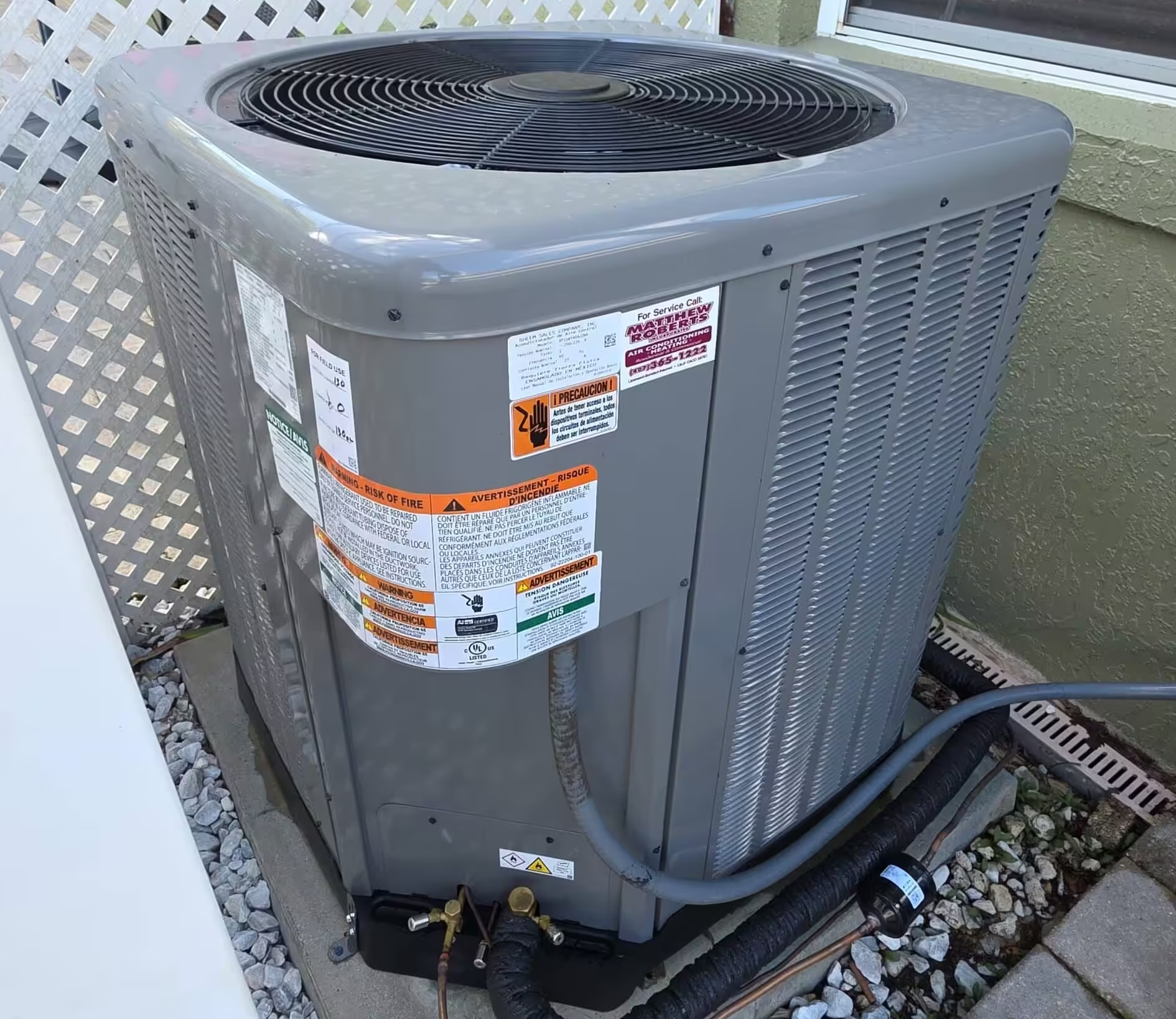
A heat pump HVAC system can both cool and heat a home using the same basic equipment. Rather than creating heat in the same way as a traditional furnace, a heat pump transfers heat from one location to another.
During the summer, a heat pump operates much like a conventional air conditioner by removing heat from inside the home and releasing it outdoors. During the winter, the system reverses operation and transfers available heat from the outdoor air into the home.
Because Florida has relatively mild winters and a long cooling season, heat pumps are commonly found in homes throughout the state.
What Is an HVAC Heat Pump?
An HVAC heat pump is a heating and cooling system that uses refrigerant to transfer heat between the inside and outside of a home.
A typical residential heat pump split system includes:
- An indoor air handler
- An evaporator coil
- An outdoor heat pump unit
- A compressor
- Refrigerant lines
- A reversing valve
- Supply and return ductwork
- A thermostat
- Condensate drainage components
Many of these components are also found in a conventional central air conditioning system.
The major difference is that a heat pump can reverse the direction of heat transfer, allowing the same refrigeration system to provide both cooling and heating.
How Does a Heat Pump Cool Your Home?
During cooling operation, a heat pump functions similarly to a traditional central air conditioning system.
Warm indoor air is pulled through the return ductwork and moved across the indoor coil.
Refrigerant circulating through the system absorbs heat from the indoor air. The blower then distributes the conditioned air back through the home’s supply ductwork.
The refrigerant carries the absorbed heat to the outdoor unit, where the heat is released into the outside air.
The process continues until the thermostat reaches the desired indoor temperature.
If the system is operating but the home isn’t cooling adequately, there are several possible causes beyond the heat pump itself. Learn more in Why Is My HVAC Running but Not Blowing Cold Air?
How Does a Heat Pump Heat Your Home?
Heating is where a heat pump differs significantly from a conventional air conditioner.
When heating is needed, the heat pump reverses the refrigeration cycle.
Instead of absorbing heat from inside the home and releasing it outdoors, the system absorbs available heat from the outside air and transfers it indoors.
The outdoor coil absorbs heat, refrigerant carries that heat into the home, and the indoor coil releases the heat into the air moving through the HVAC system.
The blower then distributes the heated air through the home’s supply ductwork.
How Can a Heat Pump Get Heat From Cold Outside Air?
This is one of the most common questions about heat pumps.
Outside air does not need to feel warm for it to contain heat energy.
Even when outdoor temperatures are considerably lower than the temperature inside the home, the refrigerant system can absorb available heat from the outside air and transfer it indoors.
As outdoor temperatures decrease, however, the amount of available heat decreases and the system may have to work harder to maintain the desired indoor temperature.
This is one reason heat pumps are particularly well suited for climates with relatively mild winters, including much of Florida.
What Does the Reversing Valve Do?
The reversing valve is one of the components that distinguishes a heat pump from a conventional air conditioning system.
The reversing valve changes the direction refrigerant flows through the system.
In cooling mode, the indoor coil absorbs heat and the outdoor coil releases it.
In heating mode, their functions effectively reverse. The outdoor coil absorbs heat and the indoor coil releases it into the home.
This ability to reverse the refrigeration cycle allows one HVAC system to provide both heating and cooling.
What Is Auxiliary Heat?
Many residential heat pump systems include a supplemental heating source commonly referred to as auxiliary heat or AUX heat.
In Florida homes, this is often an electric resistance heating element installed within the indoor air handler.
Auxiliary heat may operate when the heat pump cannot satisfy heating demand quickly enough or when certain system conditions require supplemental heating.
Electric resistance heat creates heat differently from the heat pump itself and can consume considerably more electricity when operating.
Occasional auxiliary heat operation does not necessarily indicate a problem. Frequent or prolonged auxiliary heat operation, however, may warrant further investigation depending on outdoor conditions and system performance.
What Is Emergency Heat?
Emergency heat and auxiliary heat are related, but they are not exactly the same thing.
Auxiliary heat is generally controlled automatically by the HVAC system when supplemental heating is needed.
Emergency heat is typically a thermostat setting that allows the supplemental heating source to operate without relying on the normal heat pump heating cycle.
Emergency heat is generally intended for situations where the heat pump portion of the system is not functioning properly or cannot be used.
It should not normally be selected simply because the outdoor temperature feels cold.
Why Does the Outdoor Unit Run When the Heat Is On?
With a heat pump, it is normal for the outdoor unit to operate while the home is being heated.
This sometimes surprises homeowners who associate the outdoor condenser with air conditioning only.
During heating operation, the outdoor unit is actively absorbing heat from the outside air. The compressor and outdoor coil are therefore essential parts of the heating process.
An outdoor unit operating during heating mode does not by itself indicate that the air conditioning is running incorrectly.
Why Does a Heat Pump Sometimes Look Like It Is Smoking?
During colder or humid weather, frost can develop on the outdoor heat pump coil.
When necessary, the system may enter a defrost cycle to remove this frost.
During defrost, the system temporarily changes operation to warm the outdoor coil. Water or frost on the equipment can produce visible steam as it melts and evaporates.
This steam can sometimes look like smoke.
A brief amount of steam during a normal defrost cycle may be completely normal. Persistent smoke, electrical odors, unusual noises, or other indications of equipment damage should not be assumed to be part of normal operation.
Why Does a Heat Pump Blow Cooler Air Than a Furnace?
Heat pumps often deliver air that feels less intensely hot than the air produced by a gas furnace or electric resistance heating system.
That does not necessarily mean the heat pump isn’t working.
Heat pumps are designed to provide steady heating by transferring heat rather than producing extremely hot supply air.
The air coming from a register may therefore feel warm rather than hot, particularly when compared with a conventional furnace.
System performance should be evaluated based on actual operating conditions and temperature measurements rather than simply how hot the supply air feels by hand.
Are Heat Pumps Common in Florida?
Yes. Heat pumps are very common in Florida residential construction.
Florida’s relatively mild winter temperatures make heat pumps practical because the system can provide efficient heating without requiring a separate combustion furnace in many homes.
A typical Florida configuration consists of an outdoor heat pump paired with an indoor air handler and supplemental electric heat.
This allows one central HVAC system to provide cooling during the long summer season and heating when temperatures drop.
Is a Heat Pump the Same as a Split HVAC System?
Not exactly.
Split system describes how the HVAC equipment is physically configured, with major components divided between indoor and outdoor equipment.
Heat pump describes how the system transfers heat and provides heating and cooling.
A heat pump can be part of a traditional split HVAC system.
For example, a common Florida installation consists of an indoor air handler connected to an outdoor heat pump. That system is both a split system and a heat pump system.
Learn more about the overall configuration in What Is a Split HVAC System and How Does It Work?
What Are Common Heat Pump Problems?
Heat pumps contain mechanical, electrical, refrigeration, airflow, and drainage components that must work together properly.
Common concerns can include:
Poor Heating or Cooling Performance
Restricted airflow, dirty coils, refrigerant related conditions, duct leakage, equipment problems, and other conditions can reduce heating or cooling performance.
Dirty Outdoor Coils
The outdoor coil plays an important role during both heating and cooling operation.
Grass clippings, vegetation, dirt, and other debris can restrict airflow through the equipment.
Learn more in Can I Clean My AC Condenser Coils Myself?
Defrost Problems
A heat pump must be able to manage frost accumulation on the outdoor coil during certain heating conditions.
Excessive icing or a system that does not appear to defrost properly may require professional evaluation.
Auxiliary Heat Problems
Problems with electric heating elements, controls, breakers, or other components can prevent supplemental heat from operating properly.
Condensate Drainage Problems
During cooling operation, moisture removed from the indoor air must drain away from the HVAC equipment.
Blocked or damaged condensate drainage components can result in leakage or water accumulation around the indoor unit.
Thermostat or Control Problems
Heat pump thermostats and system controls must properly coordinate heating, cooling, auxiliary heat, and other operating functions.
Incorrect settings or control problems can affect system performance.
What Do Home Inspectors Check on a Heat Pump?
During a home inspection, accessible heat pump equipment is visually evaluated and operated using normal controls when conditions permit.
Depending on the equipment and environmental conditions, the inspector may evaluate:
- Heating operation
- Cooling operation
- Thermostat response
- Supply and return air temperatures
- Indoor air handler
- Outdoor heat pump
- Accessible ductwork
- Air filters
- Refrigerant line conditions
- Condensate drainage
- Visible electrical components and disconnects
- Equipment condition
- Corrosion or deterioration
- General system performance
Certain operating modes may not be appropriate to test under all weather conditions.
A home inspection is also not equivalent to an HVAC service evaluation. Inspectors do not typically measure refrigerant pressures, dismantle equipment, or perform invasive mechanical diagnostics.
When significant performance or equipment concerns are identified, evaluation by a qualified HVAC professional may be recommended.
Does an Older Heat Pump Need to Be Replaced?
Not necessarily.
Age is an important consideration when evaluating HVAC equipment, but age alone does not determine whether a heat pump requires replacement.
Maintenance history, installation quality, equipment condition, operating performance, previous repairs, corrosion, and overall system reliability should also be considered.
An older system may continue operating adequately, while a relatively new system can still have installation or performance problems.
When Should an HVAC Professional Evaluate a Heat Pump?
Professional HVAC evaluation may be appropriate when:
- The system isn’t heating or cooling properly
- The outdoor unit does not operate when expected
- Ice remains heavily accumulated on the outdoor equipment
- The system frequently relies on auxiliary heat
- The equipment repeatedly shuts down
- Airflow is weak or inconsistent
- Unusual noises or odors are present
- Water is leaking around the indoor equipment
- Electrical problems are suspected
- Significant corrosion or physical damage is visible
- Heating or cooling performance has noticeably changed
An HVAC technician can perform diagnostic testing beyond the scope of a standard home inspection.
The Bottom Line
So, how do HVAC heat pumps work?
A heat pump transfers heat rather than relying solely on a separate heating appliance to create it. During the summer, the system removes heat from inside the home and releases it outdoors. During the winter, the refrigeration cycle reverses and transfers available heat from the outdoor air into the home.
This ability to provide both heating and cooling makes heat pumps particularly common in Florida homes.
Understanding how the system operates can also help homeowners recognize normal heat pump behavior, such as the outdoor unit operating during heating or occasional defrost cycles, while identifying conditions that may require further evaluation.
For more information about HVAC systems, cooling performance, maintenance, and common conditions identified during home inspections, visit the Tier-1 Pro HVAC Knowledge Center.