
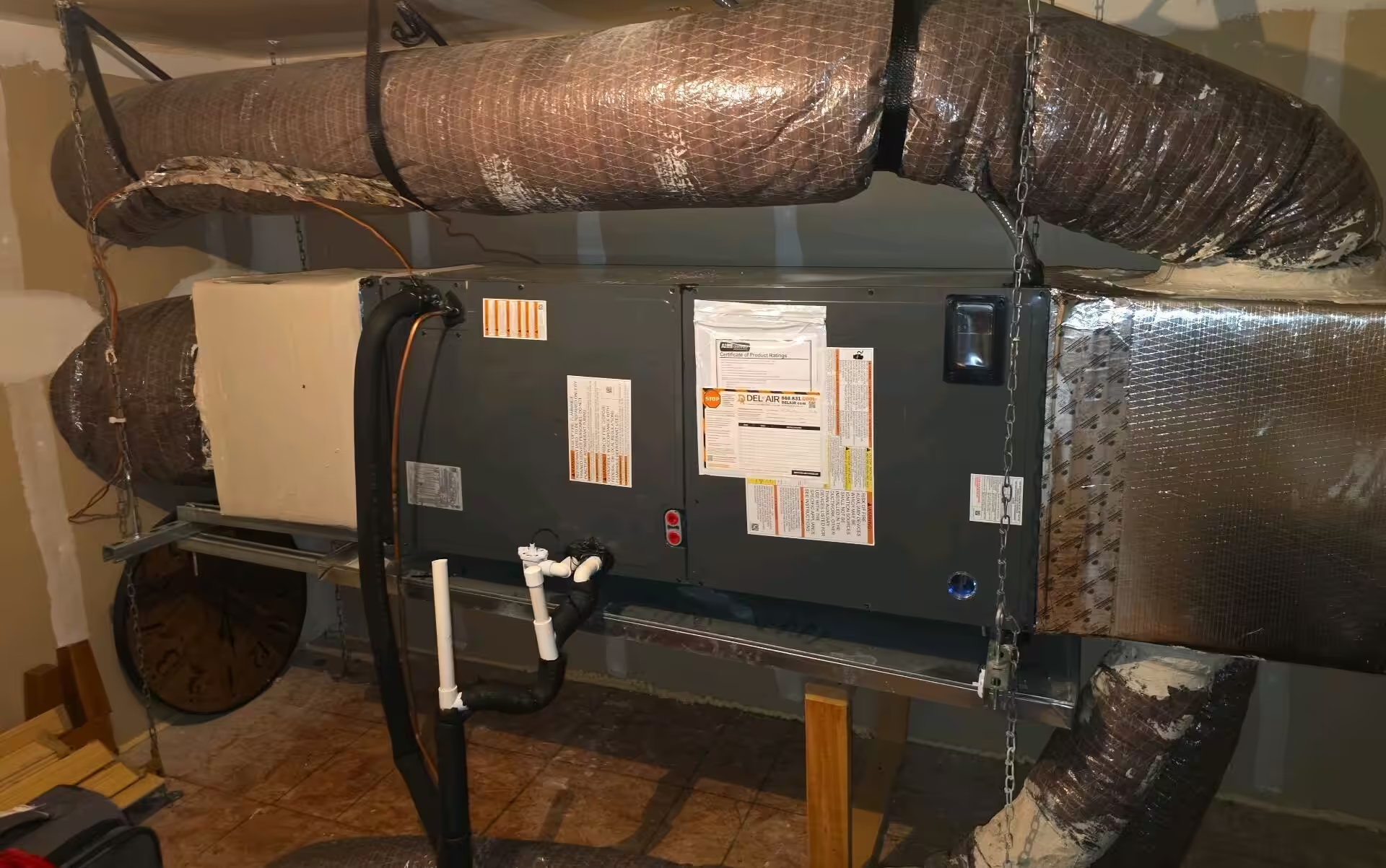
An HVAC air handler is the indoor portion of many central heating and cooling systems. Its primary job is to move conditioned air through the home while housing several important HVAC components.
In many Florida homes, the air handler works together with an outdoor heat pump or condenser as part of a split HVAC system. While the outdoor equipment handles much of the heat transfer process, the air handler circulates indoor air across the HVAC coil and distributes conditioned air through the home’s ductwork.
Understanding how an air handler works can help homeowners and buyers better understand their HVAC system, recognize common problems, and make sense of conditions identified during a home inspection.
What Is an HVAC Air Handler?
An air handler is an indoor HVAC cabinet containing components used to condition and circulate air throughout the home.
Depending on the system, an air handler may contain:
- A blower motor and fan
- An evaporator coil
- An air filter or filter location
- Electric heating elements
- Condensate collection and drainage components
- Electrical controls
- Supply and return air connections
The exact configuration varies depending on the manufacturer, equipment design, and type of HVAC system installed.
Air handlers are commonly paired with outdoor heat pumps in Florida homes.
How Does an Air Handler Work?
The basic process begins when the thermostat calls for heating or cooling.
The blower inside the air handler pulls indoor air into the HVAC system through the return ductwork.
That air passes through a filter and then across the HVAC coil, where heat is either removed from or added to the air depending on the operating mode.
The blower then pushes the conditioned air into the supply ductwork, which distributes it to rooms throughout the home.
This process continues until the thermostat determines that the desired indoor temperature has been reached.
What Does the Blower in an Air Handler Do?
The blower is responsible for moving air through the HVAC system.
It pulls air from the home through return ducts, moves it across the filter and coil, and pushes the conditioned air back through the supply ducts.
Without adequate airflow, the HVAC system cannot effectively distribute heating or cooling throughout the home.
Blower related problems can result in:
- Weak airflow from registers
- Uneven temperatures throughout the home
- Poor cooling or heating performance
- Increased system operating time
- Frozen evaporator coils
- Unusual noises
- Little or no air movement from supply registers
Airflow problems do not necessarily mean the blower itself has failed. Dirty filters, damaged ductwork, blocked returns, dirty coils, and other conditions can produce similar symptoms.
What Does the Evaporator Coil Do?
The evaporator coil is commonly located inside or immediately adjacent to the air handler.
During cooling operation, cold refrigerant flows through the evaporator coil while the blower moves warm indoor air across it.
Heat from the indoor air is absorbed by the refrigerant.
As the air cools, moisture in the air also condenses on the cold surface of the coil. This process helps the HVAC system control both temperature and indoor humidity.
The cooled and dehumidified air is then distributed throughout the home.
The refrigerant carries the absorbed heat to the outdoor equipment, where that heat is released outside.
Why Does an Air Handler Produce Water?
Finding water associated with an air conditioning system can be concerning, but condensation is a normal part of cooling operation.
When warm, humid indoor air passes across the cold evaporator coil, moisture condenses on the coil.
This is similar to water forming on the outside of a cold glass.
The condensation should fall into a drain pan and then leave the HVAC equipment through a condensate drain line.
In Florida’s humid climate, an HVAC system can remove a considerable amount of moisture from indoor air during normal operation.
The important distinction is that this water should be properly collected and drained away from the equipment.
Why Is Water Leaking From My Air Handler?
Water around an air handler is not something that should simply be ignored.
Potential causes can include:
- A clogged condensate drain
- A damaged or disconnected drain line
- A deteriorated drain pan
- Improper condensate drainage
- A frozen evaporator coil that is thawing
- Insulation or condensation problems
- Improper equipment installation
- Drainage backup
- Damaged float switch
Depending on where the air handler is installed, leakage can damage ceilings, drywall, flooring, insulation, cabinetry, or other building materials.
Air handlers installed in attics or above finished areas deserve particular attention because even a relatively small drainage problem can result in significant property damage.
What Does the Air Filter Do?
The HVAC filter helps remove airborne particles before air passes through the air handler and evaporator coil.
It also helps protect the HVAC equipment from excessive accumulation of dust and debris.
A dirty or severely restricted filter can reduce airflow through the system.
Restricted airflow may contribute to poor cooling performance, longer operating cycles, reduced comfort, and in some situations freezing of the evaporator coil.
Filters should be inspected and replaced or cleaned as appropriate for the specific filter and system.
The appropriate replacement schedule depends on factors such as filter type, household conditions, pets, system use, and indoor air quality conditions.
What Is the Electric Heat Inside an Air Handler?
Many Florida air handlers contain electric resistance heating elements, sometimes referred to as heat strips.
These heating elements can provide supplemental or primary electric heat depending on the HVAC configuration.
In a typical heat pump system, the heat pump provides the primary heating function while electric heat may operate as supplemental or auxiliary heat when additional heating capacity is needed.
The electric heating elements are located within the air handler so that air moved by the blower passes across the heated elements before being distributed through the home’s ductwork.
Learn more about how the entire heating process works in How Do HVAC Heat Pumps Work?
How Does an Air Handler Work With the Outdoor HVAC Unit?
The indoor air handler and outdoor equipment perform different jobs, but they operate together as one HVAC system.
During cooling:
- The air handler pulls warm indoor air through the return system.
- Air passes across the indoor evaporator coil.
- Refrigerant absorbs heat from the indoor air.
- The blower distributes the conditioned air through the home.
- Refrigerant carries the absorbed heat to the outdoor unit.
- The outdoor equipment releases the heat outside.
The process then repeats as the HVAC system continues operating.
This indoor and outdoor arrangement is known as a split HVAC system.
Learn more in What Is a Split HVAC System and How Does It Work?
Learn more in Can I Clean My AC Condenser Coils Myself?
Is an Air Handler the Same as a Furnace?
No.
An air handler and a furnace can both contain blowers and distribute conditioned air through ductwork, but they are not the same type of equipment.
An air handler is commonly paired with a heat pump and may contain electric resistance heating elements.
A furnace generates heat using a heating source such as natural gas, propane, oil, or electricity depending on the equipment.
In Central Florida, air handlers paired with heat pumps are particularly common.
Is an Air Handler the Same as an AC Unit?
Not exactly.
Homeowners sometimes use the term “AC unit” to describe any part of the air conditioning system, but a central split HVAC system consists of multiple components.
The air handler is the indoor equipment responsible for circulating air and typically housing the evaporator coil.
The condenser or heat pump is the outdoor equipment.
Refrigerant lines connect the two portions of the system.
Together, these components provide heating and cooling for the home.
Where Are Air Handlers Usually Located?
Air handlers can be installed in several areas of a home, including:
- Garages
- Interior closets
- Attics
- Mechanical rooms
- Utility rooms
- Crawlspaces
The installation location can affect the types of concerns that may develop.
For example, an attic mounted air handler can create a greater risk of damage to finished ceilings if a condensate drainage problem occurs.
Garage and attic installations may also expose equipment and ductwork to higher temperatures and humidity than equipment located within conditioned living space.
Why Is My Air Handler Making Noise?
Some noise is normal whenever an HVAC system operates.
The blower motor, moving air, relays, and other components can produce normal operating sounds.
However, unusual or newly developed noises may indicate a condition requiring evaluation.
Examples include:
- Rattling
- Grinding
- Scraping
- Squealing
- Excessive vibration
- Repeated clicking
- Loud humming or buzzing
Potential causes range from loose cabinet panels and debris to blower motor, fan, electrical, or mechanical problems.
Unusual noises should be evaluated when the cause is not readily apparent.
Why Is My Air Handler Running but Not Cooling?
An operating air handler does not necessarily mean the HVAC system is actually cooling properly.
The blower may continue moving air even when another portion of the system is not functioning as expected.
Potential causes can include:
- Outdoor condenser problems
- Dirty or frozen evaporator coils
- Restricted airflow
- Dirty filters
- Refrigerant related conditions
- Thermostat or control problems
- Damaged or disconnected ductwork
- Compressor or other mechanical problems
If air is moving from the registers but the home isn’t cooling properly, learn more in Why Is My HVAC Running but Not Blowing Cold Air?
What Are Common Air Handler Problems?
Air handlers contain several components and are frequently exposed to moisture during normal cooling operation.
Common conditions observed during home inspections include:
Condensate Drainage Problems
Clogged, damaged, leaking, or improperly configured drain lines can allow water to accumulate around the equipment.
Corrosion and Rust
Moisture can contribute to corrosion of drain pans, cabinets, coils, and other components over time.
Dirty Air Filters
Restricted filters can reduce airflow through the HVAC system and affect system performance.
Damaged or Missing Insulation
Missing or deteriorated insulation around the cabinet, refrigerant lines, or duct connections may contribute to condensation or energy loss.
Air Leakage
Poorly sealed cabinet panels or duct connections can allow conditioned air to escape or unconditioned air to enter the system.
Blower Problems
Blower motors, fans, bearings, electrical components, and controls can deteriorate or fail.
Biological Growth or Accumulation
Air handlers operate in an environment where moisture, dust, and organic material can sometimes accumulate.
Visible growth, significant contamination, or persistent moisture conditions may warrant further investigation and correction of the underlying moisture source.
What Do Home Inspectors Check on an Air Handler?
During a home inspection, readily accessible portions of the air handler are visually evaluated and the HVAC system is operated using normal controls when conditions permit.
Depending on accessibility and equipment configuration, an inspector may evaluate:
- General equipment condition
- Heating and cooling operation
- Blower operation
- Air filters
- Accessible evaporator coil conditions
- Condensate drain lines
- Drain pans
- Visible corrosion
- Refrigerant lines
- Duct connections
- Equipment supports
- Accessible electrical components
- Supply and return air temperatures
- Visible signs of leakage or moisture
Home inspectors may remove readily accessible service panels when appropriate, but a standard home inspection is not the same as an HVAC service or diagnostic evaluation.
Inspectors do not typically dismantle equipment, measure refrigerant pressures, or perform invasive testing of internal HVAC components.
Does an Old Air Handler Need to Be Replaced?
Not necessarily.
Age is one factor when evaluating HVAC equipment, but an older air handler does not automatically require replacement.
The equipment’s condition, performance, maintenance history, corrosion, repair history, compatibility with the outdoor equipment, and overall reliability should also be considered.
An older air handler may continue functioning adequately, while a newer unit can still have installation defects or performance problems.
When Should an HVAC Professional Evaluate an Air Handler?
Professional HVAC evaluation may be appropriate when:
- Water is leaking from or around the equipment
- The evaporator coil repeatedly freezes
- Airflow is weak or inconsistent
- The blower does not operate properly
- The system isn’t heating or cooling adequately
- Significant corrosion is present
- Unusual noises or odors occur
- Electrical problems are suspected
- Condensate drainage problems repeatedly occur
- The indoor and outdoor equipment may not be compatible
- The overall condition of the equipment is uncertain
An HVAC technician can perform mechanical and refrigeration system diagnostics beyond the scope of a standard home inspection.
The Bottom Line
So, how does an HVAC air handler work?
The air handler pulls indoor air through the return system, moves it across the HVAC coil, and distributes conditioned air back through the home’s supply ductwork.
It also houses several components that are critical to HVAC operation, including the blower, evaporator coil, air filter, condensate drainage system, and, in many Florida homes, supplemental electric heating elements.
Because the air handler handles both airflow and moisture, problems involving filters, coils, blowers, duct connections, or condensate drainage can have a significant effect on HVAC performance and the surrounding home.
Understanding the air handler and its components can help homeowners recognize maintenance needs and better understand HVAC related findings during a home inspection.
For more information about HVAC equipment, heat pumps, cooling performance, maintenance, and common conditions identified during home inspections, visit the Tier-1 Pro HVAC Knowledge Center.