
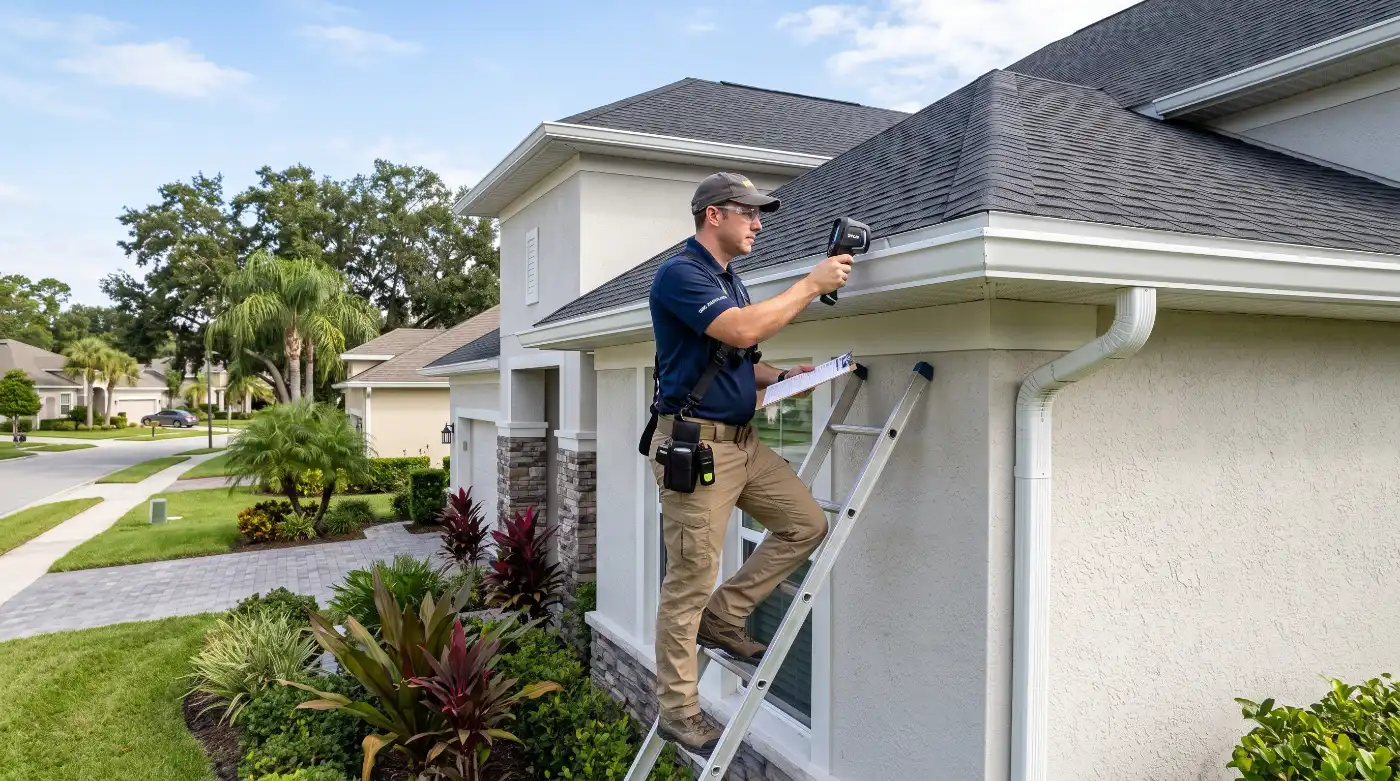
Fast Track Summary
-
Cosmetic Cover-ups: Fresh paint over a ceiling stain often masks active roof, plumbing, or HVAC condensate leaks that resurface shortly after closing.
-
Building Science Verification: Thermal imaging cameras and pinless moisture meters confirm whether a discoloration is legacy damage or active moisture intrusion.
-
Insurance & Financial Risk: Unaddressed leaks destroy drywall, rot roof decking, breed toxic mold, and trigger 4-Point inspection denials from Florida insurers.
-
Precision Diagnostics: A comprehensive home inspection combined with infrared scans, sewer scope imaging, and wind mitigation reviews protects your escrow investment.
How Inspectors Evaluate Ceiling Water Stains in Central Florida Homes
When a homebuyer discovers a ceiling water stain during an open house, a visual spot is rarely just a minor cosmetic flaw; it is dynamic evidence of a potential building envelope breakdown, plumbing failure, or severe HVAC condensation issue. Certified inspectors evaluate water stains by correlating visual indicators with thermal imaging diagnostics, structural attic evaluations, and moisture meter readings to determine if the stain represents an active leak, structural degradation, or legacy damage.
Evaluating a ceiling water stain follows a methodical diagnostic progression:
-
Visual Identification: The inspector documents yellow, brown, or dark mineral rings, flaking paint, or visibly sagging drywall.
-
Thermal Imaging Inspection: The surface is scanned using an infrared camera to locate cooler thermal anomalies that signal evaporative moisture.
-
Moisture Meter Testing: The area is checked with pinless and pin-type moisture meters to obtain quantitative readings of relative moisture content.
-
Attic & Roof Verification: The inspector physically enters the attic space to trace the water source directly to roof decking, plumbing lines, or HVAC air handlers.
A common open house mistake made by Central Florida homebuyers is assuming a fresh coat of paint over a ceiling discoloration resolves the issue. Sellers often touch up water-damaged drywall before placing a property on the market. However, without addressing the underlying driver—such as a displaced roof shingle, an overflowing HVAC condensate drain line, or a leaking supply pipe—the water intrusion continues silently inside the ceiling cavity.
During a standard buyer due diligence period, discovering a ceiling stain triggers a targeted investigation. Inspectors track the stain directly upward into the building envelope. In Seminole County and surrounding Greater Orlando communities, the intense solar heat load combined with heavy daily summer rains creates an aggressive environment for moisture intrusion.
Water travels a specific path from the exterior roof deck to the living space below:
-
Exterior Breach: Wind-driven rain penetrates a damaged shingle, cracked step flashing, or worn roof penetration boot.
-
Underlayment Penetration: Water works past the secondary water barrier and saturates the exterior roof decking.
-
Decking Saturation: Liquid water pools on the underside of OSB or plywood sheathing, slowly dripping onto attic structural framing.
-
Insulation Absorption: Water drips onto fiberglass or blown-in cellulose insulation, saturating the material until it reaches its holding capacity.
-
Ceiling Pooling: Saturated insulation transfers liquid directly to the upper side of the ceiling drywall, where brown and yellow mineral rings bloom on the visible ceiling below.
A similar water pathway occurs when an HVAC condensate system fails in the attic:
-
Condensation Collection: High humidity air passes over the cooling coil, producing continuous moisture runoff.
-
Line Blockage: Algae, dust, or biological growth clogs the primary PVC condensate drain line.
-
Pan Overflow: Water backs up and spills over the primary drain pan into the secondary attic pan.
-
Safety Failure: If the emergency pan is rusted or lacks a functional float switch, water spills onto the ceiling joists.
-
Surface Bloom: Moisture saturates the drywall from above, producing visible ceiling stains and sagging drywall.
To deliver complete due diligence during a short escrow window, a professional home inspector relies on advanced diagnostic tools rather than visual assumptions. Evaluating these ceiling defects requires combining non-destructive testing with physical structural examination.
-
Infrared Thermal Scans: Thermal imaging cameras detect subtle surface temperature differences, highlighting cooler thermal anomalies that indicate active evaporative cooling from hidden water.
-
Pinless Moisture Metering: High-frequency moisture meters measure the relative moisture content within drywall without puncturing or damaging decorative surface finishes.
-
Attic Cavity Tracing: Direct physical access allows inspectors to examine the underside of roof decking, structural rafters, and HVAC air handlers located in the attic directly above the stain.
-
Plumbing System Testing: Running supply lines, showers, and drainage fixtures isolates whether the ceiling stain stems from an upstairs bathroom leak or an exterior envelope failure.
Thermal Imaging and Moisture Testing Protocol
A ceiling water stain provides a surface clue, but advanced diagnostic equipment reveals the true scope of hidden water intrusion, active leaks, and structural saturation beneath the surface.
Visual inspections alone cannot confirm if a water stain is active, historical, or recently painted over. Infrared technology measures surface radiation temperatures across ceiling planes. In a typical scenario, normal dry ceiling drywall registers at approximately 78°F. However, where active water intrusion is present, evaporative cooling creates a distinct thermal anomaly dropping the surface temperature to 71°F or lower. This 7°F delta temperature immediately alerts the inspector to apply a moisture meter.
When an inspector identifies a cool thermal anomaly matching a ceiling stain, a pinless moisture meter is applied directly to the zone. Standard drywall reads between 5% and 12% moisture content; readings exceeding 15% to 20% indicate active, ongoing water intrusion that demands immediate corrective action.
Evaluating the source requires stepping into the attic. In Central Florida homes, attic temperatures frequently exceed 130°F during summer months. Inspectors navigate these challenging environments to systematically evaluate three critical attic diagnostic zones:
-
Roof Decking Zone: Inspectors examine wood sheathing for delamination, biological growth, rusted fasteners, and dark water staining along rafter tie-ins.
-
HVAC Air Handler Zone: Inspectors verify that the secondary drain pan is dry, check for a functioning emergency float switch, and ensure primary condensate lines are clear of algae blockages.
-
Plumbing Line Zone: Inspectors examine supply pipes, shower pan bases, and sanitary roof vent penetrations for slow drips or corroded fittings.
If the stain sits directly below an HVAC air handler mounted in the attic, the primary suspect is a clogged condensate drain line or a rusted secondary drain pan. Central Florida air conditioning units extract gallons of water daily from indoor air. If the primary condensate line clogs with algae, water spills over into the emergency drain pan. If the emergency pan lacks a functional float switch or is rusted through, water discharges straight onto the ceiling joists.
For stains located under open roof spans, the inspector evaluates the underside of the plywood or OSB roof decking for water lines, dark fungal growth, and rusting roof nails. Exterior roof penetrations—such as plumbing vent stacks, exhaust fan hoods, roof valleys, and wall step flashings—are common failure points where wind-driven rain breaches the primary barrier. According to the Florida Building Code, proper flashing integration around roof penetrations is mandatory to prevent water intrusion.
Understanding these structural interactions is essential when reviewing property condition findings across residential and commercial buildings. When purchasing a property, buyers can secure a thorough evaluation by booking a comprehensive home inspection with certified building science professionals.
Why Water Stains Create Insurance Underwriting and Structural Risks
Ceiling water stains discovered during a real estate transaction carry immediate financial, structural, and insurance underwriting consequences for both buyers and sellers in Florida.
Unaddressed water stains create three severe risk vectors during a transaction:
-
4-Point Inspection Failure: Active leaks or saturated drywall result in an immediate fail on 4-Point forms, causing insurance carriers like Citizens Property Insurance Corporation to deny policy binding.
-
Fungal & Environmental Growth: Trapped moisture inside dark ceiling cavities fosters rapid amplification of mold species like Aspergillus and Penicillium, requiring costly professional remediation.
-
Structural Delamination: Chronic moisture rots roof sheathing, degrades fastener holding strength, and weakens ceiling joists, creating severe vulnerability to hurricane-force wind uplift.
Prior to issuing a policy, Florida carriers require a formal Four-Point inspection covering the roof, electrical, plumbing, and HVAC systems. If an inspector records active ceiling leaks, saturated drywall, or unaddressed roof sheathing damage on the four-point form, carriers will routinely decline coverage until licensed contractors complete certified repairs and verify the structure is watertight.
Beyond insurance coverage delays, unaddressed ceiling water leaks compromise indoor air quality and structural integrity. High humidity combined with organic building materials creates ideal conditions for mold amplification. The building science timeline of moisture damage progresses rapidly:
-
0 Hours: Water breaches the exterior envelope or plumbing fitting and begins pooling on interior components.
-
24 to 48 Hours: Fungal spores germinate on damp drywall paper backing and saturated insulation inside unventilated attic spaces.
-
72+ Hours: Active fungal amplification occurs, releasing airborne spores into living areas and accelerating drywall structural breakdown.
-
30+ Days: Wood framing and roof sheathing experience severe rot, fasteners pull free, and ceiling drywall faces catastrophic collapse risk.
Common indoor mold species such as Aspergillus, Penicillium, and Cladosporium thrive inside dark attic cavities where ventilation is restricted. When water leaks persist, ceiling drywall loses structural density, leading to sudden drywall sagging or catastrophic ceiling collapses over living areas.
In commercial properties or multi-family buildings, water stains on drop ceiling tiles or structural concrete decks present similar financial risks. Commercial real estate investors must identify building envelope leaks early through formal physical asset due diligence. Property owners and investors evaluating commercial assets can request a comprehensive commercial property inspection aligned with ASTM E2018 standards to protect their investments.
It is vital to understand how insurance inspections evaluate structural risks:
-
Four-Point Inspections: Focus strictly on active system risks, system remaining useful life, and current operating condition. An active water leak results in a policy denial.
-
Wind Mitigation Inspections: Focus on structural wind resistance features, including roof-to-wall attachment clips, nail spacing, opening protection, and secondary water barrier (SWR) membranes to calculate insurance premium discounts.
From a structural perspective, chronic water intrusion degrades the integrity of roof trusses and roof sheathing. When moisture saturates roof decking, the underlying wood fibers swell, soften, and lose fastener retention strength. During severe storm events or hurricanes, roof sheathing that has suffered chronic moisture rot is significantly more susceptible to wind uplift failure, even if the exterior shingles appear visually intact from the ground.
Real-World Case Scenarios: Field Discoveries and Solutions
Real-world inspection scenarios demonstrate how identifying ceiling water stains protects homebuyers, luxury estate owners, and commercial investors from costly post-closing repairs.
Scenario 1: The Freshly Painted Luxury Home Hideaway
A homebuyer placed an offer on a luxury estate in Windermere featuring repainted ceilings in the primary bedroom. During the initial walkthrough, the ceiling looked pristine. However, during the due diligence evaluation, thermal imaging revealed a rectangular cold anomaly measuring 71°F, while adjacent ceiling drywall registered 78°F.
Applying a pinless moisture meter confirmed a 28% moisture level—significantly above the normal dry baseline. Inspection inside the attic space revealed a leaking step flashing along a roof valley directly above the bedroom. The seller had painted over the interior stain to pass open house viewings without repairing the exterior flashing breach. Armed with the inspection findings, the buyer negotiated a $4,500 repair credit prior to closing.
Scenario 2: The Clogged HVAC Condensate Pan in Oviedo
A buyer fell in love with a family home in Oviedo. During the home inspection, a faint 4-inch yellow ring was identified on the hallway ceiling directly below the attic-mounted air handler.
Accessing the attic revealed that the HVAC secondary drain pan was filled with standing water due to a clogged primary condensate line filled with algae. The emergency float switch had been wired incorrectly and failed to shut down the system when the pan filled. Water was overflowing the pan and soaking the ceiling drywall below. Early detection prevented a complete ceiling collapse, and the seller installed a functional float switch, cleared the condensate lines, and replaced the damaged drywall before closing.
Scenario 3: The 11th-Month Builder Warranty Roof Leak
A homeowner in Lake Mary scheduled an 11th-month builder warranty inspection prior to their one-year new construction coverage expiring. The interior living room ceiling showed no visible water damage to the naked eye.
Thermal imaging revealed a subtle thermal pattern along the exterior wall interface. An attic evaluation uncovered a misplaced roofing nail that had penetrated the valley flashing during construction, allowing heavy rain to leak down the rafter. Because the leak was caught before the builder warranty expired, the homebuilder completed the roof and insulation repairs at zero cost to the homeowner. Homeowners nearing their one-year anniversary can schedule a home warranty inspection to capture hidden builder defects before coverage expires.
Environmental Diagnostics & Additional Inspection Protocols
When ceiling water stains are uncovered during an inspection, evaluating secondary environmental risks ensures the home’s indoor environment remains safe and healthy.
When liquid water saturates interior drywall and attic insulation, mold growth often follows. If moisture testing confirms an active leak or extensive legacy damage, adding mold assessments and testing provides clear laboratory analysis. Certified inspectors utilize calibrated spore trap air cassettes and surface swab samples to capture airborne fungal particulate.
These samples are sent to an accredited laboratory to compare indoor spore counts against outdoor baseline controls:
-
Outdoor Baseline Control: Typically dominated by outdoor environmental species such as Cladosporium, with normal raw counts ranging between 500 and 2,000 spores per cubic meter.
-
Saturated Indoor Target Area: Often exhibits elevated concentrations of indoor moisture indicators like Aspergillus or Penicillium, with counts frequently exceeding 10,000+ spores per cubic meter.
Identifying elevated indoor spore counts provides the empirical data required to request professional mold remediation under Florida DBPR guidelines.
Water intrusion events can also impact surrounding plumbing systems and building structural assemblies. If water stains originate near interior plumbing chases or slab penetrations, scheduling sewer scope inspections allows inspectors to run a high-definition video camera through the main sewer lateral line. This scan verifies that under-slab drainage lines are free from offset PVC joints, root intrusion, or cast-iron pipe deterioration that could cause backup-related water damage.
In addition to environmental checks, homeowners should evaluate their structural hurricane resistance. Ordering a formal wind mitigation inspection evaluates critical structural engineering metrics:
-
Roof Decking Nailing: Verifies if 8d nails are spaced at 6-inch intervals along panel edges to resist wind uplift.
-
Roof-to-Wall Attachments: Checks for double wraps, heavy single clips, or toe-nails connecting roof trusses to wall structures.
-
Secondary Water Barrier (SWR): Confirms the presence of a self-adhering polymer modified bitumen membrane applied directly over roof sheathing joints.
-
Opening Protection: Evaluates impact-rated glass or shutter protection across all exterior window and door openings.
Passing these engineering standards unlocks substantial, legally mandated discounts on annual Florida homeowners insurance premiums.
Strategic Action Steps for Homebuyers and Property Sellers
Discovering a ceiling water stain during an open house or pre-listing walkthrough requires a methodical, step-by-step approach to protect your contract timelines and financial interests.
Strategic Recommendations for Homebuyers
-
Document the Visual Stain: Take high-resolution photographs and request seller disclosures regarding past roof or ceiling repairs.
-
Schedule Professional Due Diligence: Hire a licensed inspector equipped with thermal imaging cameras and calibrated moisture meters.
-
Review Diagnostic Data: Base your contract decisions on quantitative moisture readings and attic evaluations rather than visual surface condition alone.
-
Negotiate Repairs or Credits: Require that repairs be performed by licensed roofing or plumbing contractors, backed by paid invoices, permits, and repair warranties prior to closing.
Strategic Recommendations for Property Sellers
-
Conduct a Pre-Listing Inspection: Schedule a professional pre-listing inspection to identify attic leaks or ceiling stains before buyers discover them.
-
Repair the Leak Source First: Always fix the exterior roof breach, flashing, or plumbing line before repairing and repainting interior drywall.
-
Maintain Detailed Records: Keep all contractor receipts, building permits, and inspection sign-offs to present to prospective buyers.
-
Provide Transparent Disclosures: Fully disclose historical water intrusion events along with proof of professional repair to build buyer trust and avoid future liability.
Real estate agents guiding buyers or sellers through these transaction steps can streamline scheduling and access dedicated resources through our specialized realtor partner portal.
Authoritative Building & Industry References
For further details regarding building science standards, licensing, and insurance guidelines, consult these authoritative industry resources:
-
Certified Inspection Standards: Review professional inspection guidelines and code-of-conduct standards at InterNACHI.
-
Commercial Property Inspection Guidelines: Learn about commercial PCA protocols and physical asset assessments at ASTM International.
-
Florida Home Inspector & Mold Licensing: Verify inspector credentials, state licensing standards, and regulations at the Florida Department of Business and Professional Regulation (DBPR).
-
Florida Insurance Underwriting Standards: Explore state insurance guidelines, 4-Point rules, and mitigation standards at Citizens Property Insurance Corporation.
Key Takeaways: Water Stains
-
Cosmetic Paint Can Hide Active Leaks: Fresh paint over a ceiling stain often conceals ongoing roof, plumbing, or HVAC condensate leaks that require professional evaluation.
-
Thermal Imaging Delivers Proof: Infrared cameras combined with moisture meters confirm whether ceiling discoloration represents an active leak or dry legacy damage.
-
Insurance Coverage Risks: Florida insurance carriers routinely decline 4-Point inspection approvals when active water leaks or damaged ceiling materials are present.
-
Comprehensive Diagnostics Are Essential: Evaluating ceiling water stains requires checking attic structural assemblies, HVAC drain systems, and roof penetrations.
-
Environmental & Structural Integration: Unaddressed ceiling leaks lead to wood deck rot, structural weakened roof trusses, and toxic indoor mold amplification.
Schedule Your Diagnostic Inspection Today
Whether you are evaluating a home with a suspicious ceiling stain during an open house, preparing a residential property for market, or managing commercial property due diligence in Winter Springs, Orlando, Oviedo, or Greater Central Florida, precision diagnostics protect your financial investment. Contact our veteran-owned team at Tier-1 Pro Inspections by visiting our contact us page or calling (407) 670-0891 to schedule your comprehensive property inspection, thermal scan, or environmental assessment today.