
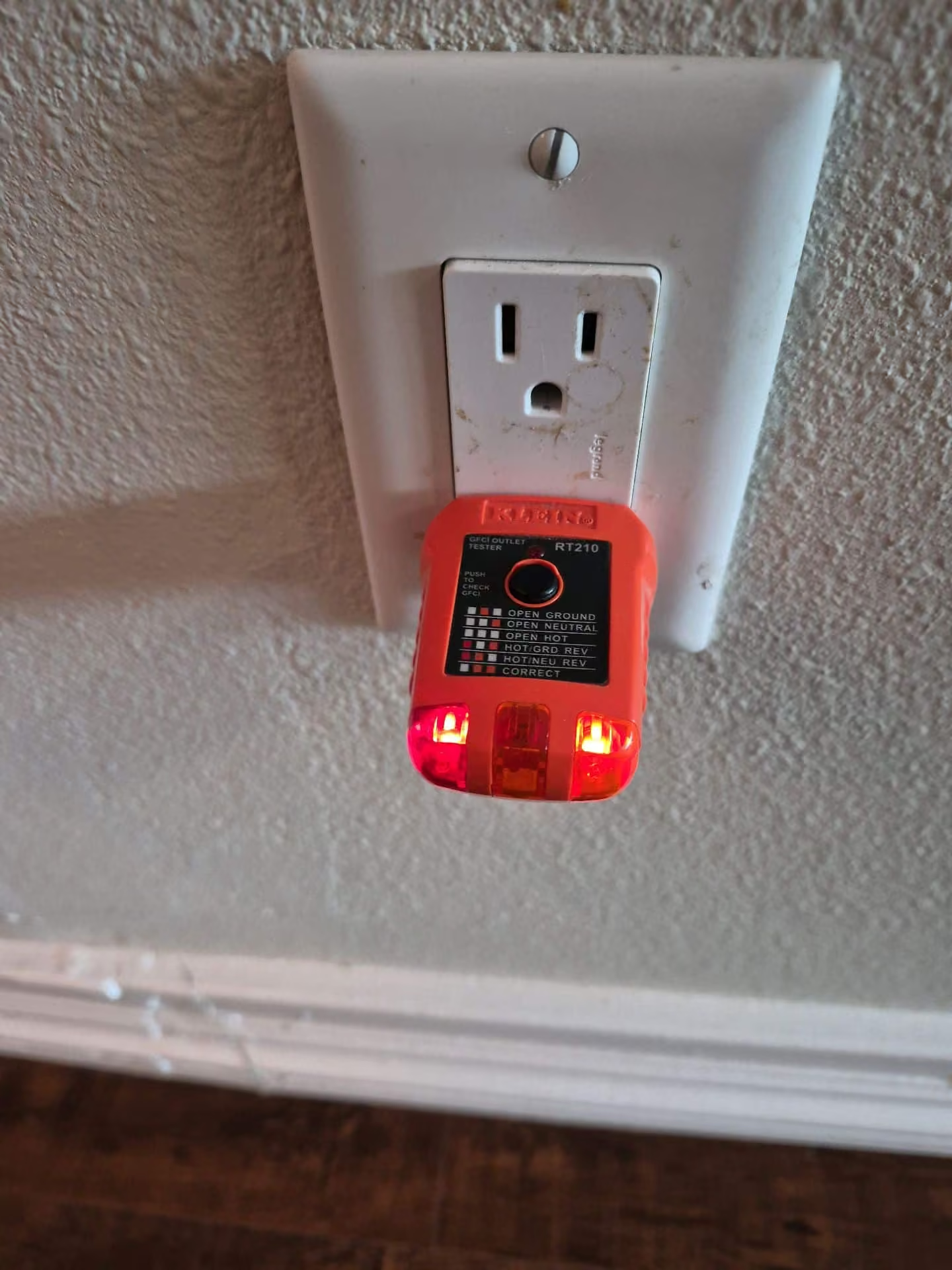
An electrical outlet can appear to work normally even when its hot and neutral conductors are connected to the wrong terminals. This condition is called reversed polarity. A lamp or phone charger may still operate, making the problem easy to overlook. However, the arrangement of conductors matters for how electrical devices are designed to operate safely.
What Does Reverse Polarity Mean?
A standard 120-volt receptacle has a hot connection, a neutral connection, and a grounding connection where provided. The hot conductor delivers electrical energy to the device, while the neutral provides the intended return path. In a correctly wired polarized receptacle, the narrow slot is hot and the wider slot is neutral. Reversed polarity means the hot and neutral connections have been interchanged.
Because the circuit may still deliver power, a homeowner may have no obvious indication that the receptacle is incorrectly wired. A functioning outlet is not necessarily a correctly wired outlet.
Why Is Reversed Polarity a Concern?
Some appliances and fixtures are designed so that a switch interrupts the hot conductor. When polarity is reversed, parts of the appliance that should not remain energized under normal conditions may still have voltage present even when the appliance switch is off. This can increase the risk of electric shock during handling, maintenance, or component replacement.
For example, certain screw-shell lamp holders are designed with the neutral connected to the threaded shell and the hot connected to the center contact. Reversing those connections can leave the more accessible shell energized. The specific hazard depends on the connected equipment, but reversed polarity should not be dismissed merely because an appliance operates.
How Do Home Inspectors Identify Reversed Polarity?
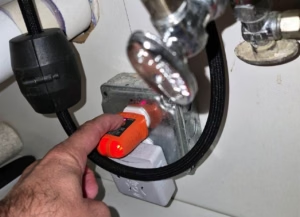
During a visual home inspection, an inspector may use an appropriate receptacle tester to evaluate accessible outlets. Many common testers display a pattern of indicator lights associated with wiring conditions, including reversed polarity. A tester can identify a suspected defect, but it does not reveal every possible wiring problem or establish exactly where the conductors were crossed.
Some outlets are inaccessible behind furniture, appliances, or stored belongings. Others may not be tested because of unsafe conditions or inspection scope limitations. A standard home inspection is not a comprehensive electrical system diagnostic evaluation.
Reverse Polarity Versus an Open Ground
Reversed polarity and an open ground are different conditions. Reverse polarity concerns the arrangement of the hot and neutral conductors. An open ground indicates that an effective equipment grounding path may be absent or interrupted. Both deserve attention, but their causes and corrective actions are not interchangeable.
A receptacle can also have more than one wiring defect. Basic plug-in testers have limitations, particularly where multiple faults or unusual circuit configurations are present. A licensed electrician can use additional testing methods to investigate the circuit and verify the condition.
Where Does the Wiring Error Originate?
The problem may be confined to a single receptacle, or it may affect other outlets supplied by the same circuit. It can result from an incorrect connection at a receptacle, a device replacement, or wiring work performed elsewhere in the circuit. The number of affected outlets does not establish the precise source without further evaluation.
Homeowners should avoid assuming that swapping two visible wires will resolve the problem. Electrical work requires identifying the circuit, confirming that power is disconnected, and verifying conductor functions. In older properties, conductor colors and previous modifications may not provide a reliable guide.
Field Insight
Surprisingly, reversed polarity is a fairly common electrical defect we encounter during home inspections. In many cases, it appears to result from improper wiring during previous DIY repairs or work performed by an unqualified handyman. Although the receptacle may function normally, the reversed connections can create an electrical shock hazard.
Fortunately, correcting reversed polarity is often relatively straightforward for a licensed electrician. However, the condition should not be overlooked, particularly during a real estate transaction. In Florida, unresolved electrical defects can raise concerns with insurance carriers and, depending on the carrier’s underwriting requirements, may delay or prevent coverage until the condition is corrected and properly documented by a licensed electrician.
This is a good example of how a seemingly minor defect can have implications beyond the electrical system itself.
What Should Buyers and Homeowners Do?
If reversed polarity is reported, have a licensed electrician evaluate the affected receptacle and related wiring as appropriate, make necessary corrections, and verify proper operation afterward. Avoid using the affected outlet until the condition has been evaluated, particularly for devices where the wiring arrangement could create an exposure risk.
Buyers should discuss the finding with their real estate professional and arrange evaluation within the transaction timeline. Homeowners should address the issue even if it has been present for years without a noticeable problem. The absence of a previous incident is not evidence that the installation is safe.
For additional context, read our guides to GFCI protection, electrical grounding connections, and residential electrical systems. The Electrical Safety Foundation International also offers consumer electrical safety education.
Why This Matters During a Home Inspection
Reversed polarity is one example of a defect that may not be apparent during an ordinary walk-through. A professional home inspection provides an independent visual assessment of accessible electrical components and helps buyers understand which observations warrant specialized follow-up. If you are purchasing a property in Central Florida, contact Tier-1 Pro Inspections to schedule an inspection and better understand the condition of the property’s accessible systems.