
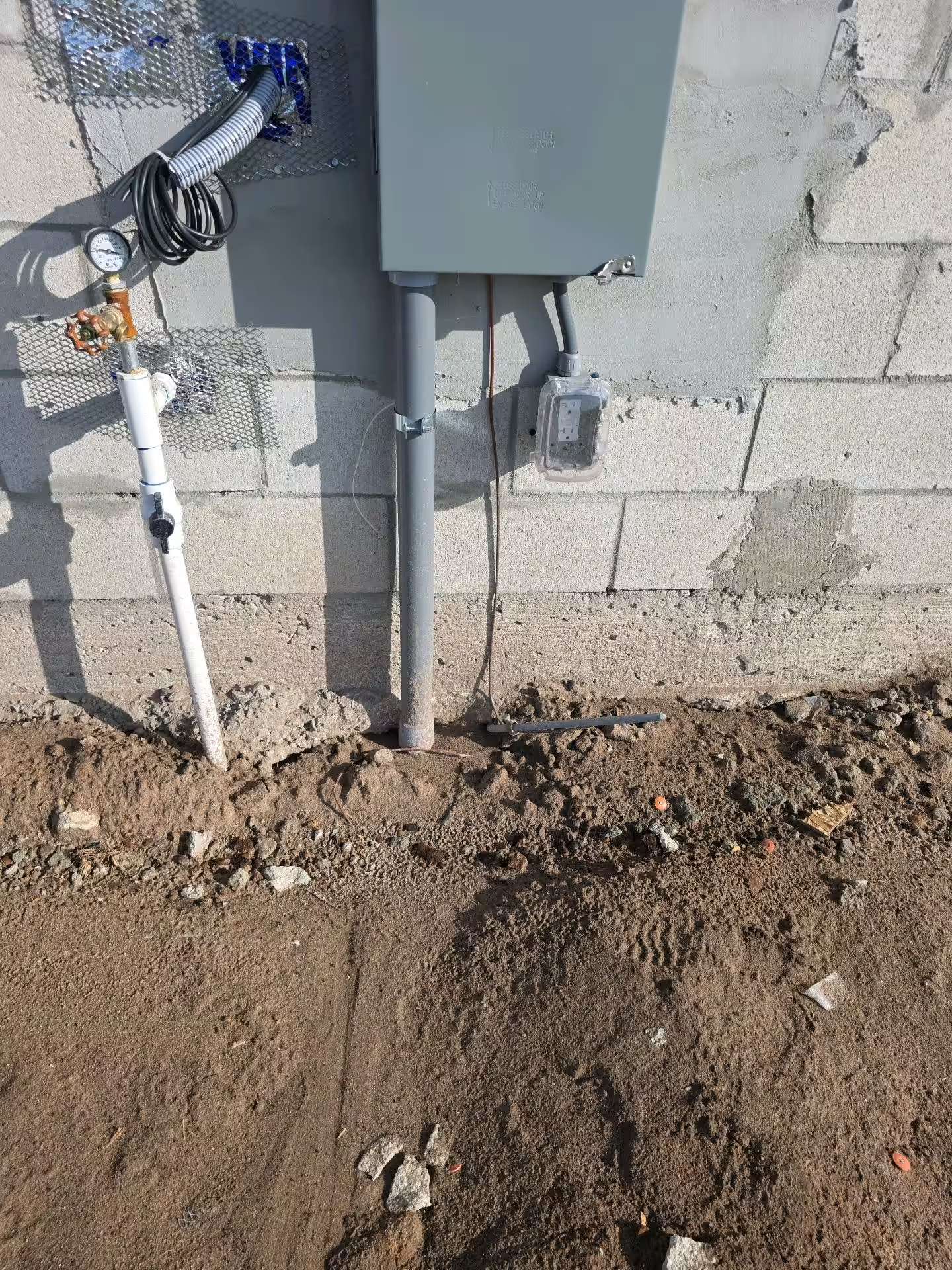
Grounding is one of the less visible parts of a property’s electrical system. At the service equipment, a grounding electrode conductor helps connect the system to grounding electrodes such as an approved ground rod or other permitted electrode. This is different from the equipment grounding conductors that provide a fault-current path for branch circuits.
What grounding electrode conductors do
The grounding electrode system helps establish a connection between the electrical system and earth for functions such as stabilizing voltage relative to ground and addressing certain electrical events. It is not a substitute for properly installed circuit grounding, bonding, or overcurrent protection. These components work together but serve different roles.
Common visible concerns
- Loose, damaged, or improperly secured grounding electrode conductors
- Questionable splices or connectors
- Connections installed on unsuitable surfaces or without appropriate fittings
- Exposed conductors that appear subject to physical damage
- Missing or uncertain connections where components should be present and accessible
Some grounding electrodes and conductors are concealed, so the absence of a visible ground rod does not by itself prove the property lacks an electrode system.
What a visual inspection can reveal
Inspectors may identify an accessible grounding electrode conductor and observe loose hardware, atypical fittings, damage, corrosion, or apparent unworkmanlike installation. However, a home inspection does not establish the continuity or adequacy of every concealed grounding or bonding connection, and it does not substitute for specialized electrical testing.
Why proper installation matters
An unreliable grounding or bonding connection can interfere with the intended performance of an electrical installation. Electrical faults and surge events involve multiple protective components; an intact-looking wire is only one piece of the system. Claims that a particular visible condition will automatically cause shocks or fires are too simplistic without professional evaluation.
Recommended next steps
A licensed electrician should evaluate questionable grounding connections, determine the correct electrode arrangement and conductor requirements for the installation, and repair connections using appropriate listed components. Avoid moving or disconnecting service grounding conductors as a do-it-yourself project.
Field Insight
For the most part, we find that most properties have properly grounded electrical systems. Where our inspectors tend to identify the most deficiencies is downstream of the main electrical panel. Common examples include ungrounded receptacles and distribution panels with improper grounding or bonding connections.
Most newer construction includes an accessible grounding connection near the main electrical panel, making it easier to accommodate additional grounding and bonding requirements.
While ground rods remain common, we also frequently encounter concrete-encased electrodes, commonly referred to as UFER grounds, and metal water piping incorporated into the grounding electrode system.
It’s important to understand that grounding and bonding serve different purposes, and a properly grounded main panel doesn’t necessarily mean every circuit or downstream distribution panel is correctly installed. That’s why our inspectors evaluate accessible grounding and bonding connections throughout the property, not just at the main panel.
Frequently asked questions
Is the grounding wire the same as the neutral?
No. Neutral conductors normally carry return current, while equipment grounding and grounding electrode conductors have distinct functions. Their connections are controlled by the type and location of the equipment.
Can an inspector verify the entire grounding system?
A visual inspection can identify accessible deficiencies, but hidden connections and electrode performance may require additional evaluation by an electrician.
For background on electrical grounding and equipment grounding, see OSHA’s electrical grounding overview.
For related topics, see our electrical systems overview and the Electrical Knowledge Center.