
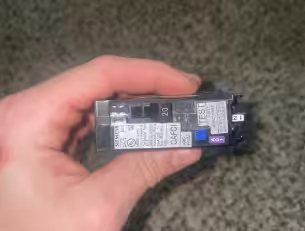
A circuit breaker can protect wiring from overloads and short circuits while still lacking technology designed to recognize certain hazardous electrical arcs. An arc-fault circuit interrupter, or AFCI, monitors a circuit for electrical patterns associated with dangerous arcing and disconnects power when it detects a qualifying condition.
Why an arc can become dangerous
An electrical arc is current traveling through an unintended gap. Loose terminations, damaged cords, deteriorated insulation, and wiring penetrated by a nail or screw can produce arcing. Not every ordinary electrical spark represents a fault, and AFCI devices are designed to distinguish potentially hazardous patterns from normal equipment operation.
The Electrical Safety Foundation International’s AFCI safety brochure explains the purpose and limitations of this protective technology.
AFCI versus GFCI: different problems, different protection
AFCI protection addresses hazardous arcing that may lead to fires. Ground-fault circuit interrupters, or GFCIs, respond to an imbalance in current that may indicate leakage to ground and an electric shock hazard. Some devices provide both functions, but one label should not be assumed to guarantee the other function.
Our guide to GFCI outlets explains the distinction further.
Where are AFCIs required in Florida?
Requirements vary with the adopted electrical code, occupancy, circuit characteristics, and whether work is new, altered, or existing. A home built before modern AFCI provisions may not have the same configuration as new permitted construction. The absence of AFCIs alone is not sufficient evidence that an older installation violates the requirements applicable when it was installed.
Homeowners considering renovations should ask a Florida licensed electrician and the local authority having jurisdiction which protections apply to the planned work. AFCI devices must be correctly matched with compatible equipment and installed in accordance with listing instructions.
What inspectors can identify
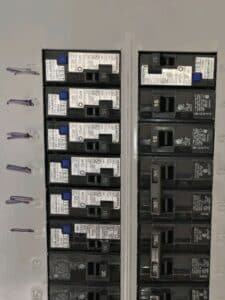
In an accessible panel, an inspector may observe breaker labels, integral test buttons, incompatible components, visible wiring concerns, or signs of damage. A standard inspection cannot trace every concealed branch circuit or establish full circuit performance. Some protection may be provided through devices elsewhere in the circuit rather than an obvious AFCI breaker in the panel.
What if an AFCI keeps tripping?
Repeated trips should not be dismissed as an inconvenience. Plug-in equipment, a damaged cord, loose connections, incompatible devices, or an actual wiring fault can contribute. Avoid replacing an AFCI with a standard breaker or repeatedly resetting it without investigation. A qualified electrician can isolate loads and evaluate the affected circuit.
Our grounding connections article covers another important but separate part of electrical safety.
Field Insight
AFCI breakers are required in new construction homes and they are an excellent safety device to have in a home. Some early-generation AFCI breakers have been subject to recalls or manufacturer safety notices. The specific brand and model need to be checked rather than assuming all older AFCIs are affected. This is one thing our inspectors specifically look for in these age homes. We do encounter AFCI breakers that fail testing, including in new construction. If you’re a homeowner, follow the manufacturer’s recommended AFCI test schedule and have an electrician evaluate a breaker that fails its test.
Frequently asked questions
Does an AFCI replace a GFCI?
No. Their protection functions differ; combined protection may be appropriate where both are required.
Can a standard inspection test every AFCI?
No. Accessibility, device design, occupancy, and inspection limitations determine what can be observed and tested.
Explore the Electrical Knowledge Center for additional guidance.