
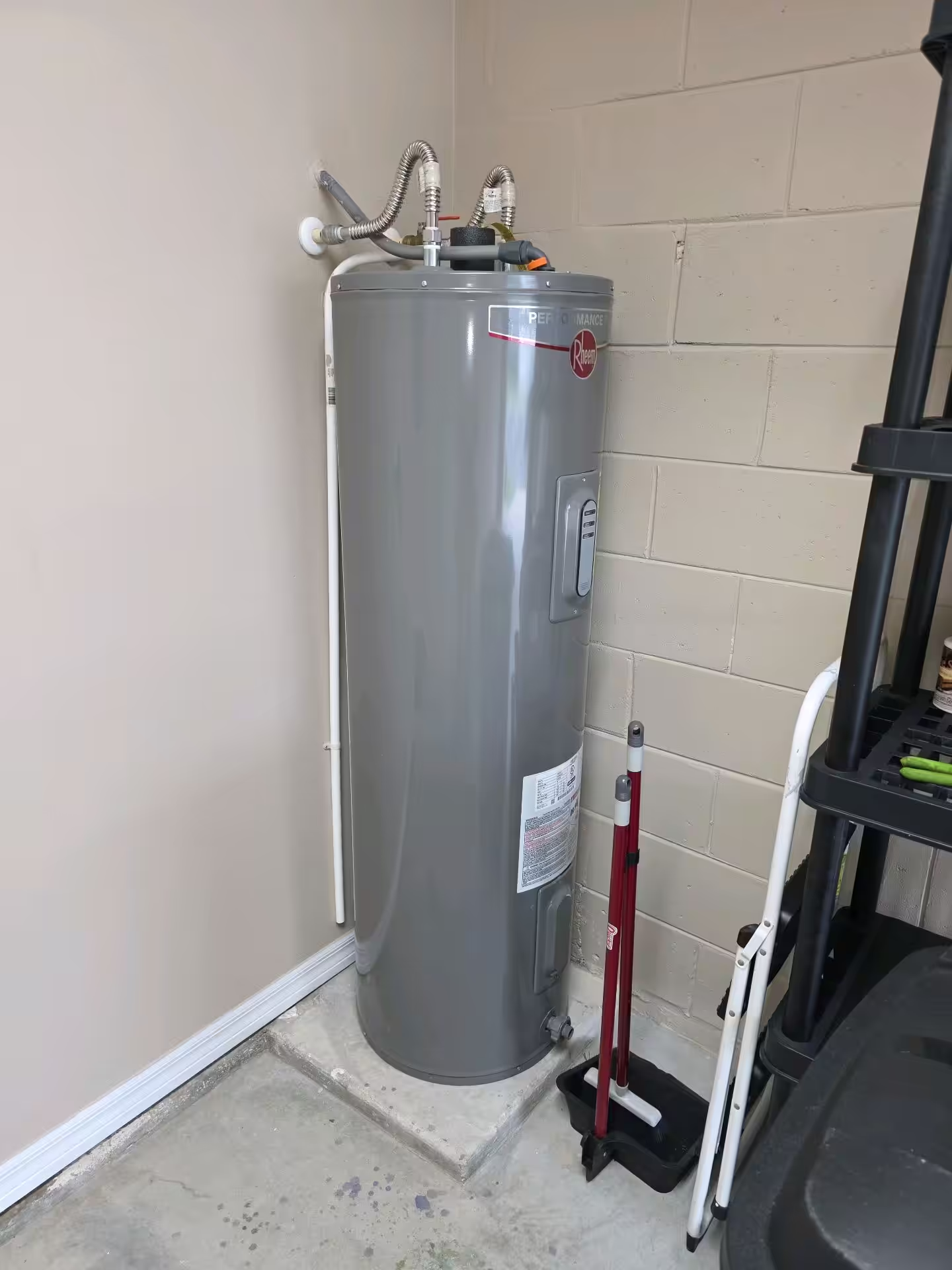
A residential water heater has a temperature and pressure relief valve, often called a TPR or T&P valve. Its job is to release water if unsafe temperature or pressure conditions develop. The discharge pipe connected to that valve has a separate purpose: direct any released water toward an appropriate termination point without creating an additional hazard.
How the relief valve and discharge pipe work together
The relief valve is a safety device, not an ordinary drain. When it opens, released water may be very hot. The discharge pipe is intended to carry that water away from the valve toward a suitable, visible termination. An incorrect pipe or termination can obstruct discharge, create a burn hazard, or conceal a valve that is leaking.
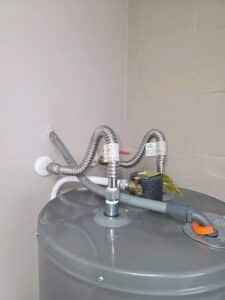
Common visible concerns
- A relief valve without a connected discharge pipe
- Pipe material or connections that appear unsuitable for the intended service
- Obvious restrictions, valves, caps, or plugged terminations
- Improper routing or a termination where discharged water could injure someone or damage materials
- Active dripping or staining that may indicate a leaking valve or an underlying pressure or heating problem
Exact installation requirements can vary with the heater, piping materials, applicable requirements, and the location of the termination. The visible presence of piping alone does not confirm an installation is correct.
What a property inspection can determine
During a visual inspection, accessible relief valves and discharge piping can be assessed for obvious deficiencies. Inspectors generally do not operate a TPR valve solely to demonstrate function because doing so can cause an older valve to leak or fail to reseat. The internal condition and opening pressure are not established by a visual inspection.
Why discharge piping matters in Florida
Water heaters are frequently located in garages, closets, and other accessible areas. A discharge termination that creates a scalding risk or allows water to damage finishes can be consequential even when the water heater otherwise heats water normally. Water observed at the pipe should not simply be ignored or redirected without finding the cause.
What to do when a concern is found
Have a qualified plumber evaluate missing or questionable discharge piping, a dripping outlet, or signs of improper operation. The plumber should determine the cause before replacing components or changing the route. Never cap or plug a relief valve discharge.
Field Insight
It’s not uncommon for our inspectors to find deficiencies with water heater temperature and pressure relief (TPR) valves and their discharge piping. Whether the discharge pipe is too short, improperly secured, made from an unsuitable material, or actively dripping, these are items we specifically look for because of the safety concerns involved.
In our experience, properly permitted installations tend to have fewer issues. However, some homeowners choose to save money by hiring a handyman to replace their water heater rather than a licensed plumber. That’s often where we find the most installation deficiencies.
Handymen may be handy, but they’re not plumbers. And when it comes to a safety device designed to relieve excessive temperature and pressure, proper installation matters.
Frequently asked questions
Why is my water heater discharge pipe dripping?
Possible reasons include thermal expansion, excessive supply pressure, high temperature, a worn relief valve, or another water-heater issue. A plumber should diagnose the actual cause.
Can I install a shutoff valve on the discharge pipe?
Obstructing the relief discharge defeats the intended safety function. Have a qualified plumber correct any restriction.
For manufacturer guidance on safe valve discharge piping, see the A. O. Smith installation instructions. Specific requirements depend on the installed equipment and applicable rules.
See our related article about water heater expansion tanks and browse the Plumbing Knowledge Center.