
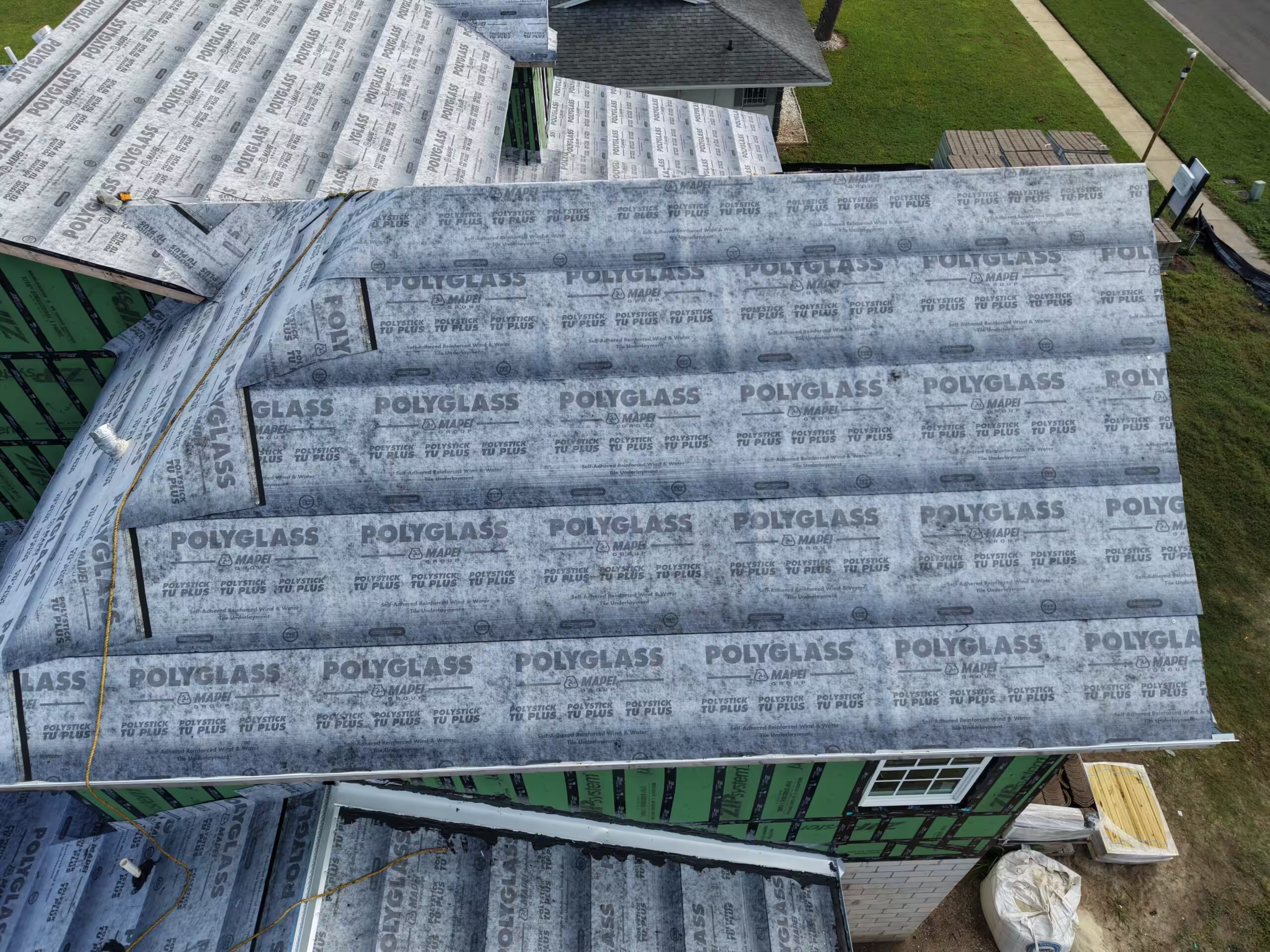
A roof covering is the visible first line of weather protection. Underneath it, underlayment provides another water-shedding layer between the covering and the roof deck. In Central Florida, that secondary protection matters because wind-driven rain can enter beneath damaged or displaced roofing materials.
What roof underlayment actually does
Underlayment is installed over the roof deck before shingles, tiles, or many metal roof systems are applied. Its job is not to replace a sound roof covering or correct poor flashing. Instead, it helps limit water intrusion when moisture passes the outer surface. The material and attachment method must work as a system with the roof covering and roof deck.
Common approaches include synthetic sheets, asphalt-based sheets, self-adhered membranes, and approved multi-layer systems. A self-adhered membrane is not automatically appropriate for every existing deck, roof type, or ventilation configuration. Installation must follow the roof covering manufacturer, the underlayment manufacturer’s instructions, and applicable permitting requirements.
Why Florida roof replacements deserve extra attention
Florida has strengthened roof-deck water protection provisions over successive code editions. Requirements depend on the code applicable to the permitted work, roof covering type, slope, and assembly. For background on sealed roof decks and underlayment methods, see the Florida Building Commission roofing fact sheet. This historical fact sheet explains a prior code update, not a complete current-code determination.
During replacement, roofers can inspect decking condition, select appropriate materials, and document concealed work before installing the finish covering. Property owners should retain the permit, product information, installation records, and clear progress photographs. Those records can answer questions years later that a noninvasive inspection cannot.

What can an inspection reveal?
From safe accessible locations, an inspector may identify exposed, torn, loose, or weathered underlayment where the roof covering has shifted or where an installation area remains visible. Water staining in an attic can point to past or current moisture intrusion, but it cannot establish the exact hidden failure pathway by itself. Most underlayment is concealed beneath the finished roof covering and cannot be fully evaluated without destructive investigation.
Read our overview of roof flashing to understand another frequent water-entry pathway, and the tile roof guide for system-specific context.
When should a roofer evaluate the underlayment?
Professional assessment is appropriate after persistent leakage, storm displacement of roofing materials, visible underlayment deterioration, or uncertainty about a recent roof replacement. The roofer should assess the entire affected assembly rather than assume a surface patch will restore the concealed water barrier.
Field Insight
Many homeowners misunderstand the importance of a roof’s underlayment. Many believe that the outer roof covering is what ultimately prevents moisture intrusion, but that is incorrect. The outer roof covering, i.e. shingle, tile, or metal roofing, is only the first line of defense. Moisture has an incredible ability to find its way into a home and the roof is often the culprit. Quality underlayment, properly installed to applicable code requirements, is one of the best ways to reduce the risk of unwanted roof-related water intrusion.
One of the best times to evaluate a new home’s underlayment is during the pre-drywall inspection if the roof covering has not been installed yet.
Questions homeowners ask
Can underlayment fail before the roof covering?
Yes. Material age, installation details, prolonged exposure, trapped moisture, and damage may affect underlayment independently of the visible covering.
Can a home inspector certify concealed underlayment?
No. A standard visual inspection documents accessible evidence and limitations, not the condition of materials hidden below an intact roof covering.
Explore more articles in our Roof Knowledge Center.