
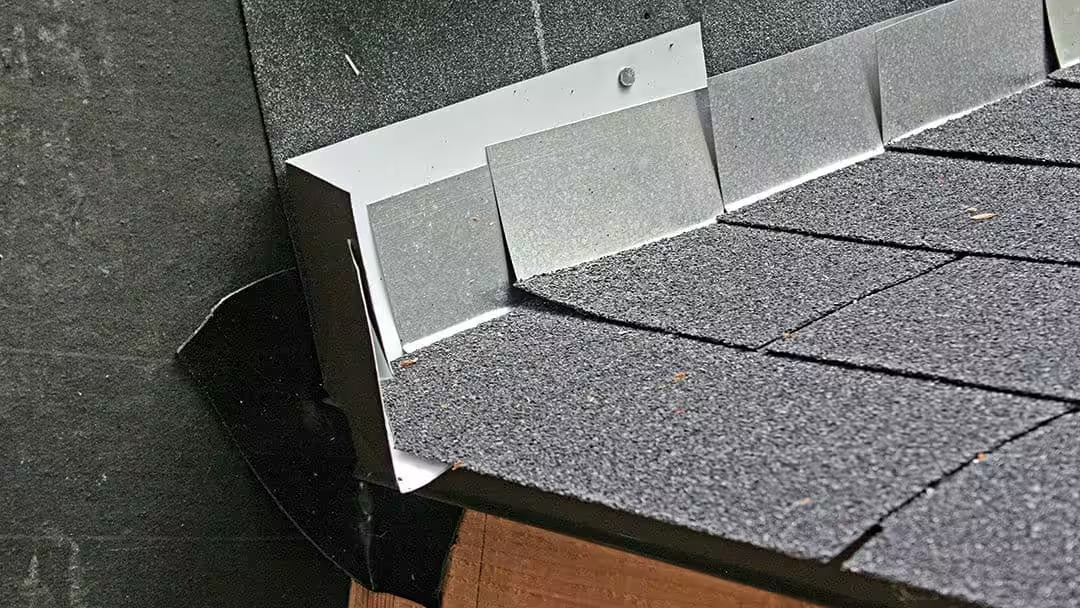
Roof flashing is used at transitions, penetrations, and changes in direction where roofing alone may not reliably keep water out. Around walls, valleys, chimneys, vents, and roof edges, properly integrated flashing helps direct rainwater onto the roof surface and away from vulnerable joints.
For Florida buyers, flashing deserves attention because heavy rain, wind-driven water, intense sun, and repeated roof repairs can expose weak points that are not obvious from the ground.
What Is Roof Flashing?
Roof flashing is typically made from corrosion-resistant metal or another approved material and installed where different building surfaces meet. Its job is to manage water at locations where shingles, tile, metal panels, or low-slope roofing cannot simply overlap in a continuous pattern.
Flashing works as part of a drainage system. The roofing material, underlayment, wall weather barrier, sealants, and flashing must be layered so water is directed outward rather than behind the roof or wall assembly.
Common Types of Roof Flashing
Step Flashing
Step flashing is commonly used where a sloped roof meets a vertical wall. Individual pieces are woven into successive shingle courses so each section overlaps the one below it. The upturned leg extends against the wall, while the lower leg integrates with the roof covering.
This layered arrangement allows water to move down the roof without relying on one long bead of sealant to keep the joint watertight.
Kick-Out Flashing
Kick-out flashing is installed at the lower end of a roof-to-wall intersection. Its purpose is to direct concentrated roof runoff away from the wall and into the gutter or drainage path instead of allowing water to wash directly down the exterior wall.
The U.S. Department of Energy identifies kick-out flashing as an important component at roof-wall intersections because it helps move runoff away from the wall assembly.
Valley Flashing
Roof valleys collect water from two adjoining roof planes. Depending on the roofing system and installation method, valleys may use exposed metal flashing, concealed metal flashing, or a manufacturer-approved layered underlayment and roofing configuration.
Because valleys concentrate water flow, installation details and material condition are especially important.
Chimney and Counter Flashing
Chimneys typically require flashing where the roof meets the chimney walls. Base or step flashing manages water at the roof surface, while counter flashing overlaps the upper portion of the flashing to help keep water from entering behind it.
On wider chimneys, additional drainage details such as a cricket may be used to divert water around the uphill side.
Drip Edge and Edge Flashing
Drip edge is installed along roof edges to help direct water away from the fascia and into the gutter or off the roof edge. It also helps protect exposed roof-deck edges and supports proper drainage at eaves and rakes.
Why Flashing Problems Matter
Flashing defects can allow water to enter areas that are difficult to see from inside the property until staining or damage develops. Problems commonly occur when flashing is missing, poorly lapped, improperly fastened, corroded, damaged during reroofing, or heavily dependent on sealant.
Sealant may be appropriate at certain details, but it generally should not be used as a substitute for properly installed flashing where a flashing assembly is required.
What Does a Home Inspector Look For?
When accessible and visible, an inspector may evaluate:
- Whether flashing is present at common roof transitions and penetrations
- Visible gaps, corrosion, displacement, or damage
- Improper laps or exposed joints
- Roof-to-wall and chimney flashing details
- Kick-out flashing at applicable roof-wall intersections
- Excessive reliance on sealant
- Signs of previous repairs or patching
- Interior or attic evidence of moisture near corresponding roof areas
A home inspection is visual and non-invasive. Some flashing is intentionally concealed beneath roofing materials or wall cladding and cannot be fully verified without removing finishes. An inspector can identify visible concerns and recommend additional evaluation when conditions warrant it, but cannot confirm every concealed flashing detail.
Common Flashing Defects
Missing or Incomplete Flashing
A roof-to-wall intersection, chimney, or penetration may lack a visible component needed to direct water properly. This can occur after reroofing, siding replacement, or prior repair work.
Improper Overlap
Flashing relies on proper layering. If an upper component terminates behind rather than over the component below it, water can be directed into the assembly instead of outward.
Corrosion or Physical Damage
Metal flashing can corrode, bend, loosen, or become damaged over time. Coastal exposure, incompatible materials, and repeated maintenance can accelerate deterioration.
Sealant-Dependent Repairs
Large amounts of roofing cement or sealant may indicate a prior leak or an attempt to compensate for a flashing problem. These repairs may be temporary and should be evaluated in context with the surrounding roof system.
Missing Kick-Out Flashing
At the bottom of a roof-to-wall intersection, missing or undersized kick-out flashing can allow concentrated runoff to flow directly against the exterior wall. Over time, that can contribute to moisture intrusion at the wall assembly.
Flashing on Florida Roof Systems
Flashing details vary by roof covering. Asphalt shingles commonly use step flashing at sidewalls, while tile, metal, and low-slope roofing may use different integrated flashing systems and manufacturer-specific details.
That is why flashing should be evaluated as part of the complete roof assembly rather than judged by appearance alone. The correct configuration depends on the roofing material, adjacent wall construction, roof geometry, and installation requirements.
Should Buyers Be Concerned About Sealant Around Flashing?
Not automatically. Sealant is commonly used at certain roof details and terminations. The concern is when sealant appears to be the primary means of waterproofing a joint that should be managed by a properly layered flashing assembly.
Cracked, separated, deteriorated, or repeatedly patched sealant can also indicate an area that deserves closer evaluation.
What Should Buyers Do Next?
If visible flashing is missing, damaged, improperly installed, or associated with moisture intrusion, a qualified roofing contractor can perform a more detailed evaluation and determine whether repair is needed.
For a broader overview of roof components and common inspection findings, visit our Roof Systems guide and the Tier-1 Roof Knowledge Center.
For additional technical guidance on roof-to-wall drainage details, see the U.S. Department of Energy Building Science Education guidance on kick-out flashing.