
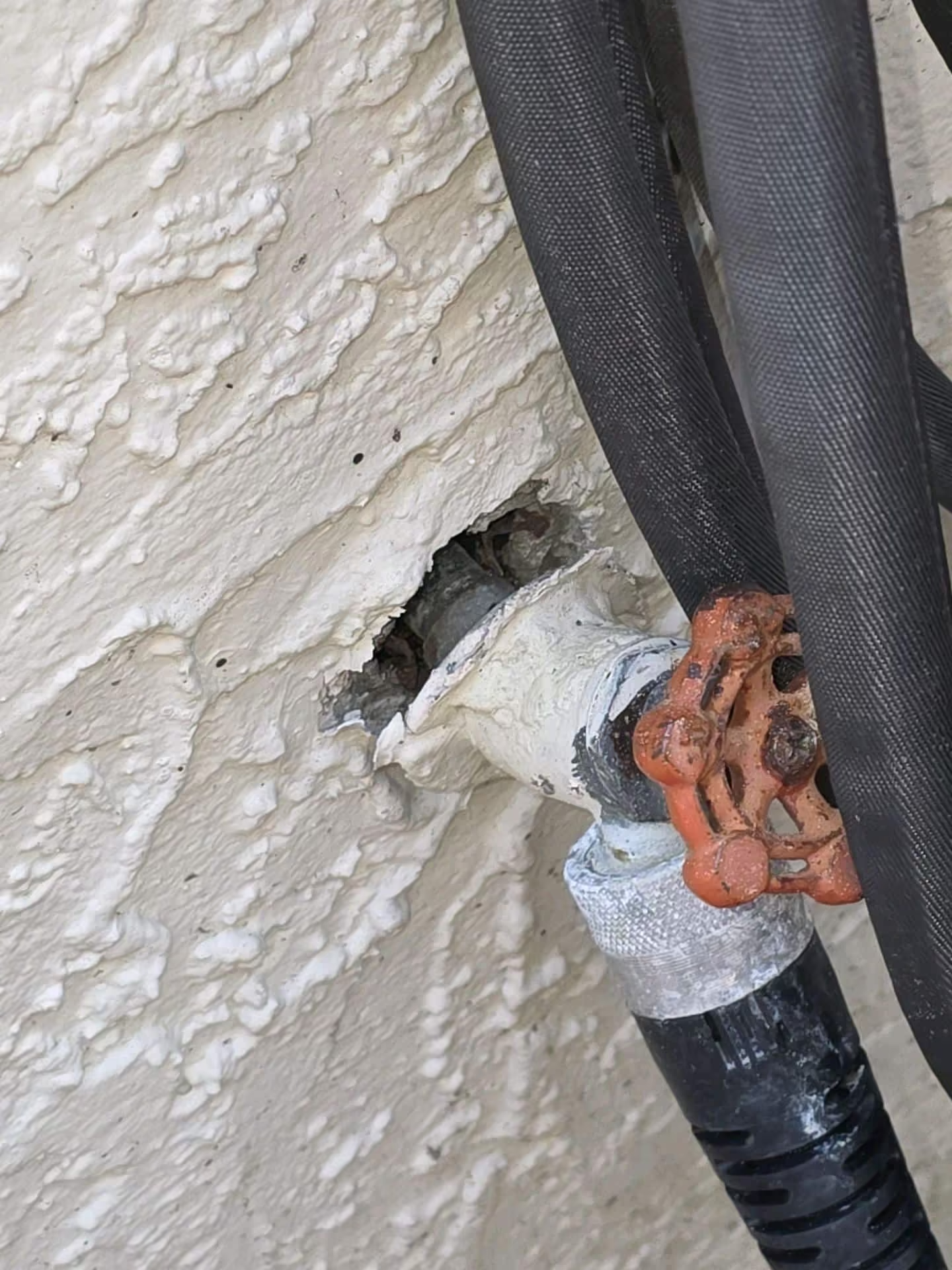
An outdoor hose bib should remain securely mounted when a hose is connected and operated. If the spigot moves at the wall, the issue may be limited to missing mounting hardware, or the movement may transfer stress to piping and fittings behind the exterior finish.
Why a loose spigot matters
Exterior faucets are frequently used with hoses, sprinklers and pressure-washing equipment. Repeated pulling or twisting on an unsecured faucet can place additional load on concealed plumbing connections. Over time, that movement may contribute to loosening or leakage, especially when the plumbing lacks appropriate support.
What a home inspector may find
Visible movement at the wall, missing mounting screws, cracked sealant, damaged exterior finish, or signs of dripping during operation justify further attention. However, a loose fixture does not by itself establish that concealed piping is leaking. Moisture inside the wall may remain hidden during a standard visual inspection.
Don’t confuse hose leaks with wall leaks
Water dripping at the hose coupling often indicates a worn hose washer or loose connection, whereas moisture appearing around the wall penetration may require investigation of the fixture and associated piping. The EPA WaterSense leak guidance recommends checking outdoor hoses and fittings for water loss. A plumber can distinguish between a simple mounting repair and a problem that requires opening or replacing the faucet connection.
What repair typically involves
A qualified plumber should verify that the fixture and piping are adequately secured, assess the fitting for leakage, and address damaged penetrations or exterior weather sealing where applicable. Merely applying caulk around a moving spigot does not stabilize its plumbing connection.
Pay attention to the wall penetration
An outdoor faucet passes through exterior finishes and may connect to pipes hidden in the wall. The surrounding opening can be exposed to rain and water from everyday hose use. If the fixture moves, gaps in damaged sealant or exterior finishes may permit water to enter at that location. Weather sealing and secure plumbing connections are separate requirements. A stable faucet can leak, and a loose faucet is not necessarily leaking, so evaluating the entire assembly is more useful than focusing on appearance alone.
Clues that warrant closer evaluation
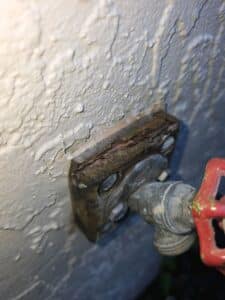
Missing mounting hardware, movement during ordinary operation, damaged stucco or siding, visible corrosion, persistent dripping or nearby staining may justify further attention. Interior discoloration behind the faucet can be relevant, although its cause cannot be established from appearance alone. A home inspector should not aggressively twist or pull a loose fixture to prove it is defective. Unnecessary force can damage concealed fittings or worsen a preexisting problem.
Common misconceptions about outdoor faucets
A thick ring of caulk may help seal an appropriately installed wall penetration, but it cannot reliably secure a faucet that is moving at its mounting point. Another misconception is that an outdoor faucet is sound whenever no water is visibly dripping. A weak connection can remain hidden until it is stressed or operated. Conversely, a small leak at the hose coupling may be a worn hose washer rather than a leak in the faucet body or piping. The plumber should identify the source before recommending repairs.
Practical steps for homeowners and buyers
Look at the fixture from the ground and note visible movement, missing fasteners, cracked finishes or water around the wall during normal use. Avoid pulling, twisting or repeatedly testing a loose spigot. A qualified plumber can inspect the mounting arrangement, check for leakage and verify piping support. If the weather barrier or exterior finish is compromised, repairs may involve an additional contractor. Buyers should request an appropriate evaluation rather than automatically assuming the defect is cosmetic or that the entire plumbing line requires replacement.
When obtaining repair estimates, ask whether securing the fixture will require access to the wall or any concealed connections. The answer can affect cost and the scope of finish repairs. A documented repair should identify both the mounting correction and any actual plumbing leaks discovered.
Field Insight
Loose exterior spigots are easy to overlook, but they can become a significant problem. We encounter them regularly during inspections, particularly in homes that have been repiped.
While a loose spigot may seem like a minor issue, the additional movement can place unnecessary stress on plumbing connections concealed within the wall. Over time, this can lead to hidden plumbing leaks and potentially significant moisture-related damage if left undetected.
Fortunately, this is often a relatively simple issue to correct. Proactively securing loose spigots can help homeowners avoid costly repairs and unnecessary headaches down the road.
For related information, read our plumbing systems overview, water pressure guide and Plumbing Knowledge Center. During a home purchase, documenting loose fixtures can help buyers prioritize straightforward repairs before they become more expensive.