
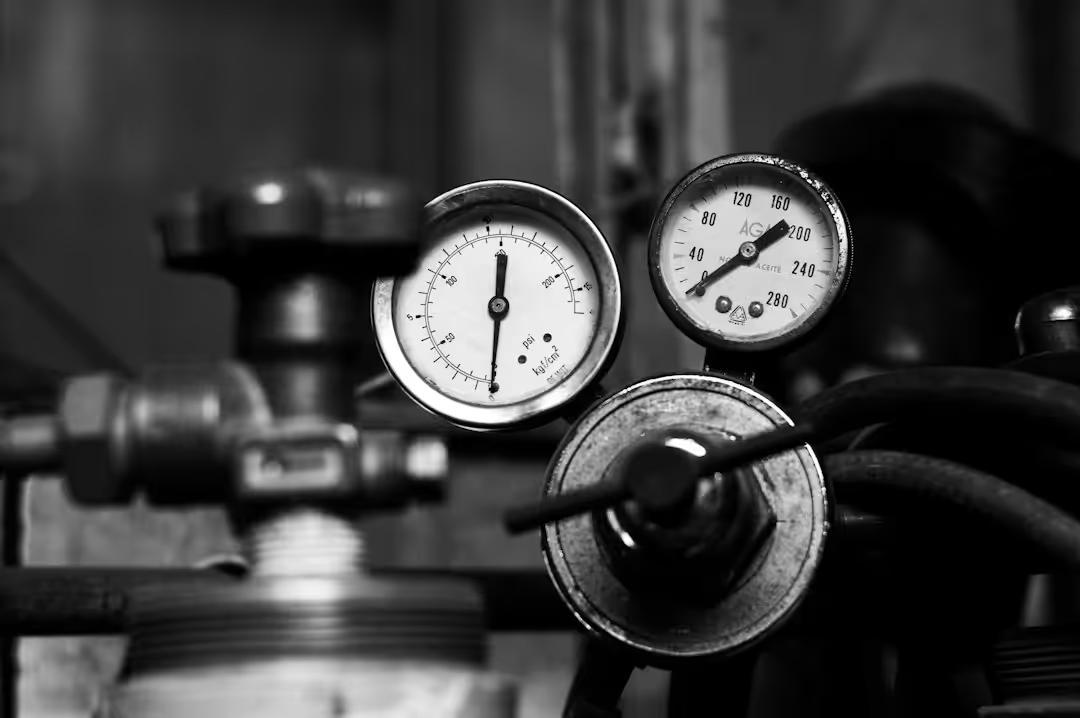
Water pressure affects how plumbing fixtures perform and how much stress is placed on the property’s supply piping, valves, appliances, and connections. For Central Florida buyers, a pressure reading can provide useful context about the plumbing system, but the number needs to be interpreted correctly.
What Is Residential Water Pressure?
Water pressure is the force that moves water through the property’s supply piping. It is commonly measured in pounds per square inch (psi). Municipal water pressure can vary by location, elevation, demand, and the utility’s distribution system. Properties supplied by private wells operate differently and typically rely on a pump, pressure switch, and pressure tank.
The U.S. Environmental Protection Agency’s WaterSense program recommends incoming service pressure between 45 and 60 psi for efficient fixture operation and system performance. WaterSense also notes that many plumbing codes require pressure regulation when supplied pressure exceeds 80 psi.
Why High Water Pressure Can Be a Concern
Higher pressure may make a shower feel stronger, but excessive pressure can place additional stress on plumbing components. Over time, that can contribute to premature wear at supply lines, valves, fixtures, appliance connections, and other vulnerable points in the system.
High pressure can also increase water use. If incoming pressure is excessive, a pressure-reducing valve (PRV), sometimes called a pressure regulator, may be installed near the main water supply to reduce pressure to a more appropriate level.
What About Low Water Pressure?
Low pressure can have several possible causes. The issue may originate with the municipal supply, a private well system, a partially closed valve, a pressure regulator, mineral buildup, restricted piping, a leak, or another plumbing condition. A single pressure reading does not identify the cause.
It is also important to distinguish overall service pressure from weak flow at one fixture. If only one sink or shower performs poorly, the issue may be localized to that fixture rather than the property’s main water supply.
Static Pressure vs. Water Flow
Pressure and flow are related, but they are not the same measurement. Static pressure is typically measured when water is not actively being used. Flow describes the volume of water moving through the system over time.
A property can show an acceptable static pressure reading and still have noticeable pressure or flow changes when several fixtures operate at once. Pipe sizing, restrictions, valves, supply conditions, and other factors can affect performance under demand.
How Water Pressure Is Checked During an Inspection
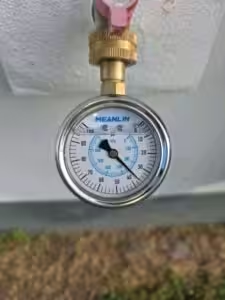
When accessible and appropriate, an inspector can use a pressure gauge at an exterior hose connection or another suitable location to obtain a snapshot of the property’s water pressure. The plumbing system is also evaluated for visible conditions such as leaks, corrosion, supply-pipe materials, fixture operation, and accessible pressure-regulating components.
A home inspection is a visual evaluation and does not provide continuous pressure monitoring or a full hydraulic analysis of the plumbing system. Pressure can fluctuate, and concealed piping or internal valve conditions are outside the scope of a visual inspection.
What Is a Pressure-Reducing Valve?
A PRV is installed on the incoming water supply to reduce higher utility pressure before it reaches the property’s plumbing fixtures and appliances. Not every property requires one, and the presence of a PRV does not by itself confirm that pressure is properly regulated.
Like other mechanical components, regulators can wear or require adjustment. If pressure is unusually high, unusually low, or inconsistent, further evaluation by a qualified plumbing contractor can help determine whether the regulator, supply system, or another component is responsible.
Water Pressure in Properties With Private Wells
Private well systems commonly cycle between a lower and upper pressure setting rather than maintaining one constant pressure. The pressure tank and pump controls play an important role in system performance. Buyers of well-supplied properties should therefore consider the pressure reading together with the visible condition and operation of the well equipment.
What Should Buyers Do With the Reading?
A water-pressure measurement is most useful when considered with the rest of the plumbing inspection. An isolated reading is not automatically a defect. The inspector considers the measured pressure along with fixture performance, visible plumbing conditions, the presence of a regulator or well equipment, and other observations at the property.
If the pressure is outside an expected range or other plumbing concerns are present, a qualified plumbing contractor can perform additional testing and determine whether adjustment, repair, or further investigation is appropriate.
Learn More About the Plumbing System
Water pressure is only one part of evaluating a property’s plumbing. Learn more in our Plumbing Systems guide, or explore additional topics in the Tier-1 Plumbing Knowledge Center.
For additional guidance on residential service pressure, see the EPA WaterSense home maintenance guidance.