
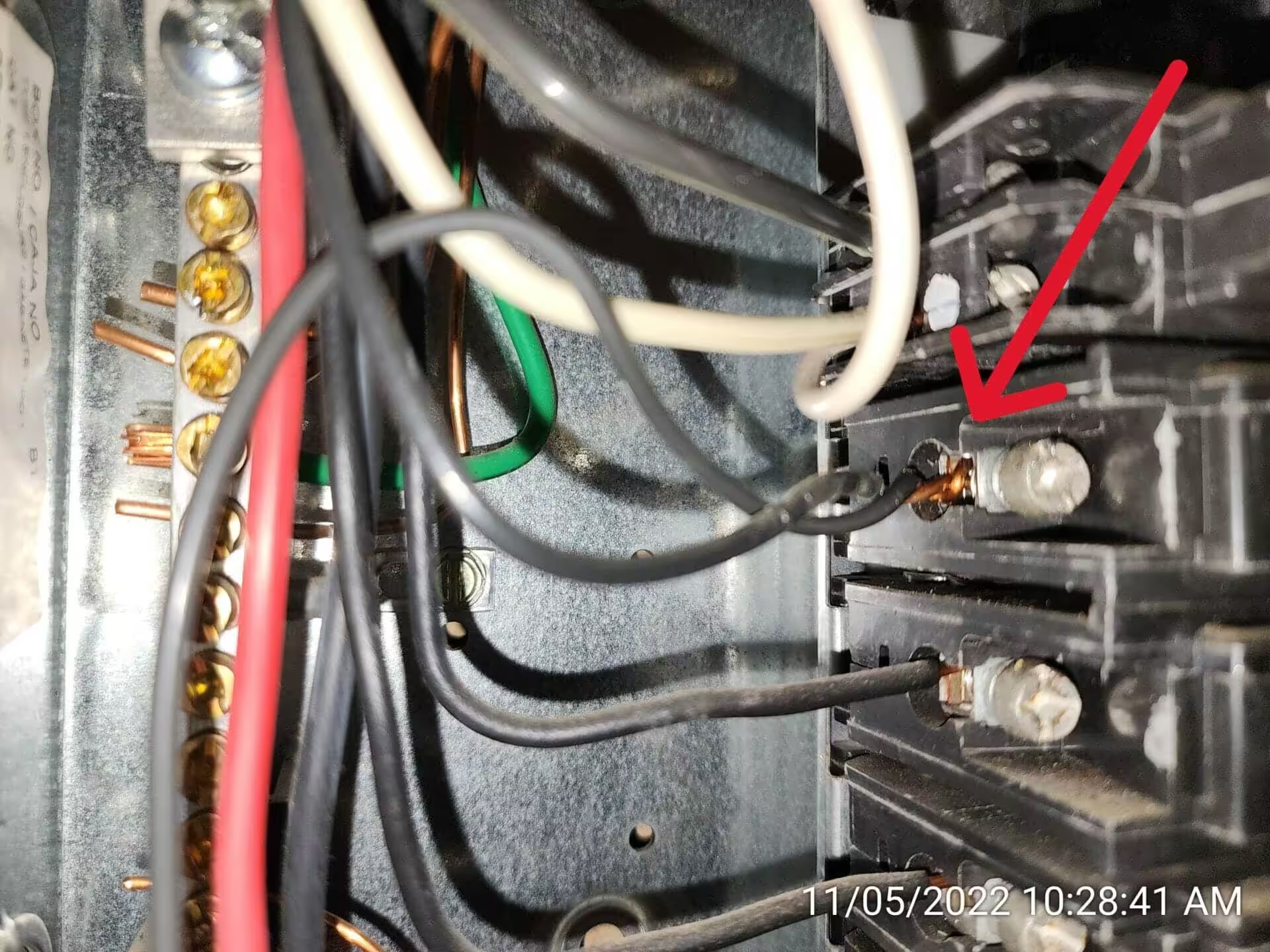
A double tapped breaker is a common electrical finding during home inspections. It generally describes a circuit breaker with two electrical conductors connected beneath a terminal intended for only one conductor.
The concern isn’t simply that two wires are connected to one breaker.
The important question is whether the specific circuit breaker is designed and listed to accept multiple conductors.
Some circuit breakers are manufactured to accept two conductors under a single terminal. Many others are designed for only one. When two conductors are improperly installed beneath a breaker designed for a single conductor, the connection may not adequately secure both wires.
That can contribute to loose electrical connections, overheating, arcing, and other electrical concerns.
Fortunately, an improper double tapped breaker can often be corrected without replacing the entire electrical panel. The appropriate repair depends on the breaker, conductors, available panel space, circuit configuration, and overall electrical installation.
What Is a Double Tapped Breaker?
A double tapped breaker occurs when two electrical conductors are connected to a single circuit breaker terminal.
You may also hear the condition described as:
- Double tapping
- Double tapped breaker
- Double lugged breaker
- Two wires under one breaker
- Multiple conductors under a breaker terminal
The terminology can vary, but the important issue is the same:
Is the breaker terminal designed and listed for the number and type of conductors connected to it?
If the answer is no, the connection is improper and should be corrected.
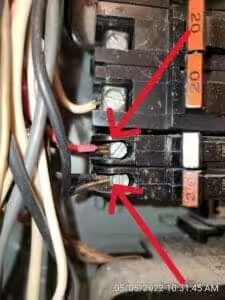
Are All Double Tapped Breakers Improper?
No.
This is an important distinction.
Some circuit breakers are specifically designed and listed by the manufacturer to accept two conductors.
When the breaker is designed for multiple conductors, the conductors are compatible with the terminal, and the connection is installed according to the manufacturer’s requirements, two wires beneath one breaker terminal may be acceptable.
Other breakers are designed to accept only a single conductor.
Installing two wires beneath one of those terminals is not an appropriate connection.
This is why a home inspector should not identify a breaker as defective simply because two conductors are visible.
The breaker itself needs to be considered.
How Can You Tell if a Breaker Allows Two Wires?
The breaker manufacturer’s markings and specifications determine how the terminal is intended to be used.
Depending on the breaker, markings may identify:
- Number of permitted conductors
- Permitted conductor sizes
- Permitted conductor materials
- Terminal configuration
- Other installation requirements
Certain breaker designs also have terminals physically configured to secure multiple conductors independently.
However, homeowners should not remove an electrical panel cover or handle breakers simply to investigate whether a connection is permitted.
Electrical panels contain energized components capable of causing severe electrical shock, burns, or other injury.
If the configuration is uncertain, it should be evaluated by a qualified electrician.
Are Double Tapped Breakers Dangerous?
An improperly double tapped breaker can create an electrical safety concern, particularly if the terminal cannot adequately secure both conductors.
Electrical connections need to remain tight and stable.
When two conductors are installed beneath a terminal designed for only one, one conductor may not be properly secured.
A loose electrical connection can create increased resistance.
Increased resistance can generate heat and potentially contribute to:
- Overheating
- Arcing
- Damaged conductor insulation
- Breaker damage
- Panel damage
- Intermittent circuit operation
- Electrical failure
The severity of an individual condition depends on the actual connection and installation.
An improper double tap should therefore be corrected, but the presence of two wires beneath a breaker should first be evaluated to determine whether the breaker is designed for that configuration.
Can a Double Tapped Breaker Cause a Fire?
Improper electrical connections can contribute to overheating and arcing, both of which can create fire hazards.
That does not mean every double tapped breaker is actively overheating or about to cause a fire.
The concern is that an improperly secured conductor can create conditions that increase electrical risk.
During an inspection, additional signs such as the following may increase concern:
- Heat damage
- Discoloration
- Melted insulation
- Damaged breaker components
- Visible arcing
- Burning odors
- Deteriorated conductor insulation
Any signs of overheating or electrical damage warrant further evaluation.
Why Do Double Tapped Breakers Happen?
Double tapped breakers are commonly associated with electrical modifications made after the original installation.
For example, someone may add:
- A new receptacle circuit
- Exterior equipment
- Garage wiring
- Pool equipment
- Lighting
- An appliance
- Additional interior wiring
- Other electrical loads
Instead of installing a new breaker or properly modifying the circuit configuration, the additional conductor may be placed beneath an existing breaker terminal.
Double tapping can also occur during renovations, additions, panel modifications, or previous electrical repairs.
The condition doesn’t necessarily indicate who performed the work or when it occurred.
Is a Double Tapped Breaker the Same as an Overloaded Circuit?
No.
These are two different conditions.
A double tapped breaker describes how conductors are connected to the breaker terminal.
An overloaded circuit occurs when the electrical demand on a circuit exceeds what the circuit is designed to safely carry.
A double tapped breaker does not automatically mean the circuit is overloaded.
Likewise, a circuit can be overloaded even if only one conductor is connected to the breaker.
Determining whether a circuit is overloaded requires evaluating the circuit configuration and electrical loads, not simply counting the number of wires connected to the breaker.
Is a Double Tapped Breaker the Same as a Double Lugged Neutral?
No.
Although the terms sound similar, they describe different electrical conditions.
A double tapped breaker generally involves multiple conductors connected beneath a circuit breaker terminal.
A double lugged neutral generally refers to multiple neutral conductors installed beneath a terminal where the configuration is not permitted.
These conditions occur in different parts of the electrical panel and need to be evaluated based on the specific equipment and terminal requirements.
Are Double Tapped Breakers Allowed?
Sometimes.
The determining factor is not simply whether two conductors are connected to one breaker.
The question is whether the breaker is listed and designed for that particular configuration.
If a breaker is designed to accept two conductors and the conductors meet the manufacturer’s requirements, the installation may be acceptable.
If the breaker is designed for only one conductor, placing two conductors beneath that terminal is improper.
This distinction is why statements such as “all double tapped breakers are defects” are overly broad.
The specific breaker and installation matter.
Are Double Tapped Breakers Against Electrical Code?
Electrical installations are required to use equipment in accordance with its listing, labeling, and installation requirements.
For a double tapped breaker, one of the central questions is whether the breaker terminal is designed and listed for the connected conductors.
However, a home inspection is not a municipal electrical code inspection.
Home inspectors evaluate readily accessible electrical components for visible deficiencies, safety concerns, improper installations, damage, and other conditions that may warrant attention.
When the suitability of a breaker connection is uncertain, evaluation by a qualified electrician may be recommended.
Can a Double Tapped Breaker Affect a Four Point Inspection?
It can be documented as an electrical deficiency when the breaker is not designed for the installed conductor configuration.
Florida Four Point Inspections include an evaluation of readily accessible components of the home’s electrical system.
Electrical conditions documented during the inspection can be relevant to an insurance carrier’s underwriting decision.
However, the inspector does not determine whether an insurance company will ultimately accept or reject the property.
The inspector documents the observed electrical condition. The insurance carrier determines its underwriting requirements.
When repairs are required, the electrical deficiency should be appropriately corrected before an updated report or reinspection is requested.
How Do You Fix a Double Tapped Breaker?
There is no single repair that applies to every double tapped breaker.
The appropriate correction depends on factors such as:
- Breaker type
- Conductor size
- Conductor material
- Circuit configuration
- Available panel space
- Electrical load
- Panel manufacturer
- Existing wiring
- Overall condition of the electrical system
Common professional correction methods may include installing the conductors on appropriately configured breakers, modifying the circuit connection using an approved method, or making other appropriate changes based on the electrical installation.
The important objective is to ensure the conductors are properly protected and terminated using equipment designed for the configuration.
Can You Pigtail a Double Tapped Breaker?
In some electrical configurations, a qualified electrician may determine that an approved splice and single conductor connection to the breaker is an appropriate correction.
This is commonly referred to as creating a pigtail.
However, whether this is appropriate depends on the circuit configuration, conductor sizes, electrical load, enclosure space, and other installation requirements.
A pigtail should not be treated as a universal repair for every double tapped breaker.
The electrician evaluating the circuit should determine the appropriate correction.
Can You Just Add Another Breaker?
Sometimes an electrician may determine that separating conductors onto individual breakers is appropriate.
However, this is not always as simple as adding another breaker.
Considerations can include:
- Available panel spaces
- Panel design
- Breaker compatibility
- Circuit requirements
- Electrical load
- Conductor configuration
- Panel capacity
- Other existing electrical conditions
Electrical panels should only contain breakers designed and listed for use with that specific equipment.
The fact that a breaker physically fits into a panel does not necessarily mean it is approved for use in that panel.
Does a Double Tapped Breaker Mean I Need a New Electrical Panel?
Usually, the presence of an improper double tapped breaker by itself does not establish that the entire electrical panel needs replacement.
Many double tap conditions can be corrected through more limited electrical repairs.
Panel replacement may become appropriate when additional conditions are present, such as:
- Significant panel deterioration
- Obsolete or problematic equipment
- Extensive corrosion
- Heat damage
- Insufficient capacity
- Lack of appropriate breaker positions
- Significant previous modifications
- Other major electrical deficiencies
The overall electrical panel should be evaluated rather than recommending replacement solely because a double tap is present.
Can a Homeowner Fix a Double Tapped Breaker?
Electrical panel repairs should generally be performed by a qualified electrical professional.
Removing a panel cover can expose energized components even when individual circuit breakers are turned off.
Electrical service equipment can contain components that remain energized unless power is disconnected upstream.
Attempting to move conductors, install breakers, create splices, or modify panel wiring without appropriate knowledge can result in:
- Electrical shock
- Arc flash
- Burns
- Equipment damage
- Improper circuit protection
- Fire hazards
A double tapped breaker may appear to be a simple wiring issue, but determining the correct repair requires understanding the electrical circuit and panel configuration.
What Do Home Inspectors Look for in an Electrical Panel?
During a home inspection, the electrical panel is evaluated for readily visible conditions.
Depending on accessibility and the electrical system, an inspector may observe:
- Panel manufacturer
- Service configuration
- Breakers
- Conductor sizes
- Branch circuit wiring
- Double tapped breakers
- Double lugged neutrals
- Grounding and bonding
- Aluminum wiring
- Corrosion
- Signs of overheating
- Damaged components
- Missing panel openings
- Improper modifications
- Other visible electrical deficiencies
The electrical panel is only one component of the home’s larger residential electrical system, which also includes the service, branch wiring, grounding and bonding, receptacles, protection devices, and permanently installed electrical equipment.
What Happens When a Home Inspector Finds a Double Tapped Breaker?
If two conductors are connected to a breaker, the inspector considers whether the breaker appears designed for that configuration.
When the breaker is not designed to accept the connected conductors, the condition may be documented as an improper double tap.
The recommendation will typically be for appropriate correction by a qualified electrical professional.
The home inspector’s role is to identify the visible condition and explain its significance.
Determining the exact repair method is generally left to the electrician performing the work.
Should a Double Tapped Breaker Stop You From Buying a House?
Not by itself.
Double tapped breakers are commonly identified during home inspections and are often correctable.
The more important questions are:
- Is the breaker actually improperly double tapped?
- Are there signs of overheating or damage?
- Are additional electrical deficiencies present?
- What correction does the electrician recommend?
- What is the overall condition of the electrical system?
A single double tapped breaker is very different from an electrical panel containing widespread improper modifications, overheating, damaged equipment, or other significant deficiencies.
Buyers should consider the condition in the context of the entire electrical system.
When Should an Electrician Evaluate a Double Tapped Breaker?
Electrical evaluation is appropriate when:
- A breaker appears improperly double tapped
- The breaker listing or terminal configuration is uncertain
- Conductors appear loose
- Signs of overheating are present
- Insulation is damaged
- Arcing is suspected
- The breaker repeatedly trips
- Multiple improper connections are present
- Other panel deficiencies are identified
- Electrical modifications appear improperly performed
A qualified electrician can determine whether the existing connection is acceptable and, when necessary, identify the appropriate correction.
Double Tapped Breakers and Home Inspections
Double tapped breakers are a good example of why electrical findings need to be evaluated based on the specific equipment and installation, rather than by appearance alone.
Two wires beneath one breaker terminal may indicate an improper electrical connection.
Or the breaker may be specifically designed to accept two conductors.
The difference matters.
During a home inspection, the electrical panel is evaluated along with the larger electrical system to identify visible deficiencies and conditions that may require additional attention.
When an improper double tap is identified, appropriate correction by a qualified electrical professional is generally recommended.
The Bottom Line
So, what is a double tapped breaker?
A double tapped breaker generally refers to two electrical conductors connected beneath a single circuit breaker terminal.
But two wires under one breaker are not automatically improper.
Some breakers are specifically designed and listed to accept multiple conductors. When they are not, the connection may fail to adequately secure both wires and can contribute to loose connections, overheating, arcing, or other electrical concerns.
Improper double tapped breakers are often correctable without replacing the entire electrical panel, but the appropriate repair depends on the specific breaker, conductors, circuit, panel, and overall electrical installation.
Because electrical panel work involves potentially energized components, corrections should be performed by a qualified electrical professional.
For a broader explanation of electrical panels, circuit breakers, branch wiring, grounding, protection devices, and common inspection findings, see Electrical Systems: What Homeowners and Buyers Should Know.
For more information about electrical wiring, panels, protection devices, older electrical systems, and common electrical concerns identified during home inspections, visit the Tier-1 Pro Electrical Knowledge Center.