
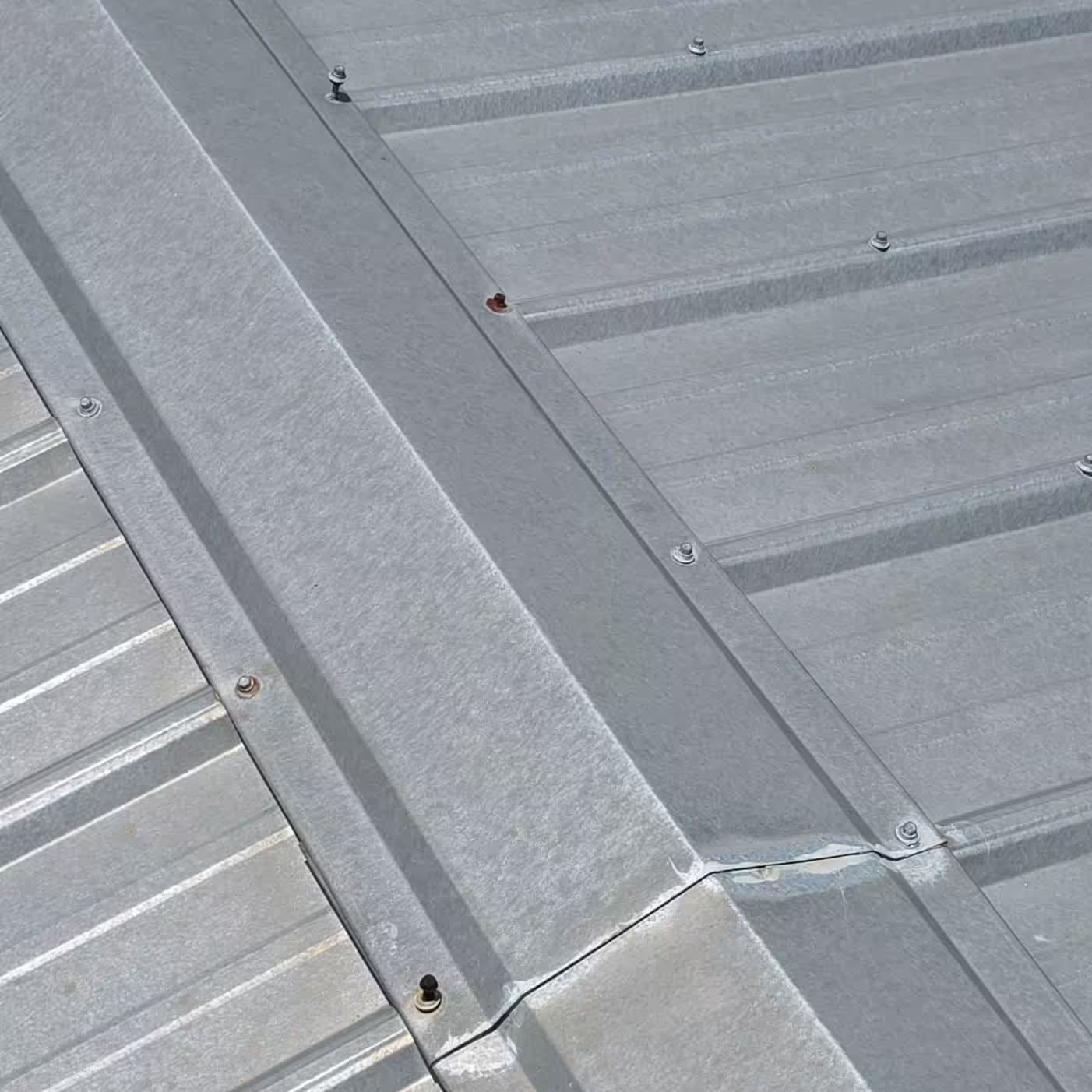
Not all metal roof panels conceal their attachment hardware. In an exposed-fastener system, screws pass through the metal and secure it to the supporting structure. Those screws are essential to attachment, and their sealing components help limit water entry at each penetration.
How exposed-fastener roofing works
Many through-fastened metal roofs use screws with washers or integral sealing gaskets. Placement, spacing, fastener dimensions, corrosion resistance, substrate engagement, and compression of the sealing material affect performance. A roof may look intact from the ground while individual fasteners are loose, tilted, missing, damaged, or overdriven.
The Metal Construction Association’s technical guidance on fastener compatibility emphasizes matching fasteners with the metal panel and supporting application.
Warning signs worth investigating
Visible raised screw heads, washers that have split or moved out of position, corrosion around fasteners, and deformation at the fastener location can justify further evaluation. Persistent staining below a roof, especially near panel laps or penetrations, also warrants attention. However, a stain alone does not prove that a particular fastener caused the leak.
Florida roofs experience strong sunlight, moisture, wind, and thermal movement. These conditions increase the importance of installation quality and ongoing maintenance, though no fixed fastener replacement interval applies to every product.
Why adding sealant is not always the answer
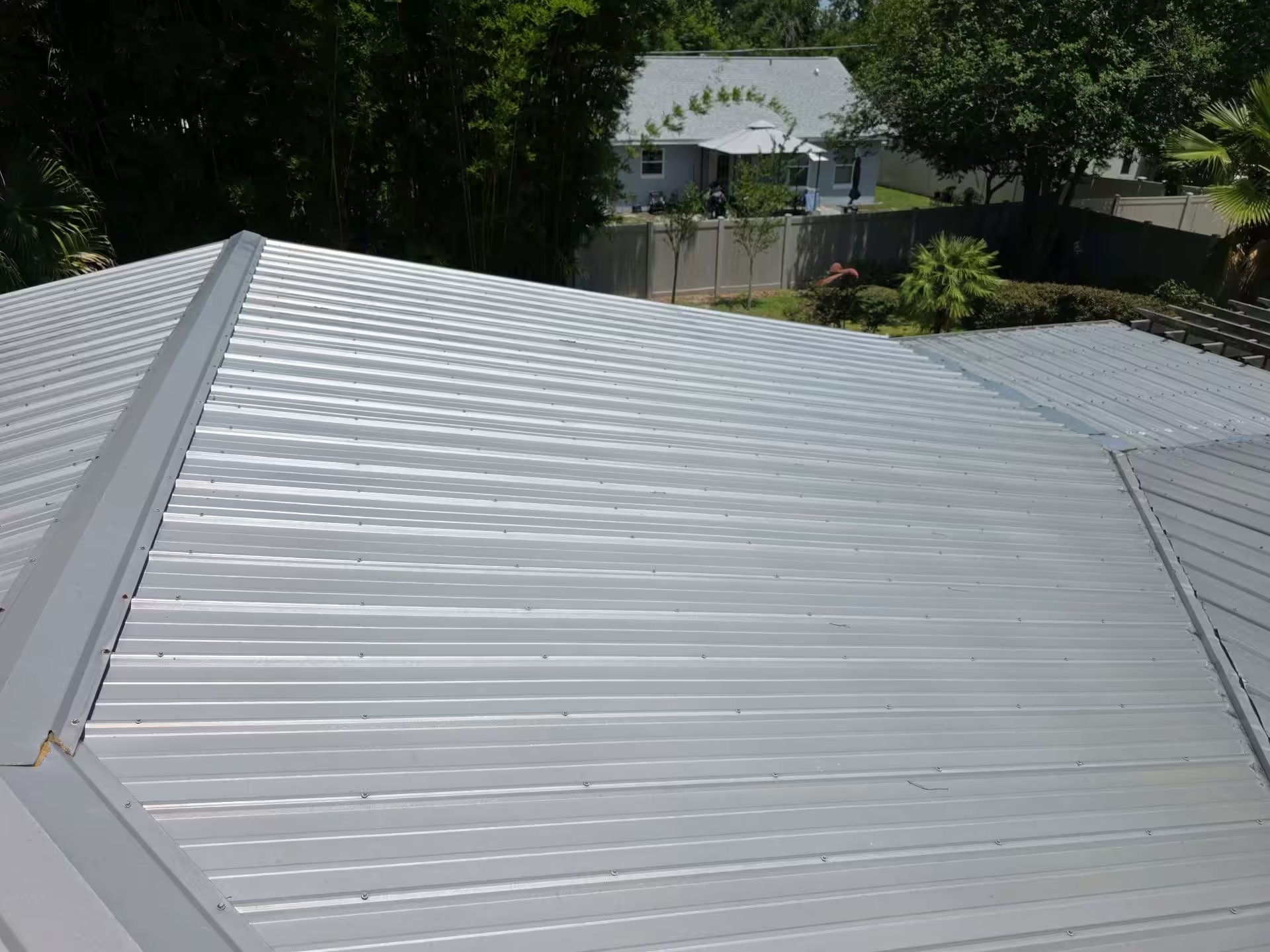
Covering a loose or damaged screw with sealant may mask a problem without restoring attachment or washer compression. Repair selection depends on the metal roof system, condition of the substrate, fastener size and type, and manufacturer instructions. A roofing contractor should determine whether a particular screw requires proper replacement, a compatible repair detail, or broader system work.
Standing seam roofs usually conceal much of their fastening, so the same inspection observations should not be generalized to every metal roof. See our guide to metal roof systems for the broader differences, and our roof flashing overview for other potential leakage paths.
What a visual inspection can establish
A home inspector may document visible backed-out fasteners, apparent washer damage, corrosion, or evidence of leakage from safely accessible areas. The inspector cannot certify concealed substrate integrity or determine every attachment’s holding capacity without a specialized assessment. When roof conditions or access are unsafe, inspection scope is limited and a licensed roofer may need to evaluate the affected area.
Field Insight
In our experience, metal roofs are an excellent roof covering here in Central Florida. The longevity and water resistance of this roof covering is what makes it an attractive option. The underlayment and secondary water resistance requirements depend on the roof assembly, applicable building code, and scope of the permitted work. However, maintenance is still important. Fasteners can back out over time, so regular inspections can help prevent issues and extend the life of your roof system.
Frequently asked questions
Do all metal roofs have exposed screws?
No. Some metal roof assemblies use concealed clips or fasteners, while others rely on visible through-fasteners.
Should homeowners tighten roof screws themselves?
Roof work involves fall hazards and the risk of further damaging the roof. A qualified roofer should assess suspect fasteners and follow product-specific procedures.
Read additional guidance in our Roof Knowledge Center.