
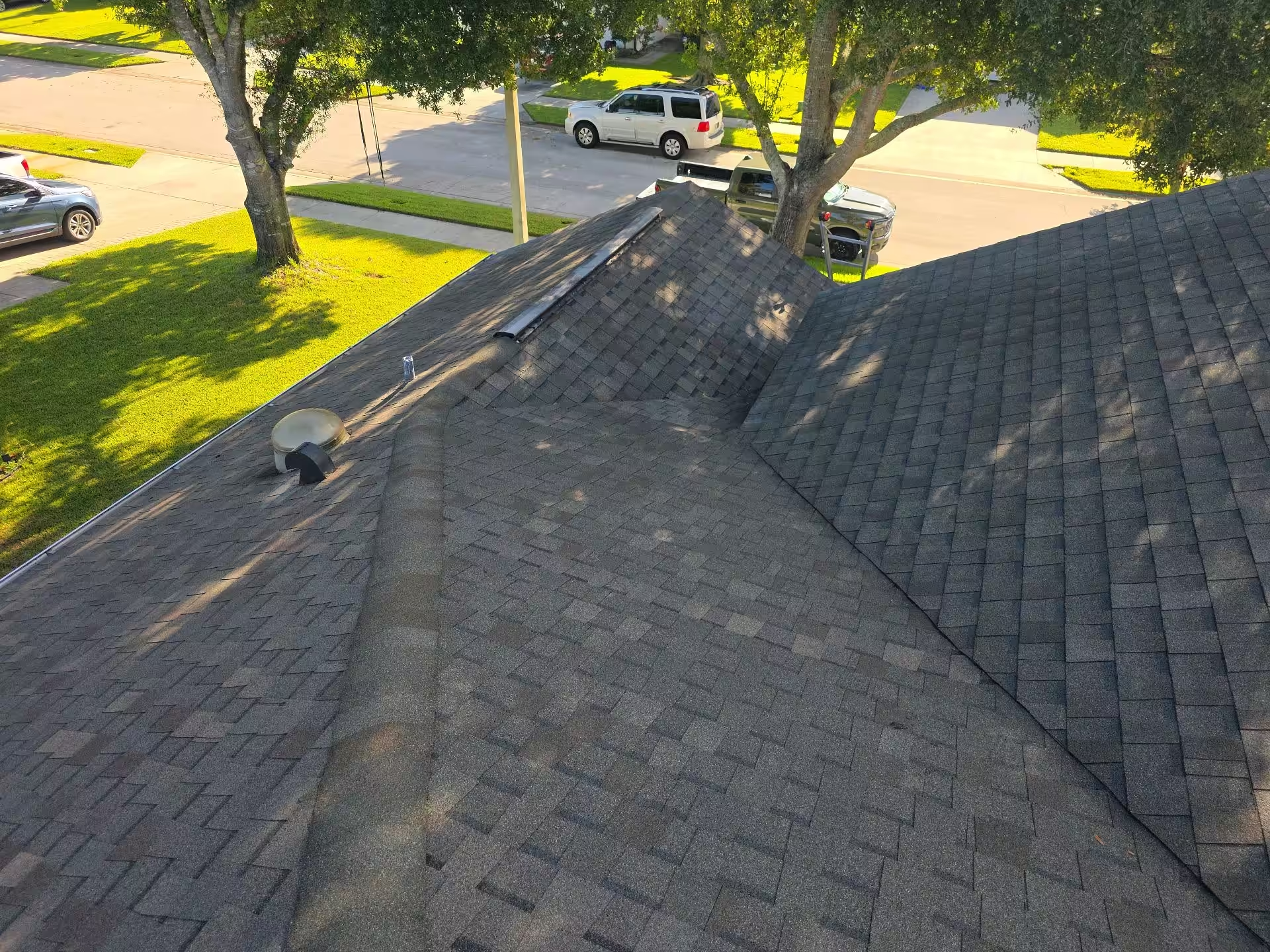
Asphalt shingles are one of the most common roofing materials found on homes throughout Central Florida. They are relatively affordable, widely available, and can provide years of reliable protection when properly installed and maintained.
Florida’s climate, however, can be demanding on asphalt roofing.
Intense sunlight, high temperatures, humidity, heavy rain, tropical weather, and strong winds can all affect how a shingle roof ages and performs. For homeowners and buyers, understanding the condition of an asphalt shingle roof is therefore about more than simply knowing its age.
What Is an Asphalt Shingle Roof?
Asphalt shingles are individual roofing materials installed in overlapping courses to create a water-shedding roof covering.
Modern asphalt shingles typically consist of a fiberglass mat coated with asphalt and covered with protective mineral granules.
Those granules are an important part of the shingle. They help protect the asphalt from ultraviolet exposure and contribute to the appearance and durability of the roofing material.
The shingles themselves are only one part of the complete roof system. Underlayment, flashing, roof decking, drip edges, penetrations, valleys, ventilation, and installation details all contribute to how effectively the roof protects the home.
What Types of Asphalt Shingles Are Common in Florida?
The two types homeowners are most likely to encounter are three-tab and architectural shingles.
Three-Tab Shingles
Three-tab shingles have a flatter, more uniform appearance and were commonly installed on older Florida homes.
They are generally thinner and less dimensional than architectural shingles. While they can provide an effective roof covering, many older three-tab roofs encountered during inspections are now well into their service life.
Architectural Shingles
Architectural shingles, sometimes called dimensional shingles, are now much more common.
They are manufactured with multiple layers that create a thicker, dimensional appearance and are generally designed to provide better durability and wind resistance than traditional three-tab products.
However, the type of shingle alone does not determine how well a roof will perform.
Installation quality, roof design, ventilation, maintenance, weather exposure, and age all matter.
How Long Do Asphalt Shingle Roofs Last in Florida?
This is one of the most common roofing questions we receive, and there isn’t a single number that applies to every roof.
Manufacturer ratings may suggest relatively long service lives under ideal conditions, but actual performance in Central Florida can vary considerably.
Florida roofs experience:
- Intense ultraviolet exposure
- High roof-surface temperatures
- Heavy rainfall
- High humidity
- Strong winds
- Tropical storms and hurricanes
- Rapid temperature changes
- Organic growth and debris accumulation
Installation quality and attic ventilation can also affect how a roof ages.
For this reason, homeowners should be cautious about assuming that a manufacturer’s rated lifespan is the same as the roof’s actual remaining service life.
Two asphalt shingle roofs installed in the same year can be in substantially different condition.
Why Does Florida’s Sun Affect Asphalt Shingles?
Sunlight and heat are significant contributors to roof aging in Florida.
Roof surfaces can become extremely hot during the day. Repeated exposure to heat and ultraviolet radiation gradually affects the asphalt within the shingles.
Over time, shingles may become more brittle and show signs of deterioration.
This can include:
- Granule loss
- Cracking
- Curling or distortion
- Balding / Delamination
- Exposed asphalt
- Reduced flexibility
Some aging is normal. The important question is whether deterioration has progressed to the point where the roof’s ability to perform may be affected.
What Does Granule Loss Mean?
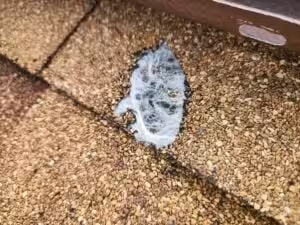
Granules are the small mineral particles covering the surface of an asphalt shingle.
Some loose granules are normal, particularly with newer roofing materials. Granules may also accumulate in gutters and at downspout discharge locations.
More extensive granule loss can occur as shingles age or deteriorate.
When significant areas of the shingle surface lose their granules, the underlying asphalt becomes more exposed to sunlight and weather.
During an inspection, the extent and distribution of granule loss are more meaningful than simply finding a few loose granules.
What Causes Shingles to Lift or Become Damaged?
Shingles can become lifted, displaced, creased, torn, or missing for several reasons.
Wind is an obvious concern in Florida, but other causes can include:
- Improper installation
- Inadequate fastening
- Failure of the shingle sealing strips
- Previous storm damage
- Foot traffic
- Mechanical damage
- Aging and deterioration
- Previous repairs
A lifted shingle isn’t automatically proof of hurricane or storm damage. Determining the cause may require additional evaluation, particularly when insurance claims or significant repairs are involved.
From an inspection standpoint, the concern is whether the condition may allow further damage or affect the roof’s ability to shed water properly.
Can an Asphalt Shingle Roof Leak Even if the Shingles Look Good?
Yes.
The visible field of shingles is only one part of the roofing system.
Leaks frequently develop around areas such as:
- Plumbing vent penetrations
- Exhaust vents
- Valleys
- Skylights
- Chimneys
- Roof-to-wall intersections
- Flashing
- Previous repairs
- Exposed or improperly installed fasteners
This is why evaluating a roof involves more than looking for missing shingles.
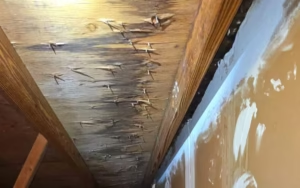
When accessible, the attic can also provide valuable information about the roof system. Staining, damaged decking, moisture-related deterioration, or evidence of previous repairs may indicate conditions that are not readily visible from the exterior.
What Are Common Asphalt Shingle Roof Problems Found During Home Inspections?
During Central Florida home inspections, we commonly encounter asphalt shingle roofs with conditions related to age, installation, maintenance, previous repairs, or weather exposure.
These may include:
- Missing or displaced shingles
- Lifted shingles
- Creased or damaged shingles
- Excessive granule loss
- Exposed fasteners
- Improperly driven fasteners
- Deteriorated flashing
- Damaged plumbing vent boots
- Improper previous repairs
- Debris accumulation
- Damaged or deteriorated valleys
- Signs of previous moisture intrusion
- Deteriorated roof decking
- Installation deficiencies
Not every roof deficiency means the entire roof requires replacement.
The location, extent, severity, age of the roof, and overall condition should all be considered when determining the appropriate next step.
Can Asphalt Shingles Be Repaired?
Many localized shingle deficiencies can be repaired.
Individual damaged or missing shingles, flashing problems, deteriorated penetration seals, and other localized conditions may not require complete roof replacement.
However, repairs become more complicated as a roof ages.
Older shingles can become brittle and difficult to manipulate without causing additional damage. Matching discontinued or weathered shingles can also be difficult.
If deterioration is widespread, repeated localized repairs may no longer be the most practical solution.
A qualified roofing contractor can help determine whether repair or replacement is appropriate when significant concerns are identified.
Should You Walk on an Asphalt Shingle Roof?
Walking on a roof always involves safety concerns and can potentially damage roofing materials.
Asphalt shingles can become particularly vulnerable when they are extremely hot, deteriorated, wet, steep, or otherwise unsafe to access.
For that reason, inspectors do not necessarily walk every roof. However, it is always the preferred method for inspecting a roof when the inspector determines that it can be done safely.
Roof inspection methods may include observation from the roof surface, roof edge, ladder, ground, windows, or other accessible vantage points depending on conditions at the property.
The method used should never require taking an unreasonable safety risk or causing damage to the roof.
Why Does Roof Age Matter When Buying a Florida Home?
For a home buyer, roof age can have both maintenance and financial implications.
An older roof may still be functioning at the time of the inspection, but buyers should consider the possibility of future repairs or replacement.
In Florida, roof age can also affect homeowners insurance. Typically, architectural shingles over 15 years old and 3-tab shingles over 12 years old, can prove more difficult to insure in Central Florida.
Insurance carriers may have their own underwriting requirements regarding roof age, condition, remaining useful life, and acceptable roofing materials.
A home inspection can provide valuable information about visible roof conditions, but it does not guarantee that a particular insurance carrier will accept the roof.
How Do Asphalt Shingle Roofs Relate to Four Point Inspections?
The roof is one of the four major systems evaluated during a Four Point Inspection, along with the electrical, plumbing, and HVAC systems.
The Four Point process may document information such as the roof covering, approximate age, visible condition, and evidence of active leaks or other concerns.
This makes the condition of an asphalt shingle roof particularly important for owners of older Florida homes seeking homeowners insurance.
A standard home inspection and a Four Point Inspection serve different purposes. A home inspection provides a much broader evaluation of the property, while the Four Point Inspection is primarily designed to provide specific information requested for insurance underwriting.
What Should Buyers Look for When Reviewing an Asphalt Shingle Roof?
Buyers shouldn’t focus exclusively on one number, such as the roof’s age.
Instead, consider the complete picture:
- What type of shingles are installed?
- Approximately how old is the roof?
- What is its overall observed condition?
- Are there localized defects?
- Is deterioration widespread?
- Are there signs of previous repairs?
- Is there evidence of past or present leakage?
- Are significant future expenses likely?
- Could the roof affect insurance eligibility?
The answers to those questions provide much more useful information than age alone.
Understanding Asphalt Shingle Roofs in Central Florida
Asphalt shingles can provide an effective and economical roofing system, which is why they remain so common throughout Central Florida.
But our climate matters.
Sun exposure, heat, heavy rain, wind, storms, installation quality, ventilation, maintenance, and age all influence how an asphalt shingle roof performs over time.
For homeowners, routine observation and timely maintenance can help identify problems before they become more significant.
For buyers, understanding both the roof’s current condition and its potential future costs is an important part of evaluating a home.
A professional home inspection can help identify visible roofing deficiencies and provide a better understanding of how the roof fits into the overall condition of the property.
For more information about roofing materials, common defects, maintenance concerns, and conditions we regularly encounter during Central Florida home inspections, visit the Tier-1 Pro Inspections Roof Knowledge Center.