
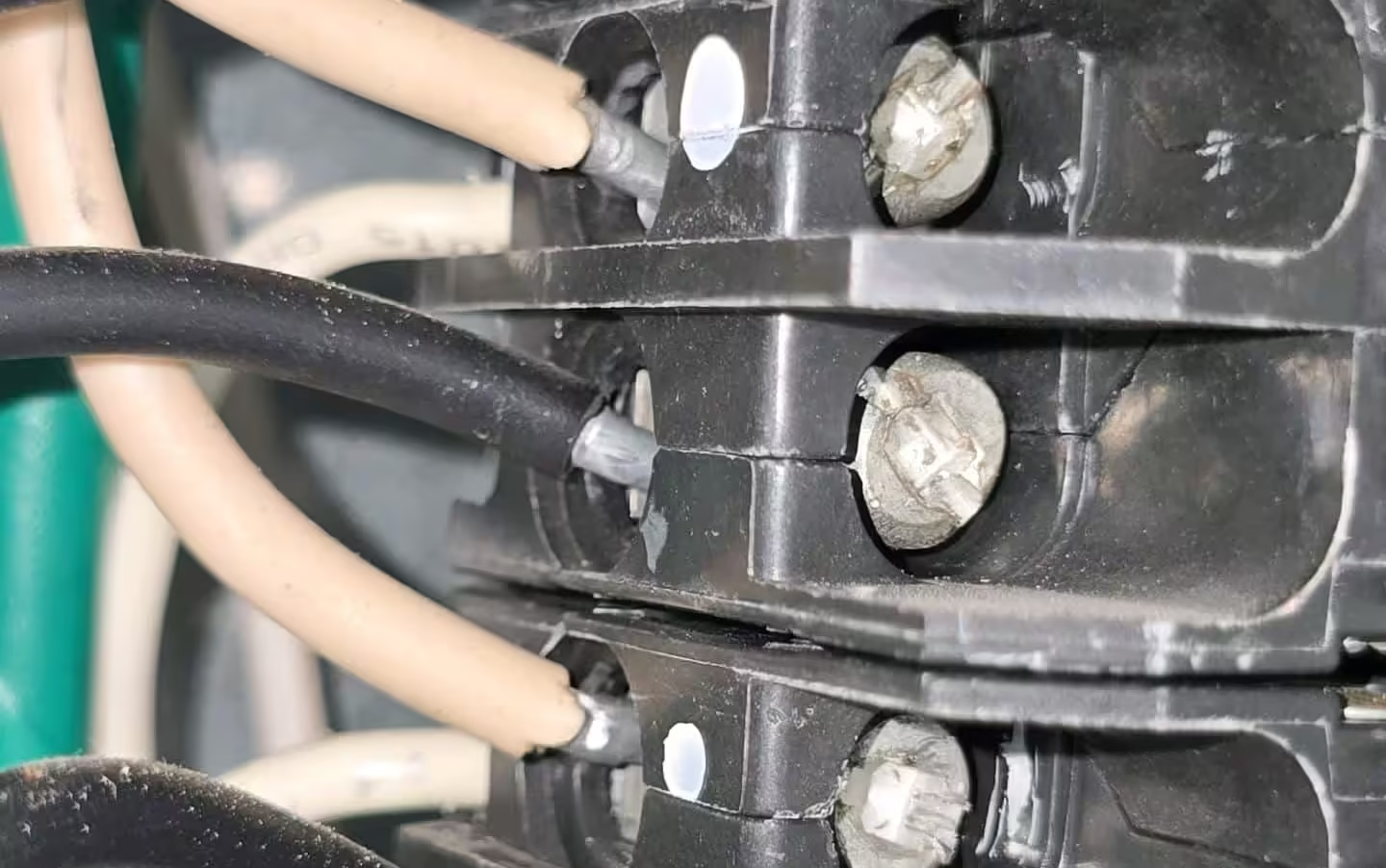
Aluminum wiring is commonly found in older homes and is an electrical condition that often raises questions during home inspections, insurance inspections, and real estate transactions.
But the term aluminum wiring can be misleading.
Not every aluminum conductor in a home represents the same concern. Aluminum is still commonly used for certain larger electrical circuits and service conductors. The greater concern in many older homes is solid-strand aluminum branch-circuit wiring used for receptacles, switches, lighting, and other smaller household circuits.
Understanding that distinction is important.
The presence of aluminum wiring does not automatically mean the entire electrical system is unsafe or needs to be replaced. The type of wiring, where it is used, the condition of the connections, compatible devices, previous repairs, and overall electrical installation all matter.
What Is Aluminum Wiring?
Aluminum wiring uses aluminum rather than copper as the electrical conductor.
Both materials conduct electricity, and aluminum continues to have legitimate uses in modern electrical systems.
Depending on the home, aluminum conductors may be present at:
- Service entrance conductors
- Main electrical feeders
- Large appliance circuits
- HVAC equipment
- Subpanels
- Branch circuits
- Other electrical equipment
The location and type of aluminum conductor are important when evaluating its significance.
When people discuss concerns with aluminum wiring in older homes, they are often referring specifically to solid aluminum branch-circuit conductors rather than every aluminum conductor in the electrical system.
What Is Solid-Strand Aluminum Branch Wiring?
Branch circuits distribute electricity from the electrical panel to receptacles, switches, lights, and other equipment throughout the home.
During the 1960s and 1970s, solid aluminum conductors were installed in many residential branch circuits as an alternative to copper.
These smaller solid aluminum conductors can present concerns at connections and termination points if the components or installation are not appropriate for aluminum wiring.
Potential problem areas include:
- Receptacles
- Switches
- Junction boxes
- Light fixtures
- Circuit breakers
- Splices
- Other electrical terminals
The primary concern is often not the conductor running through the wall itself, but the connections where the aluminum conductor terminates.
Is All Aluminum Wiring a Problem?
No.
This is one of the most important distinctions homeowners and buyers should understand.
Aluminum conductors are still used in residential electrical systems today, particularly for larger conductors.
For example, aluminum may be found supplying:
- Main electrical services
- Subpanels
- HVAC equipment
- Electric ranges
- Other larger electrical loads
The presence of aluminum conductors in these applications does not automatically indicate a defect.
The concerns commonly associated with older residential aluminum wiring generally involve certain solid-strand aluminum branch-circuit installations and their connections.
An inspector therefore needs to consider the conductor type, size, location, termination, equipment compatibility, and visible condition rather than simply reporting that “aluminum wiring is present.”
Why Can Aluminum Branch Wiring Be a Concern?
Electrical connections need to remain secure over time.
Older solid aluminum branch-circuit wiring has characteristics that can make proper connections particularly important.
Problems can develop when aluminum conductors are connected to devices or terminals that are not suitable for aluminum wiring, when connections become loose, or when improper repairs or modifications have been made.
A poor electrical connection can create increased resistance.
Increased resistance can generate heat.
Over time, an improperly installed or deteriorated connection may contribute to:
- Overheating
- Arcing
- Damaged insulation
- Discolored devices
- Melted components
- Intermittent electrical operation
- Electrical failure
- Increased fire risk
This is why the condition and configuration of aluminum wiring connections matter.
Does Aluminum Wiring Expand and Contract?
Electrical conductors can change dimension as they heat and cool.
Aluminum and copper have different physical properties, and aluminum expands and contracts differently as temperature changes.
Repeated heating and cooling can become relevant at electrical connections, particularly when terminals, devices, or installation methods are not appropriate for aluminum conductors.
This is one reason proper terminals, compatible equipment, and secure connections are important when aluminum wiring is present.
However, expansion and contraction should not be viewed as the only issue associated with older aluminum branch wiring.
The complete installation needs to be considered.
Does Aluminum Wiring Oxidize?
Aluminum develops an oxide layer when exposed to air.
At electrical connections, proper installation and compatible equipment are important to maintain a reliable electrical connection.
Oxidation alone does not mean every aluminum conductor is defective, but connection quality is an important part of evaluating older aluminum branch wiring.
Is Aluminum Wiring Against Code?
The presence of aluminum conductors does not automatically mean an electrical installation is prohibited or noncompliant.
Aluminum conductors continue to be used in electrical installations when they are properly sized, installed, and terminated with equipment designed for their use.
Older solid aluminum branch wiring requires more careful consideration because of the particular conductor type and the devices and connections associated with it.
A home inspection is also not a municipal electrical code inspection.
Home inspectors evaluate readily accessible electrical components for visible deficiencies, safety concerns, damage, improper installations, and conditions that may warrant further evaluation.
Questions regarding current code compliance or the suitability of a specific aluminum wiring installation should be addressed by a qualified electrician.
How Can You Tell if a House Has Aluminum Wiring?
Aluminum wiring may be identified through visible conductor markings, conductor appearance, electrical panel observations, or other characteristics of the electrical installation.
During a home inspection, accessible wiring may be visible at:
- Electrical panels
- Subpanels
- Attics
- Garages
- Junction boxes
- Exposed wiring locations
- Other readily accessible areas
However, much of a home’s branch wiring is concealed behind walls and ceilings.
A home inspector generally cannot determine the complete extent of concealed aluminum wiring without invasive investigation.
The presence of visible aluminum branch wiring may indicate that additional aluminum wiring exists elsewhere in the home.
What Years Were Aluminum-Wired Homes Built?
Solid aluminum branch-circuit wiring is most strongly associated with residential construction from the mid-1960s through the 1970s.
However, the year a home was built does not prove what type of wiring is present.
Homes are frequently modified over time.
An older home may have been partially or completely rewired, while renovations or additions may contain wiring that differs from the original construction.
The electrical system itself should be evaluated rather than assuming conductor type solely from the home’s age.
Is Aluminum Wiring the Same as Cloth Wiring?
No.
These terms describe different characteristics of electrical wiring.
Aluminum wiring refers to the material used for the electrical conductor.
Cloth wiring generally refers to wiring that incorporates woven fabric material as part of its insulation or outer covering.
A conductor’s material and its insulation are separate characteristics.
Older homes may contain multiple generations and types of wiring, which is why the electrical system should be evaluated as a whole rather than based on one term or material.
Is Aluminum Wiring the Same as Copper Wiring?
No.
Copper and aluminum are different conductor materials with different physical and electrical characteristics.
Both can be used to carry electricity when appropriately designed and installed.
Copper is commonly used for residential branch circuits today, while aluminum remains common in certain larger conductor applications.
The concern with older aluminum branch wiring is not simply that aluminum conducts electricity differently from copper.
The condition and compatibility of its connections and terminations are especially important.
What Does CO/ALR Mean on an Electrical Device?
Some electrical devices are specifically identified for use with aluminum conductors.
The marking CO/ALR indicates a device designed for use with copper or aluminum conductors in applications covered by its listing.
This marking may be found on certain receptacles or switches.
However, simply seeing a newer receptacle or switch does not establish that all aluminum wiring in the home has been properly addressed.
The conductor connections, device compatibility, installation method, and other components of the circuit still need to be considered.
What About AL/CU Markings?
Electrical equipment may contain markings identifying the conductor materials for which its terminals are designed.
For example, some terminals may be identified for aluminum and copper conductors.
The specific equipment listing and manufacturer’s requirements determine what conductor materials and sizes are permitted.
This is especially important in electrical panels, breakers, disconnects, and equipment supplied by larger aluminum conductors.
A terminal marked for aluminum conductors does not mean every possible aluminum wiring configuration is automatically acceptable.
The entire installation still needs to meet the equipment’s requirements.
Can Aluminum Wiring Be Connected to Copper Wiring?
Aluminum and copper conductors may be joined in certain circumstances using connectors and methods specifically designed for the conductor materials and application.
Improperly joining aluminum and copper conductors can create problematic electrical connections.
This is one reason amateur or undocumented modifications to older aluminum branch wiring deserve additional attention.
If copper wiring has been added to a home containing aluminum branch circuits, the transition points should use appropriate connection methods.
How Is Aluminum Wiring Repaired?
There is no single repair recommendation that applies to every home with aluminum wiring.
The appropriate approach depends on factors including:
- Type of aluminum conductor
- Location of the wiring
- Condition of the conductors
- Existing devices and terminals
- Previous modifications
- Splice methods
- Extent of the aluminum branch wiring
- Electrical panel configuration
- Overall condition of the electrical system
A qualified electrician should determine the appropriate correction when remediation is needed.
Depending on the installation, this may involve approved connection methods, compatible equipment, targeted corrections, or more extensive electrical upgrades.
A home inspector should identify the visible condition and recommend appropriate further evaluation rather than prescribing a repair method for an electrical system that has not been fully evaluated.
What Are COPALUM Connections?
COPALUM is a specialized connection system that may be used in certain aluminum wiring remediation applications.
The process creates a permanent connection between conductors using a specialized crimping system.
It requires specific equipment and qualified installation.
Because remediation options depend on the existing wiring and installation, homeowners should have a qualified electrical professional determine whether a particular method is appropriate for their home.
What Are AlumiConn Connectors?
AlumiConn connectors are another type of connector that may be used in certain aluminum-to-copper or aluminum conductor applications when installed in accordance with their listing and manufacturer’s requirements.
As with any electrical repair, simply knowing the name of an approved product is not enough to determine whether it is appropriate for a particular circuit or home.
Proper conductor preparation, sizing, installation, torque, enclosure space, and other requirements matter.
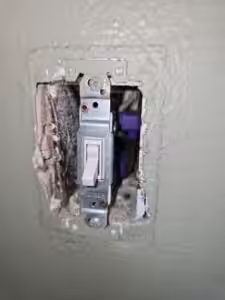
A qualified electrician should determine the appropriate repair method.
Does Aluminum Wiring Need to Be Completely Replaced?
Not necessarily.
Finding aluminum wiring does not automatically mean the entire home requires rewiring.
The appropriate recommendation depends heavily on what type of aluminum wiring is present.
Larger aluminum service and feeder conductors may be completely normal components of the electrical system.
Older solid aluminum branch-circuit wiring requires closer evaluation, particularly at its connections and terminations.
When solid aluminum branch wiring is present, a qualified electrician can evaluate the system and determine whether repair, remediation, partial replacement, or more extensive replacement is appropriate.
Can Aluminum Wiring Affect Homeowners Insurance in Florida?
Yes.
Older electrical systems and certain wiring types can affect homeowners insurance eligibility in Florida.
Insurance carriers may have their own underwriting requirements regarding:
- Solid aluminum branch wiring
- Electrical panel type
- Electrical service
- Wiring condition
- Electrical repairs
- Remediation methods
- Supporting documentation
- Other visible electrical deficiencies
Requirements can vary between insurance carriers, but most carriers rely on a Four Point Inspection form to inform them of the risks on a property.
The presence of aluminum wiring therefore does not allow a home inspector to predict whether a particular insurance company will insure the property.
Homeowners and buyers should discuss carrier-specific requirements with their insurance professional.
Does Aluminum Wiring Automatically Fail a Four Point Inspection?
No.
A Four Point Inspection is used to document the condition and characteristics of the home’s roof, electrical, plumbing, and HVAC systems for insurance purposes.
When aluminum branch wiring is present, the inspector documents the observed electrical system and applicable conditions on the report.
The inspector does not establish the insurance carrier’s underwriting rules.
The inspector documents the condition. The insurance carrier makes the underwriting decision.
An insurance company may request repairs, electrical documentation, remediation, or additional information depending on its underwriting requirements.
Can Aluminum Wiring Cause a Home Inspection to Fail?
A standard home inspection is not a pass-or-fail inspection.
The inspector evaluates the visible and readily accessible components of the home and reports material defects, safety concerns, and other significant conditions.
If solid aluminum branch wiring is identified, its presence and visible condition may be documented, and further evaluation by a qualified electrician may be recommended.
That does not mean the home itself has “failed” the inspection.
What Do Home Inspectors Look for When Aluminum Wiring Is Present?
When aluminum wiring is visible, the inspector may consider factors such as:
- Whether the conductors appear to be branch wiring, feeders, or service conductors
- Conductor type and size
- Visible conductor condition
- Breaker compatibility
- Terminal compatibility
- Evidence of overheating
- Damaged insulation
- Loose or improper connections
- Splices
- Copper-to-aluminum transitions
- Previous modifications
- Electrical panel condition
- Other electrical deficiencies
The inspection remains limited to visible and readily accessible components.
Inspectors generally cannot verify every concealed connection throughout a home.
What Are Warning Signs of Problems With Aluminum Wiring?
Potential electrical warning signs may include:
- Warm or discolored receptacles
- Warm switches
- Flickering lights
- Intermittent electrical operation
- Burning odors
- Buzzing or crackling
- Sparking
- Frequently tripping breakers
- Melted electrical components
- Visible heat damage
- Damaged conductor insulation
These symptoms can have causes unrelated to aluminum wiring.
However, they should not be ignored.
Electrical symptoms involving heat, burning odors, arcing, or damaged components warrant prompt evaluation by a qualified electrical professional.
Should I Buy a House With Aluminum Wiring?
The presence of aluminum wiring should provide information for the buyer to investigate rather than automatically determine whether the home should or should not be purchased.
Important questions include:
- What type of aluminum wiring is present?
- Is it solid aluminum branch wiring or larger feeder wiring?
- How extensive is it?
- What is the visible condition?
- Are appropriate devices and connections present?
- Has the system previously been evaluated or remediated?
- Are there signs of overheating or damage?
- Are other electrical deficiencies present?
- Will the wiring affect insurance options?
- Does an electrician recommend additional work?
A house with larger aluminum feeder conductors is very different from a house containing widespread older solid aluminum branch wiring with questionable connections.
The details matter.
Should an Electrician Evaluate Aluminum Branch Wiring?
When older solid aluminum branch-circuit wiring is identified, further evaluation by a qualified electrician is generally appropriate.
Electrical evaluation becomes particularly important when:
- Wiring condition is uncertain
- Improper devices are present
- Connections appear questionable
- Heat damage is visible
- Improper splices are identified
- Copper and aluminum conductors have been joined
- Previous remediation cannot be verified
- Electrical modifications are evident
- Insurance documentation is needed
- The extent of aluminum branch wiring is unknown
The electrician can evaluate the system beyond the scope of a visual home inspection and determine whether correction or remediation is appropriate.
Aluminum Wiring and Home Inspections
Aluminum wiring illustrates why electrical systems should be evaluated based on their specific components and installation, rather than simply labeling an entire conductor material as defective.
Aluminum conductors continue to have legitimate uses in modern residential electrical systems.
The greater concern in many older homes is solid aluminum branch-circuit wiring and the condition, compatibility, and integrity of its connections.
During a home inspection, the electrical panel and readily accessible wiring are evaluated as part of the larger residential electrical system.
When older aluminum branch wiring or questionable connections are identified, further evaluation by a qualified electrical professional may be recommended.
The Bottom Line
Aluminum wiring is not automatically defective simply because the conductor is aluminum.
Aluminum remains commonly used for certain service, feeder, HVAC, appliance, and other larger electrical conductors.
The condition that typically warrants greater attention in older homes is solid-strand aluminum branch-circuit wiring, particularly the connections at receptacles, switches, breakers, splices, and other termination points.
For homeowners and buyers, the important questions are what type of aluminum wiring is present, where it is installed, how it is terminated, whether the equipment is compatible, whether previous modifications were properly performed, and whether signs of overheating or deterioration are present.
In Florida, older aluminum branch wiring may also affect insurance underwriting requirements, making accurate documentation especially important.
For a broader explanation of electrical panels, branch wiring, circuit breakers, grounding, protection devices, and common electrical findings, see Electrical Systems: What Homeowners and Buyers Should Know.
For more information about residential wiring and other electrical concerns commonly identified during home inspections, visit the Tier-1 Pro Electrical Knowledge Center.