
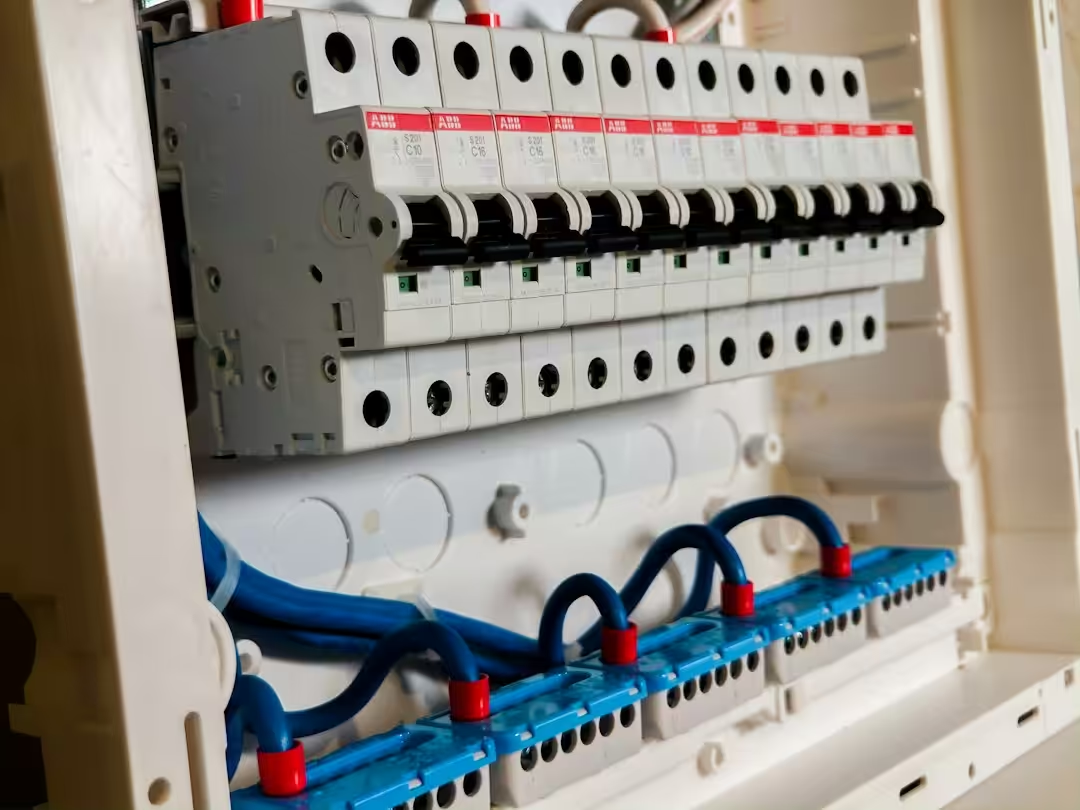
Whole-house surge protection is designed to reduce the amount of transient electrical energy that reaches wiring, appliances, HVAC equipment, electronics, and other connected devices. For Florida buyers, the topic comes up frequently because thunderstorms, utility switching, and equipment cycling can all produce voltage surges.
A surge protective device does not make a property immune to lightning damage, and it is not a substitute for proper grounding, bonding, or point-of-use protection. It is one layer of electrical-system protection that can be evaluated as part of the overall service equipment.
What Is a Whole-House Surge Protector?
A whole-house surge protector, more accurately called a surge protective device (SPD), is typically installed at or near the main electrical service equipment. Its purpose is to limit transient overvoltage by diverting surge energy away from sensitive equipment.
Depending on the product and installation, an SPD may be integrated into the service equipment, installed as a breaker-style device, or mounted adjacent to the panel.
What Causes Electrical Surges?
Electrical surges are short-duration increases in voltage. They can originate outside the property from lightning activity or utility switching, but they can also occur inside the electrical system when equipment with motors or compressors cycles on and off.
Air-conditioning equipment, refrigerators, pumps, and other motor-driven loads can contribute to smaller internal surge events. Larger external surges can enter through utility conductors or other connected systems.
Does a Whole-House Surge Protector Stop Lightning?
No device can guarantee that a property or its electronics will be protected from every lightning event. A whole-house SPD is intended to reduce transient voltage that reaches connected equipment, but the effectiveness of the protection depends on the type of surge, installation, grounding and bonding conditions, device condition, and the overall electrical system.
For sensitive electronics, manufacturers and electrical-safety guidance commonly support a layered approach that combines service-level surge protection with appropriate point-of-use protection.
Are Whole-House Surge Protectors Required?
The 2020 National Electrical Code introduced a requirement for surge protection at dwelling-unit services, using a Type 1 or Type 2 SPD. The 2023 NEC retained and expanded surge-protection provisions for additional occupancies and feeder applications.
That does not mean every existing Florida property is automatically required to be retrofitted. Applicability depends on the code edition adopted for the work, the age of the installation, whether service equipment has been replaced or altered, and local enforcement requirements. An inspector should describe what is present and recommend appropriate electrical evaluation when the installation appears incomplete, damaged, or inconsistent with the applicable requirements.
Type 1 vs. Type 2 Surge Protection
Type 1 and Type 2 SPDs are both used for service-level or distribution-level surge protection, but their permitted installation locations differ.
- Type 1 SPD: May be installed on the supply side or load side of the service disconnect, depending on the listed product and installation.
- Type 2 SPD: Is installed on the load side of the service disconnect, commonly at the main service equipment or downstream distribution equipment.
The device should be listed for the intended application and installed in accordance with the manufacturer’s instructions.
What Does a Home Inspector Look For?
When an SPD is visible and accessible, an inspector may evaluate:
- Whether a surge protective device is present
- Its general location relative to the service equipment
- Visible signs of damage or improper installation
- Status lights or indicators when provided by the manufacturer
- Visible conductor routing and connections
- Whether the device appears compatible with the panel and installation method
A visual home inspection does not determine the remaining service life of an SPD, verify its internal electronics, or test its ability to respond to a future surge. Some devices include indicator lights that show whether protection is active, but the meaning of those indicators depends on the manufacturer.
What If the Surge Protector Shows a Fault or No Protection?
If the device has a status indicator showing loss of protection, a fault condition, or no power, that condition should be evaluated by a qualified electrical contractor. Some SPDs are designed to be replaced after their protective components have degraded or after certain surge events.
The electrician can also confirm whether the device is properly matched to the service equipment and installed in accordance with its listing and manufacturer instructions.
Is Surge Protection the Same as Grounding?
No. Surge protection, grounding, and bonding perform different functions within the electrical system. An SPD helps limit transient overvoltage. Grounding and bonding provide fault-current paths and help establish electrical system reference and safety relationships.
A property can have a surge protector and still have grounding or bonding deficiencies. Likewise, a properly grounded electrical system does not replace surge protection.
Why This Matters in Florida
Florida properties experience frequent thunderstorms and contain an increasing number of sensitive electronic components in HVAC systems, appliances, lighting controls, smart-home devices, pool equipment, and other systems. That makes surge protection especially relevant to buyers evaluating newer electrical installations or service-equipment upgrades.
The presence of an SPD should be considered as one part of the electrical system rather than as a guarantee against equipment damage.
What Should Buyers Do Next?
If the inspection identifies a missing, damaged, improperly installed, or nonfunctional surge protective device where further evaluation is appropriate, a licensed electrical contractor can determine whether installation, replacement, or correction is needed.
For a broader overview of electrical components and common inspection findings, visit our Electrical Systems guide and the Tier-1 Electrical Knowledge Center.
For additional technical context on current surge-protection requirements, see Eaton’s NEC surge-protection guidance.