
If you’ve just received indoor air quality results that came back elevated, the first thing worth saying is this: an elevated result is common, it is manageable, and it is not the emergency it can feel like in the moment. Mold testing produces numbers, and numbers without context are easy to misread in the direction of alarm. Before you start worrying about your health, your home’s value, or an expensive remediation project, it helps to understand what these results actually measure, why “elevated” doesn’t automatically mean “dangerous,” and what a sound, measured response looks like. That understanding is what turns an anxious moment into a clear next step, and clear next steps are exactly what this situation calls for.
Mold is a normal and unavoidable part of the environment. It exists outdoors everywhere, its spores are present in the air all the time, and there is no such thing as a home — or any indoor space — that is entirely free of mold spores. This matters because it reframes what an indoor air quality test is really doing. The test isn’t checking whether mold exists in your home; some always will. It’s comparing the type and concentration of mold spores inside your home against what’s normal for the outdoor environment at the same time and place, and looking for indications that conditions inside are supporting mold growth beyond what the outdoor baseline would predict. An “elevated” result means the indoor sample showed spore concentrations or types that stand out relative to that baseline — which is useful information that warrants a thoughtful response, not a reason for panic.
What an Indoor Air Quality Test Actually Measures
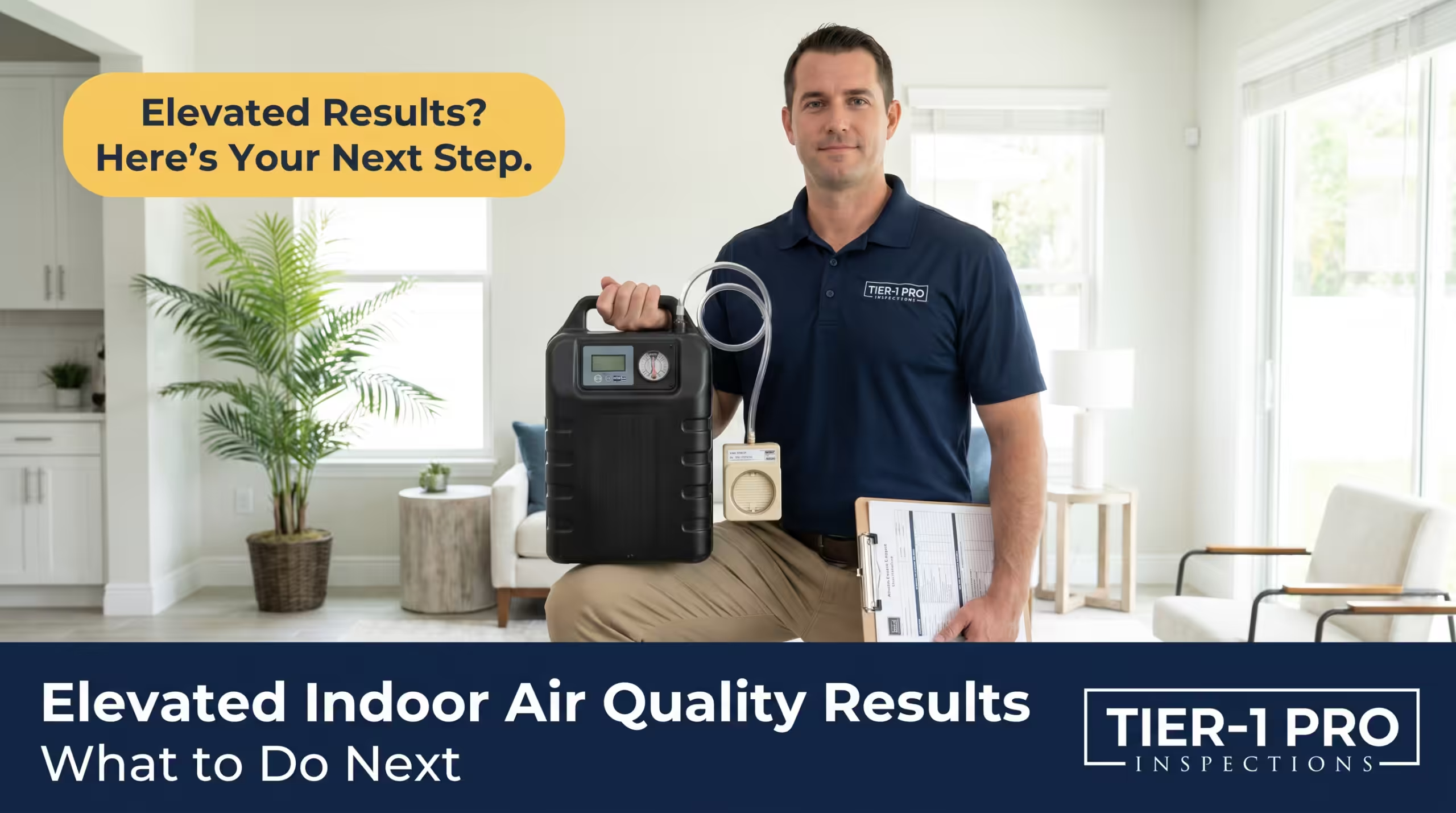
Understanding how mold assessment works makes the results far less mysterious and far less frightening. An indoor air quality assessment for mold typically involves collecting air samples from inside the home and comparing them against a control sample collected outdoors. The samples capture airborne mold spores, which are then analyzed in a laboratory to identify the types of mold present and estimate their concentrations. The comparison between indoor and outdoor samples is the heart of the analysis, because it’s the relationship between the two — not the raw indoor number in isolation — that tells the meaningful story.
When the indoor spore types and concentrations closely track the outdoor sample, that generally indicates the indoor air reflects normal infiltration of outdoor spores rather than an active indoor growth source. When the indoor sample shows significantly higher concentrations than outdoors, or shows types of mold that are present indoors but not in the outdoor control, that pattern suggests there may be an active source of mold growth somewhere inside the building envelope. This is what an “elevated” result is flagging — a pattern that warrants investigation into whether there’s a moisture source supporting growth, and if so, where. The result is a starting point for understanding, not a diagnosis of a health hazard.
It’s also worth understanding what these tests don’t tell you, because misunderstanding their limits is a common source of unnecessary worry. An air sample tells you what spores were airborne at the moment and location the sample was taken. It doesn’t, by itself, tell you exactly where growth is occurring, how extensive it is, or whether it poses a specific health risk to you personally. Spore concentrations in air fluctuate based on activity, air movement, humidity, and time of day. A single elevated air sample is a data point that indicates further evaluation is warranted — it’s not a complete picture of your home, and it’s certainly not a verdict on your safety. This is why interpreting results in context, ideally with the professional who conducted the assessment, matters more than reacting to a number on a page.
Mold and Health: A Measured Perspective
Because health concern is usually what drives the anxiety around elevated mold results, it deserves a direct and honest treatment — one that neither dismisses the topic nor inflates it. For most healthy individuals, typical indoor mold exposure does not cause serious health problems. The people most likely to experience effects from mold exposure are those with specific vulnerabilities:
- Individuals with mold allergies
- People with asthma or other respiratory conditions
- Those with compromised immune systems
- The very young or elderly
For these groups, elevated indoor mold can contribute to allergy-like symptoms, respiratory irritation, or aggravation of existing conditions, which is a legitimate reason to address the underlying cause. For a healthy adult, an elevated air sample is a reason to investigate and remediate the source, not a reason to fear for your wellbeing.
The measured takeaway is that mold is worth addressing when there’s an active growth source, primarily because unaddressed moisture and mold growth will worsen over time and can affect the building materials of your home, and because indoor air quality is worth maintaining as a general matter of a healthy living environment. It’s not worth catastrophizing. If you have specific health concerns — particularly if you or a family member has a respiratory condition, an immune vulnerability, or symptoms you believe may be related to your home environment — those concerns should be discussed with your physician, who can advise on your individual situation in a way that no environmental test or general article can. Addressing the mold source is an environmental remediation question. Assessing personal health effects is a medical question, and keeping those two questions distinct helps keep the whole situation in proportion.
What to Do Next: A Practical Sequence
The most important principle in responding to an elevated result is that the goal is not to eliminate mold spores from the air — that’s neither possible nor the point. The goal is to identify and correct the moisture source that’s supporting any active growth, because mold cannot grow without moisture. This is the single most important concept in the entire subject: mold is a moisture problem first and a mold problem second. Address the moisture, and you address the mold. Treat the visible mold without correcting the moisture, and it comes back. Every sound response to an elevated result is built on this foundation.
The first practical step is to understand the results in context rather than reacting to them in isolation. If the assessment was conducted by a professional mold assessor, reviewing the findings with them is the logical starting point. They can explain what the indoor-to-outdoor comparison actually showed, whether the pattern genuinely suggests an active indoor source, and what areas of the home the results point toward. This conversation frequently resolves a good deal of the initial anxiety, because a professional can distinguish between a result that reflects normal conditions and one that genuinely warrants remediation — a distinction that isn’t obvious from the raw numbers to someone reading them for the first time.
If the results and any accompanying assessment indicate an active moisture and growth source, the next step is a mold assessment focused on locating that source. A mold assessment goes beyond air sampling to evaluate the home for the moisture conditions and visible or concealed growth that the air sample flagged. This may involve moisture meters to detect elevated moisture in building materials, thermal imaging to identify temperature differentials associated with moisture accumulation behind walls or ceilings, and physical inspection of the areas most likely to support growth — around plumbing, at roof and window penetrations, in areas with humidity control issues, and anywhere water intrusion may be occurring. Identifying the source is what makes remediation effective rather than cosmetic. Without knowing where the moisture is coming from and where growth is occurring, any cleanup is a guess.
Once the source is identified, remediation addresses two things: correcting the moisture condition and removing the mold growth. Correcting the moisture might involve repairing a plumbing leak, addressing a roof or window water intrusion, improving ventilation or humidity control, or resolving a drainage issue directing water toward or into the structure — whatever the specific source turns out to be. Removing the mold growth involves cleaning or removing affected materials following appropriate procedures, with the scope depending on the extent of growth. Minor, localized growth from a small and correctable moisture source is a very different project from extensive growth resulting from a long-standing water problem, and the assessment is what determines which situation you’re actually dealing with. In Florida’s climate — where heat, humidity, and frequent rain create conditions that support mold growth more readily than in drier regions — moisture control is an ongoing consideration for every homeowner, and addressing the specific source that a test flagged is part of the broader picture of keeping a Central Florida home’s moisture in check.
An important note on the relationship between assessment and remediation: in Florida, the roles of mold assessor and mold remediator are held to a standard of independence for good reason. A mold assessor evaluates the situation and determines what needs to be done. A mold remediator performs the physical remediation work. Keeping these roles separate protects the homeowner from the conflict of interest that would exist if the same party both diagnosed the extent of a mold problem and profited from the size of the remediation contract. When you’re navigating remediation, understanding this distinction helps you approach the process with appropriate independence between the assessment of what’s needed and the performance of the work.
Keeping the Situation in Proportion
The homeowners who navigate an elevated indoor air quality result best are the ones who respond to it as what it is — a signal to investigate and, if warranted, correct a moisture source — rather than as a crisis. The sequence is logical and manageable: understand the results in context, identify the source through a proper assessment if the results warrant it, correct the moisture condition, and remediate the growth appropriately. At no point in this sequence is panic useful, and at no point is the situation typically as dire as an alarming number can make it feel in the first moment. Mold is a normal environmental reality, moisture is its cause, and both are addressable through a measured, informed process. An elevated result is the beginning of that process, not a reason to fear your own home.
If you’ve received elevated results and aren’t sure what they mean or what to do, the most productive thing you can do is talk with a qualified mold assessor who can interpret the findings for your specific situation and advise on whether and how to proceed. That conversation will almost always leave you with more clarity and less worry than staring at the numbers on your own.
People Also Ask
My indoor air quality results came back elevated. What does that actually mean?
An elevated result means the mold spore concentrations or types found in your indoor air sample stood out relative to the outdoor control sample taken at the same time. Because mold spores are always present in the air both indoors and outdoors, the test compares the two to identify whether indoor conditions may be supporting active mold growth beyond normal outdoor infiltration. Elevated results warrant investigation into a possible moisture source, but they are common, manageable, and not automatically a health emergency. Reviewing the results with the assessor who conducted the test is the best way to understand what they mean for your specific home.
Is elevated mold in my home dangerous to my health?
For most healthy individuals, typical indoor mold exposure does not cause serious health problems. The people most likely to be affected are those with mold allergies, asthma or other respiratory conditions, compromised immune systems, and the very young or elderly, who may experience allergy-like or respiratory symptoms. If you have specific health concerns or a family member in a vulnerable group, discuss them with your physician, who can advise on your individual situation. Addressing the mold source is an environmental question; assessing personal health effects is a medical one, and the two are best handled separately.
How are mold samples collected?
Mold assessment typically involves collecting air samples from inside the home along with a control sample from outdoors. These samples capture airborne mold spores, which are analyzed in a laboratory to identify the types of mold present and estimate their concentrations. The indoor samples are compared against the outdoor control to determine whether indoor conditions reflect normal outdoor spore infiltration or suggest an active indoor growth source. Assessment may also include surface sampling and the use of moisture meters and thermal imaging to locate moisture conditions supporting growth.
What’s the first thing I should do about elevated results?
Understand the results in context rather than reacting to the raw numbers. If a professional conducted the assessment, review the findings with them — they can explain what the indoor-to-outdoor comparison showed and whether it genuinely indicates an active source. The underlying principle of any response is that mold is a moisture problem: the goal is to identify and correct the moisture source supporting growth, not to eliminate spores from the air, which isn’t possible. A proper assessment locates the source, and remediation then corrects the moisture and removes the growth.
Can I just clean the mold myself?
For very minor, localized growth from a small and correctable moisture source, some cleanup may be manageable — but the critical point is that cleaning visible mold without correcting the underlying moisture source will only result in the mold returning. The moisture is the cause; the visible mold is the symptom. For anything beyond minor surface growth, or where the source of moisture isn’t obvious, a proper assessment to locate the moisture source and determine the scope of growth is what makes remediation effective. Extensive growth or growth from a concealed or ongoing water problem is not a DIY situation.
Why should mold assessment and remediation be done by different companies?
In Florida, mold assessors and mold remediators are held to a standard of independence to protect homeowners. A mold assessor evaluates the situation and determines what remediation is needed; a remediator performs the physical work. Keeping these roles separate avoids the conflict of interest that would arise if the same party both diagnosed the extent of a problem and profited from the size of the remediation contract. This independence gives homeowners an objective assessment of what actually needs to be done, separate from the interest of whoever performs the work.
This article provides general educational information about indoor air quality and mold assessment results. It is not medical advice. If you have health concerns you believe may be related to mold exposure, consult your physician regarding your individual situation.