
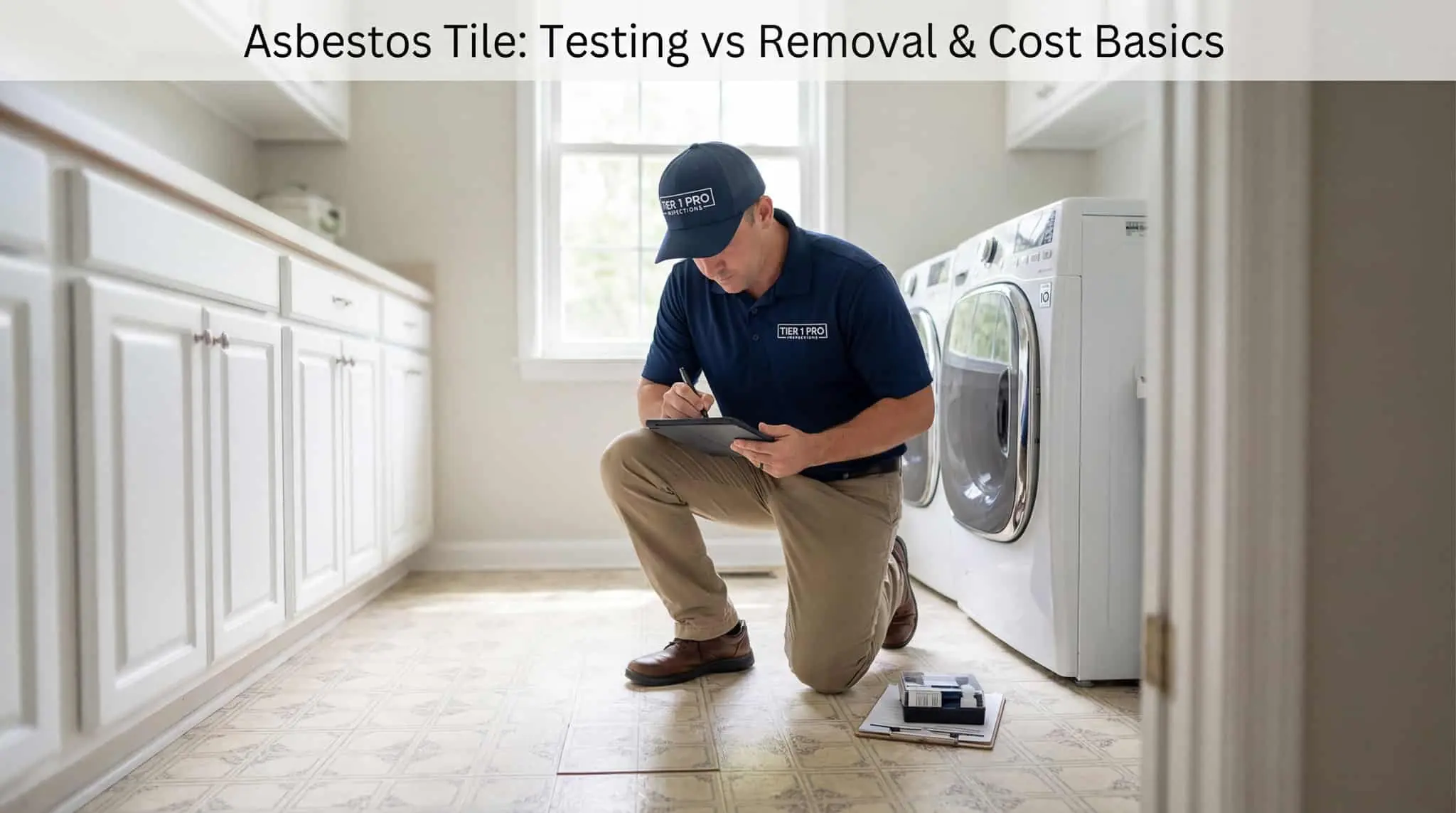
Asbestos-containing materials were commonly used in residential construction for many years, including in certain types of floor tiles and adhesives. While many homes in Central Florida have been updated over time, some properties—particularly older ones—may still contain these materials. When asbestos tile is present or suspected, understanding the difference between testing and removal helps homeowners and buyers make informed decisions.
A home inspection may identify materials that appear consistent with asbestos-containing products based on age, appearance, and installation type. However, confirming the presence of asbestos requires laboratory testing. This distinction is important when evaluating next steps.
What Asbestos Tile Is and Where It May Be Found
Asbestos tile is most commonly associated with vinyl floor tiles installed in homes built prior to the 1980s, although it may also be found in adhesives or backing materials. These tiles were valued for their durability and resistance to heat, which made them a practical choice at the time.
In many cases, asbestos-containing floor tiles remain in place without causing issues, particularly if they are intact and undisturbed. Inspectors typically note the presence of materials that may be consistent with asbestos but do not perform testing as part of a standard home inspection.
When Testing May Be Recommended
Testing is generally considered when materials are damaged, deteriorating, or likely to be disturbed during renovations. Laboratory testing involves collecting a sample and analyzing it to determine whether asbestos fibers are present.
For buyers, testing may provide additional clarity when evaluating a property that contains older flooring materials. For homeowners planning updates, testing helps determine whether specialized handling is required before work begins.
It is important to note that testing is a separate service from a home inspection and is typically performed by licensed professionals who follow proper safety protocols.
Removal, Costs, and Practical Considerations
Removal of asbestos-containing materials is not always necessary. In some cases, encapsulation or leaving the material undisturbed may be appropriate, depending on its condition and intended use of the space. When removal is required, it must be performed by qualified professionals who follow regulated procedures.
Costs associated with asbestos testing and removal can vary based on several factors, including:
- Size of the affected area
- Accessibility of the material
- Condition of the flooring or adhesive
- Local regulations and requirements
Because of these variables, estimates are typically provided by specialized contractors rather than during a home inspection.
Making an Informed Decision
A home inspection helps identify materials that may require further evaluation, but decisions regarding testing or removal should be made with guidance from licensed professionals. Understanding the difference between these options allows buyers and homeowners in Central Florida to move forward with clear expectations and responsible planning.