
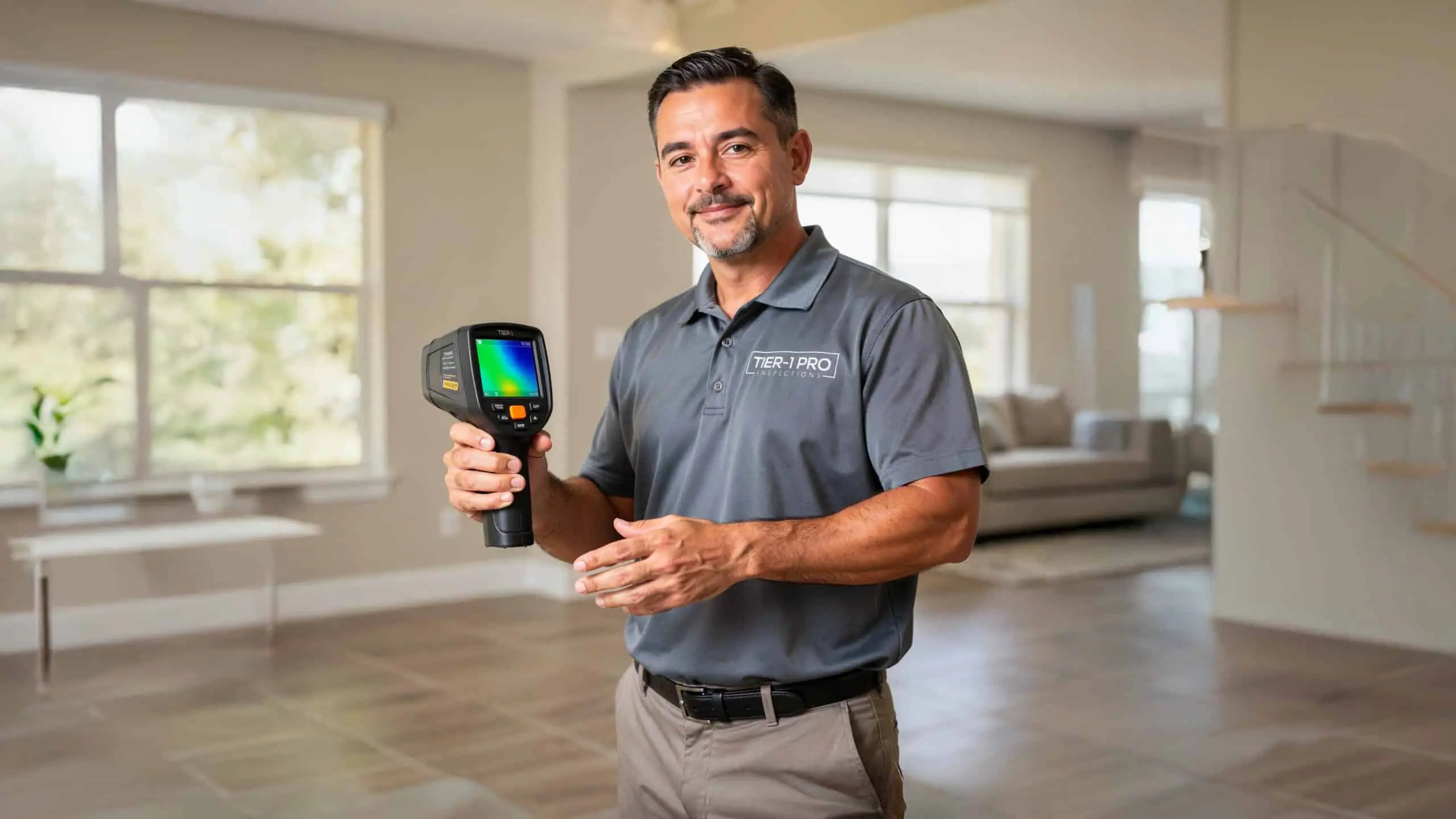
In Central Florida, moisture is one of the most common environmental factors affecting homes. High humidity, seasonal storms, and everyday HVAC use can create conditions where hidden moisture becomes a concern. During a home inspection, inspectors rely on visual observations and specialized tools to identify areas that may warrant closer attention. One of the most useful tools in this process is thermal imaging.
Thermal imaging cameras allow inspectors to detect temperature variations within walls, ceilings, and other surfaces. These variations can sometimes indicate the presence of moisture that is not visible to the eye. While thermal imaging does not directly detect mold, it can help identify conditions where moisture may be present, which is often a key factor in mold growth.
How Thermal Imaging Supports a Home Inspection
A thermal imaging camera captures infrared temperature differences across surfaces. When an inspector scans a wall, ceiling, or floor with the camera, cooler or warmer areas may appear in the image depending on how heat is moving through the material. These patterns can provide clues about insulation gaps, air leaks, or potential moisture intrusion.
For example, if moisture is present behind drywall, the area may appear cooler on the thermal image because evaporation affects surface temperature. An inspector can then investigate further by checking the area visually or recommending additional evaluation if necessary. Thermal imaging adds another layer of information that supports the inspection process without causing damage to the property.
When Mold Testing May Be Recommended
Mold testing is typically considered when there are indicators that moisture has been present for an extended period. This might include visible staining, persistent musty odors, or thermal patterns that suggest possible moisture accumulation behind building materials.
It is important to understand that mold testing is a specialized service separate from a standard home inspection. Testing usually involves collecting air or surface samples that are analyzed by a laboratory to determine the presence and concentration of mold spores. The results can help homeowners or buyers better understand indoor environmental conditions and determine whether further evaluation is needed.
Why Moisture Awareness Matters in Central Florida Homes
Because Central Florida experiences warm temperatures and high humidity throughout much of the year, moisture management is an important part of maintaining a home. Roof leaks, plumbing issues, HVAC condensation, and poor ventilation can all create conditions where moisture accumulates in hidden areas.
Tools such as thermal imaging help inspectors identify potential concerns that may otherwise go unnoticed during a visual inspection alone. When used appropriately, these tools support clearer documentation and more informed decision-making for buyers and homeowners.
A home inspection is ultimately about providing reliable information. Thermal imaging and mold testing, when appropriate, help inspectors gather additional insight into how a property is performing so homeowners and buyers can move forward with confidence.